InsurTech News: Video You Can Underwrite With - InsureVision Launches TeslaStick and FleetVision
InsureVision is turning everyday driving video into underwriting-grade risk signals. Two products lead the charge: TeslaStick for personal auto and FleetVision for commercial fleets. The aim is direct: fix multi-billion dollar pricing gaps in motor insurance with data carriers can actually bind on.
Why video matters now
Most cars already have cameras. Tesla vehicles continuously record via Dashcam, writing to a simple USB drive in the glovebox - no extra hardware, no install, no wiring. Other OEMs capture short clips after an incident; Tesla's always-on approach changes what insurers can do with zero friction.
TeslaStick: embedded personal auto underwriting
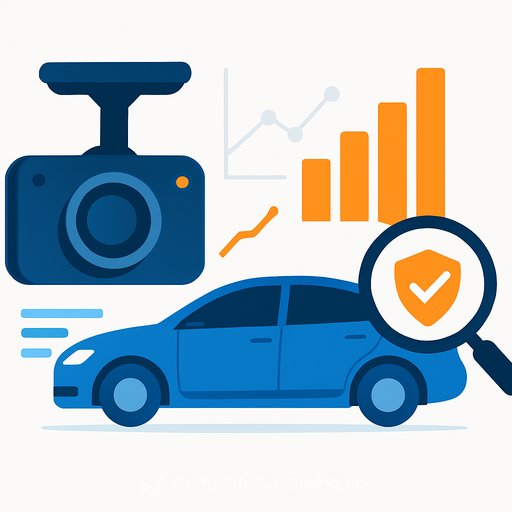
TeslaStick plugs into the glovebox USB, reads the continuous Dashcam feed, and pairs with a smartphone app. A custom risk transformer monitors driving; when an event triggers, it fetches the exact footage and evaluates the full scene with vision transformer AI tuned for insurance risk.
InsureVision's stance is clear: "The future of all insurance is embedded." Signals like Full Self-Driving usage are too thin on their own. This system looks across manual and assisted driving, letting context - not raw telemetry - drive the risk call.
Distribution is B2B2C. Carriers white-label the device for Tesla policyholders to deliver individualized pricing without building video AI infrastructure. Insurers keep the customer; InsureVision runs the heavy compute.
FleetVision: two decisions that matter in commercial auto
Commercial auto carriers are fighting losses on two fronts. First, pricing fleets accurately before day one. Second, finding the specific driver likely to blow up the loss ratio before a claim lands. Traditional telematics blurs cause and context - a hard brake to avoid a child looks the same as a distracted near-miss.
Fleets already sit on the missing data: petabytes of forward-facing dashcam video, mostly reviewed after crashes. That video contains behavioral markers tied to loss propensity - following distance, lane discipline, situational awareness - but it's been out of reach at scale.
InsureVision's contextual approach focuses on scene understanding over mechanical proxies. In reviewed results by Dr. Neale Kinnear (Affective Mobility) and Dr. Johnathon Ehsani (Johns Hopkins University), traditional harsh-braking signals delivered an 8.3% uplift in predicting at-fault claims, while InsureVision's combined method delivered 22.5% - roughly 3x the predictive lift.
The economics insurers care about
InsureVision points to a clear gap: Progressive runs at an 88.2% combined ratio while the industry averages 107.1%. Only a handful of top commercial auto carriers post underwriting profits. Telematics scale helped leaders. InsureVision argues video-based assessment is the next data flywheel - sharper risk separation, priced sooner, with fewer surprises.
Commercial auto combined ratio context
How carriers can use it now
- Personal auto: pilot TeslaStick in Tesla-heavy books for individualized pricing without new installs.
- Commercial auto: run FleetVision on historic dashcam video to pre-score fleets and flag high-risk drivers pre-bind.
- Operationalize context: move beyond binary events (e.g., "harsh brake") to scene-aware signals your pricing and safety programs can act on.
- Keep your front end: white-label distribution preserves your brand and customer relationship while offloading compute.
Tech snapshot
Core stack: contextual driving risk assessment using vision transformer AI and InsureVision's "enviromatics" platform for video-to-risk analysis from standard forward-facing cameras. The company reports about 3x the predictive accuracy over basic event-based telematics in tests reviewed by independent experts.
Company snapshot
- Founded: 2022
- Mission: stop catastrophic claims, save lives, and make premiums fair by reinventing risk assessment with end-to-end transformer AI
- Funding: $2.7M seed (March 2025), led by Rethink Ventures with Twin Path Ventures and State Farm Ventures
- Partners: strategic relationships including Mitsui Sumitomo Insurance
- Products: TeslaStick (personal auto, embedded), FleetVision (commercial auto)
What to do next
- Run a controlled trial: pick a segment (e.g., Tesla owners, medium fleets with forward-facing dashcams) and compare loss pick vs. bind pricing using video-derived signals.
- Update guidelines: add scene-aware markers (following distance, lane stability, attention) to pre-bind and mid-term pricing rules.
- Link safety to dollars: tie driver coaching and retention to measurable improvements in scene-aware risk, not event counts.
If your underwriting, claims, or product teams need a quick primer on applied AI skills, consider these learning paths: AI Learning Path for Software Engineers for engineers building vision-transformer models and data pipelines, AI Learning Path for Technology Managers for leaders planning and executing AI initiatives, or AI Learning Path for CIOs to align governance and strategic leadership around AI-enabled underwriting.
Your membership also unlocks: