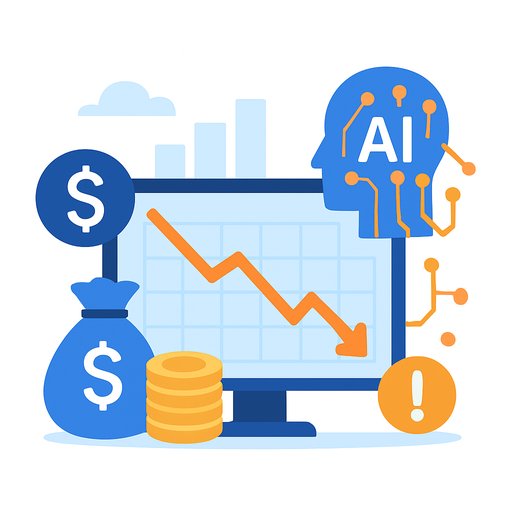
Sector Snapshot: Insurtech Funding Is Way Down, But AI Is Still Driving Some Big Deals
Insurtech funding is down, but attention hasn't left the category. The dollars that are moving tend to favor AI-heavy teams and workflow automation, not splashy direct-to-consumer bets. That's the signal to pay attention to if you work in insurance.
So far in 2025, global insurtech startups have raised about $3.9 billion across seed through growth rounds. That's under one-fourth of the 2021 peak, with deal count also at multiyear lows - a sign of softer interest and larger average checks.
Where the money went in 2025
Several outsized rounds landed in Q4, many centered on AI.
- Cyber risk analytics: CyberCube raised $180 million (October, led by Spectrum Equity). Founded in 2015, it applies proprietary AI and large language models to quantify cyber risk for carriers and brokers.
- AI-first health plans: Curative raised $150 million in a Series B at a $1.275B valuation. The company offers an employer health plan with $0 out-of-pocket costs and uses AI to support member experience. Backers include DCVC, Refactor, Duquesne Family Office, Jam Fund and Upside Vision Fund.
- Benefits platforms: Angle Health raised $134 million in a Series B on Dec. 3 to scale its AI-driven healthcare benefits offering. Portage Ventures led with participation from Y Combinator, Wing Venture Capital and others.
- P&C distribution and pricing: Openly secured $123 million in growth financing (January, led by Eden Global Partners). Founded in 2017, it uses AI to generate quotes across home, auto and life.
Early-stage snapshot
- Life policy lending: Inclined Technologies raised $8 million (Series B) to expand lending against whole life policies.
- Claims automation agents: Avallon Labs raised $4.6 million (seed, led by Frontline Ventures with Y Combinator, 1984, Liquid2 and Booom) to automate repetitive claims tasks.
- Workflow automation: FurtherAI raised $25 million (Series A, led by Andreessen Horowitz) to automate insurance workflows; YC also participated.
- Operations automation: Liberate Innovations raised $50 million (October, led by Battery Ventures) to automate insurance operations.
What this means for carriers, brokers, MGAs and TPAs
The straight D2C growth story has cooled. The new winners are infrastructure and workflow plays that reduce manual work across underwriting, claims, and policy servicing. Expect vendor pitches to focus on measurable lifts: faster cycle times, lower LAE, better triage and more precise risk selection.
Practical playbook: 90 days to ROI
- Pick one process: Start with claims intake, subrogation spotting, or straight-through underwriting on a narrow product/peril.
- Define success upfront: Target metrics like claim cycle time (-20%), LAE (-10%), quote-to-bind speed (-30%), FNOL-to-assignment throughput (+25%).
- Data prep: Clean FNOL, policy and loss data; set up third-party enrichment where needed. Document PII handling and retention.
- Pilot an LLM use case: Use large language models for document classification, summarization, correspondence drafting and fraud signals - with human review on exceptions.
- Tight feedback loop: Weekly review of model errors, edge cases and adjuster feedback. Ship improvements, don't wait for perfect.
Vendor due diligence checklist
- Security: SOC 2 Type II, SSO, encryption at rest/in transit, data residency options.
- Privacy: Clear stance on training on your data (opt-out by default), redaction for PII/PHI, audit logging.
- Model governance: Versioning, monitoring, rollback, explainability for underwriting/claims decisions.
- Operational fit: Integration pattern (APIs, webhooks), sandbox availability, implementation effort in weeks not quarters.
- Proof of value: Baseline vs. post-pilot metrics, A/B design, success criteria tied to LAE or loss ratio.
Metrics to watch in 2025
- Loss ratio impact from improved triage, SIU referrals and peril-specific models.
- LAE per claim and average claim cycle time.
- Quote speed and bind conversion on small commercial and personal lines.
- Underwriter and adjuster time saved per item handled.
- Model drift and re-training cadence.
Risk, compliance and governance
- Adopt a risk-based framework such as the NIST AI Risk Management Framework.
- Align with NAIC AI principles for fairness, accountability and transparency.
- Keep humans in the loop for adverse decisions; require explanations where models influence pricing or claims outcomes.
- Maintain audit trails, data lineage and retention policies appropriate for PII/PHI.
Bottom line
Funding is down, but AI-centric insurtechs are still landing big checks - especially those that make underwriting, claims and operations cheaper and faster. The opportunity now is practical: fix one workflow, measure the lift, then scale what works.
If your team needs structured upskilling to run these pilots, consider this hands-on program: AI Certification for AI Automation.
Your membership also unlocks: