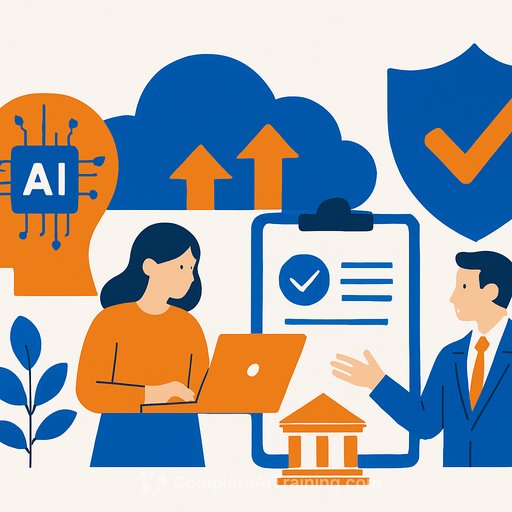
Insurtech’s Biggest Emerging Trends: AI, Cloud Architecture, Customer Experience, and Modernisation
The insurance sector, long held back by legacy technology, is now undergoing swift digital transformation. Technologies such as artificial intelligence (AI), automation, and embedded insurance are reshaping underwriting, claims processing, and customer engagement. This shift is prompting many insurance firms and leaders to rethink their strategies.
AI Driving Change
Artificial Intelligence is reshaping insurance operations end-to-end. By analysing data like credit scores, claims history, vehicle models, and local crime statistics, AI enables hyper-personalised, real-time quoting and precise risk profiling.
In claims management, AI automates triage processes to assess the details of incidents and even recommend outcomes. This cuts down on human involvement for routine cases, freeing advisers to focus on more complex claims and reducing resolution times.
Chatbots powered by AI now handle more than simple queries. They provide 24/7 support tailored around policies, coverage, and claims, easing the workload on agents and improving customer experience.
Industry-Wide Trends
The sector is also seeing a rise in cloud-native architectures that deliver the speed and reliability insurers need to stay competitive against nimble startups. API-ready platforms are breaking down traditional silos by enabling seamless data integration and new cross-product offerings.
Connected devices and the Internet of Things (IoT) provide real-time insights that enhance risk management. These technologies help prevent cyber breaches, monitor risk exposure across global supply chains, and support services such as pet insurance throughout ownership.
Customer engagement is evolving through AI-driven personalisation and marketing technologies. Embedded insurance, enabled by APIs, introduces new distribution channels by integrating coverage into customers’ existing experiences.
There is also notable convergence between industries. Automotive manufacturers bundle insurance with connected services, and technology companies are bringing fresh approaches to traditional insurance markets. These collaborations open opportunities for innovative, ecosystem-based solutions.
Modernising Insurance Systems
Customer experience is the top priority for many insurance CIOs. Most UK insurers still rely on decades-old systems built on legacy technology. Instead of upgrading these systems, many have simply added new ones alongside, creating complexity and inefficiency.
AI implementation, especially in call centres and customer service, is another key trend. AI agents are expected to handle much of the future interaction, reducing reliance on human representatives.
Modernising legacy systems is critical. Traditional mainframe-based systems take weeks to update, whereas modern fintech platforms allow rapid changes thanks to flexible architecture. This gap creates a competitive disadvantage for established insurers.
Cost optimisation is driving these changes. Many insurers spend the bulk of their technology budgets maintaining existing systems rather than innovating. CIOs are challenged to balance technical debt reduction with delivering new products and improved customer experiences.
AI Challenges and Governance
Advanced modelling technologies, including machine learning and generative AI, are widely explored by insurers. While lab results show powerful predictive models, their real-world application often falls short, sometimes causing unexpected shifts in business outcomes.
This has led insurers to reconsider the use of AI in mission-critical functions like pricing and claims automation. Concerns have grown about over-reliance on models that lack full transparency and understanding.
Effective use of AI demands new governance and human oversight. Insurers are reintroducing controls to challenge and test models before and after deployment, ensuring reliability and regulatory compliance. Without these measures, the risks of deploying AI-driven models could outweigh their benefits.
AI’s Most Beneficial Applications
- Internal Automation: Insurers see significant AI gains in automating internal processes such as document creation, delivery, and review, which speeds up policy and claims handling.
- Fraud Detection: AI algorithms help identify suspicious patterns in customer data to prevent fraudulent claims and reduce losses.
- Pricing Strategies: AI-driven pricing platforms analyze data to set fair, risk-adjusted premiums more responsively while maintaining compliance.
- AI Agents: Emerging use of AI agents and chatbots is supporting underwriting and data collection internally.
Key Risks to Consider
Despite widespread AI adoption, risks remain significant. Increased cyber threats, potential bias in AI models, and concerns about transparency and fairness in automated decision-making are prominent issues. Regulators are intensifying their focus on accountability, data protection, and ethical AI use.
Insurance firms must proceed carefully, balancing innovation with governance to mitigate these risks.
For insurance professionals interested in building AI skills relevant to these trends, exploring targeted AI courses can provide practical knowledge and tools. Resources such as Complete AI Training's latest AI courses offer tailored learning paths in automation, AI tools, and prompt engineering.
Your membership also unlocks: