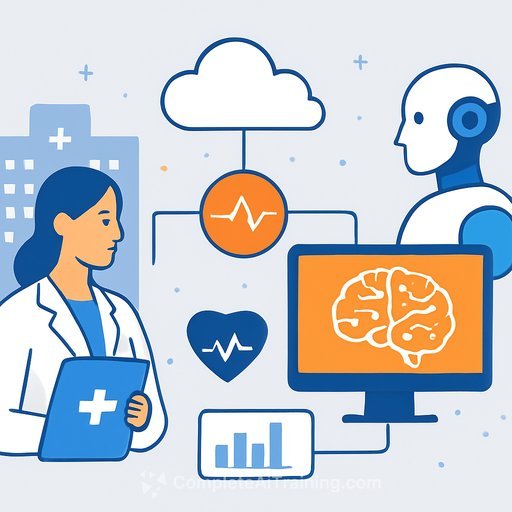
Interoperable data and AI are improving access, decisions, and value-based outcomes
The U.S. system is still fragmented. Patients see multiple providers, data gets stuck in silos, and care teams lose time chasing records. Interoperability fixes that by enabling a seamless exchange of health information across settings - a core requirement for value-based care models that depend on coordination and outcomes.
Limited data sharing has a direct impact on quality and cost. Closing that gap means building mechanisms that connect nationwide health information systems and make patient data available at the point of care - securely, reliably, and in real time.
What's moving right now
Early this year, eClinicalWorks - through PRISMANet - achieved QHIN (Qualified Health Information Network) designation and now participates in TEFCA. That connectivity lets users exchange records with hospitals, outpatient clinics, medical practices, and nursing homes across the TEFCA Network.
In July, eClinicalWorks joined other health IT leaders at the White House for the CMS Digital Health Tech Ecosystem launch, introducing a framework to promote seamless data sharing. As part of the initiative, eClinicalWorks pledged to support the CMS Interoperability Framework and enable real-time access for patients, providers, and apps. They also committed to replacing clipboards with intake via QR codes or Smart Health Cards/Links.
How interoperability improves patient care
Interoperability solutions - including the AI Assistant for PRISMA, an AI-powered health information search engine - pull comprehensive patient histories from primary care, specialists, clinics, urgent care centers, and hospitals nationwide, regardless of the EHR in use. That context helps clinicians act faster with fewer blind spots.
For patients, industry-wide commitments tied to the CMS pledges open access to their own records. Clear, convenient access drives engagement and transparency. Patients can review conditions, track progress, and participate in shared decision-making with their care teams.
Point-of-care benefits
- Continuity of care: Clinicians can see current, complete medical records. A cardiologist reviewing recent labs and imaging from a primary care visit can decide with confidence.
- Coordinated care: Chronic disease management improves when everyone sees the same data. For a patient with diabetes, the endocrinologist, dietitian, diabetes educator, and PCP can align treatment without guesswork.
- Efficient use of resources: Shared data prevents duplicate tests and procedures and reduces friction across referrals. That supports value-based models that emphasize outcomes over volume.
AI x interoperability: what's next
AI layered on top of interoperable data speeds up clinical review. Summaries, highlights, and risk signals surface what matters without sifting through dozens of documents. Blue Bonnet Family Medicine Health and Wellness Clinic in Ennis, Texas reports saving several minutes per appointment using the AI Assistant for PRISMA - time they put back into patient care.
What providers can do this quarter
- Secure TEFCA connectivity: Confirm participation via your vendor, HIE, or direct onboarding to a QHIN. Learn the basics of TEFCA from ONC: official overview.
- Close FHIR gaps: Enable SMART on FHIR apps and keep to current FHIR versions in your upgrade cycle. Validate endpoints against your highest-volume use cases (ED, imaging, referrals).
- Digitize intake: Replace clipboards with QR-based check-in or Smart Health Cards/Links to speed registration and reduce data entry errors.
- Tune consent and compliance: Align policies with information blocking rules and patient-request workflows. Keep audit trails simple and reviewable.
- Operationalize AI responsibly: Start with summarization and chart review. Set clear guardrails for human oversight, PHI handling, and documentation standards.
- Measure what matters: Track duplicate testing rates, med reconciliation completeness, referral turnaround times, and minutes saved per visit. Tie improvements to value-based metrics and contracts.
Bottom line
Interoperability and AI are practical tools for better decisions, fewer repeat tests, and more engaged patients. As TEFCA connectivity expands and AI tools mature, care teams will spend less time hunting for information and more time acting on it.
If your team is building AI skills for clinical, IT, or operations roles, see curated training by job here: Complete AI Training.
Your membership also unlocks: