
AI news ·
Jack Technology and Siemens partner to bring AI and humanoid robots into apparel manufacturing
Siemens and Jack Technology struck a deal targeting up to 30 percent efficiency gains in apparel production. The partnership deploys Siemens' AI orchestration software, low-code platform, and engineering tools to support humanoid robots in sewing workshops.
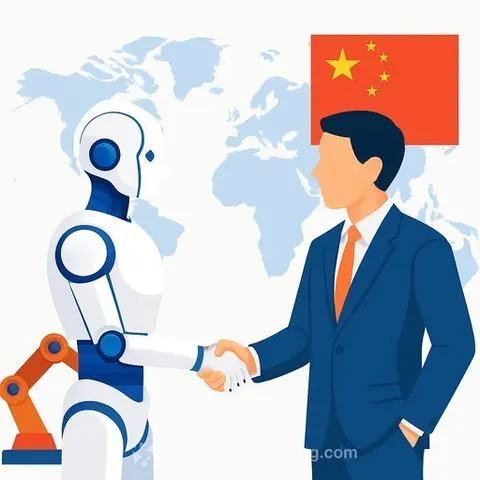
Siemens and Jack Technology, one of the world's largest industrial sewing equipment manufacturers, have entered a collaboration to bring AI-orchestrated software and humanoid robotics into apparel production lines. The deal, announced last week, targets efficiency gains of up to 30 percent across product development and manufacturing workflows for a company that serves customers in more than 160 countries.
The partnership centers on deploying Siemens' new industrial AI orchestration software, Intelligence Center X, alongside its Mendix low-code platform and Designcenter engineering software. Jack Technology will use these tools to build, deploy, and iterate manufacturing applications that support humanoid robots working inside traditional sewing workshops.
The technology stack behind the shift
The integration combines three distinct software layers. Mendix provides agentic low-code development, letting Jack's teams create and modify applications without deep coding expertise. Designcenter handles advanced product engineering for complex mechanical systems - the kind that go into humanoid robots designed for fabric handling and stitching tasks. Intelligence Center X orchestrates the AI models that drive automation decisions across the production floor.
Raymond Kok, CEO of Mendix, a Siemens business, said, "By combining agentic low-code development with digital product engineering, manufacturers can move faster from concept to production." Siemens will also deliver specialized technical training to help Jack build a dedicated digital platform for the sewing equipment industry.
Why apparel manufacturing is changing now
Jack Technology operates in a market defined by tightening demands: shorter lead times, rising product customization, and unrelenting pressure on cost efficiency. These conditions push manufacturers toward software-driven production environments that can reconfigure lines quickly. The company's move to integrate AI-enabled systems and humanoid robots directly into sewing workshops is a response to that pressure, not a speculative experiment.
The collaboration's 30 percent efficiency target spans development cycle times, product quality, production workflows, and overall cost reduction. That number reflects the compound effect of linking low-code application development with AI-driven automation and modern product engineering tools.
A broader signal for industrial automation
The deal reflects a pattern spreading across the apparel sector. Manufacturers are adopting software-driven engineering and agentic development platforms to modernize operations that have historically relied on mechanical repetition and manual changeovers. Humanoid robotics, once confined to research labs, are entering production environments where dexterity and adaptability matter more than pure speed.
For technical professionals watching the AI Agents & Automation space, the Siemens-Jack collaboration is a concrete example of orchestration software moving from concept into a high-volume, cost-sensitive industry. It also shows how low-code platforms are becoming the integration layer between AI models, robotics hardware, and legacy manufacturing systems.
Why this matters for IT and development professionals
The technical pattern here is what matters. A manufacturer is not just buying robots - it is deploying a software stack that lets its own teams build and iterate the applications those robots run on. For developers and IT architects, this means low-code platforms like Mendix are being treated as serious industrial tools, not departmental shortcuts. The integration with product engineering software and AI orchestration creates a template for how manufacturing companies will structure their technology stacks over the next few years.
For those in AI for IT & Development roles, the takeaway is practical: agentic development platforms and industrial AI orchestration are converging. The skills to connect these systems - and to design applications that survive on a factory floor - will become a distinct specialization, not a side project.