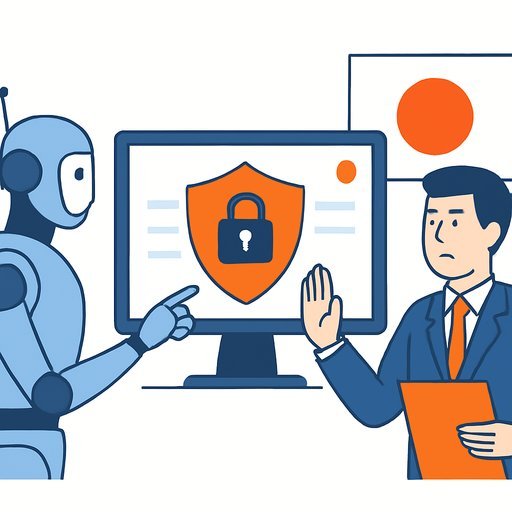
Japan Moves to Deploy AI to Detect Pirate Manga Sites by FY2026
Japan is preparing an AI-based system to automatically detect websites and social posts that display manga without permission. A draft supplementary budget for fiscal 2025 earmarks ¥100 million to advance the program, aiming for practical use as early as fiscal 2026.
Trials began in fiscal 2024 on domestically hosted pirate sites. The next phase will expand testing to 10 countries where pirated content is prevalent to improve coverage and accuracy before full rollout.
How the System Works
- AI trains on publisher-provided image and text data from manga to match and flag unauthorized uploads across websites and social platforms.
- Planned functions include automated deletion requests and operator warnings issued on behalf of publishers.
- International demonstrations will validate cross-border detection and takedown workflows.
Why This Matters for Government
The current approach relies on manual checking by publishers and piecemeal takedown requests. It's slow, incomplete, and expensive to maintain at scale.
According to ABJ (Authorized Books of Japan), estimated losses from access to pirated manga and related works reached about ¥700 billion in June alone. That scale demands an automated, coordinated response.
Key Decisions for Policy and Operations Leads
- Legal authority and scope: Confirm statutory basis for proactive scanning, cross-border notices, and automated takedown communications. Define due process and notice requirements.
- Data governance: Set standards for publisher data ingestion, storage, and retention. Limit use to antipiracy purposes. Implement access controls and audit logging.
- Model governance: Establish target precision/recall, human-in-the-loop review, and an appeals path for site operators. Track false positives and publish summary metrics.
- International cooperation: Prepare MOUs with partner countries, clarify jurisdictional pathways, and align with local platform and ISP processes.
- Platform integration: Negotiate API access and rate limits with major social networks, hosters, and CDNs. Predefine escalation tiers for repeat offenders.
- Publisher onboarding: Standardize data formats, labeling, and submission workflows. Offer a secure channel for updates and takedown preferences.
- Security and abuse prevention: Protect training data; prevent misuse of the system for unrelated censorship or competitor targeting.
- Procurement and cost control: Stage deployment, set service-level targets in contracts, and plan for ongoing model maintenance.
Timeline and Budget Snapshot
- Now-FY2025: Expand demonstrations to 10 countries; refine accuracy and coverage.
- Budget: ¥100 million in the draft FY2025 supplementary budget to support development and validation.
- Target: Practical implementation starting FY2026, subject to demonstration outcomes and legal clearances.
Operational KPIs to Track
- Detection coverage rate across priority platforms and geographies
- Average time from detection to takedown
- Precision and false-positive rates by content type
- Volume of removals and repeat-offender reduction over time
- Publisher satisfaction and onboarding speed
Risk Areas and Mitigations
- Over-blocking legitimate content: Require human review for borderline cases; provide a transparent appeals channel.
- Adversarial evasion: Schedule continuous retraining; include robust image/text transformations in testing.
- Jurisdictional limits: Use standardized international notice templates and MOUs; prioritize platforms with global reach.
- API and platform changes: Build integration resilience; maintain contingency pathways and vendor commitments.
- Data leakage: Use secure enclaves, encryption at rest/in transit, and strict vendor NDAs.
- Cost creep: Cap contracts, phase features, and tie payments to performance metrics.
Immediate Next Steps for Agencies
- Stand up an interagency task force (culture, telecoms, justice, foreign affairs) with a single accountable lead.
- Run a pilot with a small set of major publishers to validate end-to-end detection and takedown flows.
- Draft SOPs, legal templates for cross-border notices, and an operator code of conduct.
- Secure platform cooperation letters and map escalation procedures by country.
- Budget for staff training on AI oversight and takedown operations.
Resources
Your membership also unlocks: