Japan's Physical AI Shift Becomes a Matter of Industrial Survival
Japan's government and manufacturers are moving beyond pilot projects to deploy AI-powered robots across factories, warehouses, and logistics networks. The shift reflects a fundamental economic problem: the country's working-age population is shrinking, and essential industrial operations cannot function with fewer workers.
Japan's Ministry of Economy, Trade and Industry announced in March that it wants the country to capture 30 percent of the global physical AI market by 2040. The target builds on Japan's existing dominance in industrial robotics-Japanese manufacturers held roughly 70 percent of the global market in 2022.
The urgency stems from demographic reality. Japan's population declined for a 14th consecutive year in 2024. The working-age share of the population has dropped to 59.6 percent and is projected to shrink by nearly 15 million people over the next 20 years, according to figures cited by investors and industry executives.
Continuity Risk, Not Just Efficiency
In Western markets, companies frame AI adoption around productivity gains and margin expansion. Japan's debate has moved beyond efficiency into survival. Factories, warehouses, and critical services face a physical shortage of workers that cannot be filled through hiring.
Hogil Doh, general partner at Global Brain, said: "Physical AI is being bought as a continuity tool: how do you keep factories, warehouses, infrastructure, and service operations running with fewer people?"
Sho Yamanaka, principal at Salesforce Ventures, described the shift bluntly: "The driver has shifted from simple efficiency to industrial survival. Japan faces a physical supply constraint where essential services cannot be sustained due to a lack of labor."
Japan's Hardware Advantage
Japan's competitive position rests on decades of strength in industrial precision components. The country dominates the market for sensors, actuators, servo motors, and control systems-the physical interface between AI systems and the real world.
Yamanaka said: "Japan's expertise in high-precision components is a strategic moat. Controlling this touchpoint provides a significant competitive advantage in the global supply chain."
The question is whether that hardware advantage extends into the AI era, where value is shifting toward orchestration software, simulation tools, and deployment intelligence.
The Software Layer Matters
Companies such as Mujin are emerging as critical players by building robotics control platforms that allow existing industrial machines to perform more autonomously. That software layer is where defensible value is expected to reside.
Issei Takino, Mujin's chief executive, said: "In robotics, and especially in Physical AI, it is critical to have a deep understanding of the physical characteristics of hardware. This requires not only software capabilities, but also highly specialized control technologies, which take significant time to develop and involve high costs of failure."
Unlike consumer AI, where digital models iterate quickly, failure in physical AI carries operational, financial, and safety risks. A software error in a warehouse robot can halt production lines and trigger multimillion-dollar losses.
Investment is now moving into digital twins and simulation environments that allow companies to model real-world operations virtually before deployment. This reduces operational risk and shortens implementation cycles.
Deployment is Replacing Trials
The shift from experimentation to real deployment is measurable. Doh said: "The signal is simple-customer-paid deployments rather than vendor-funded trials, reliable operation across full shifts, and measurable performance metrics such as uptime, human intervention rates and productivity impact."
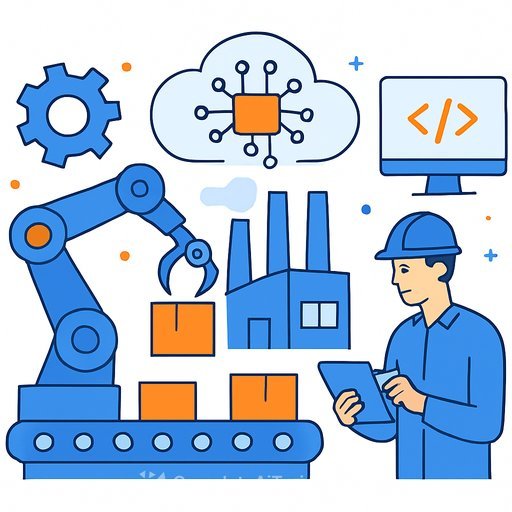
Autonomous forklifts and warehouse systems are already operating in logistics. Inspection robots monitor industrial facilities and data centers. In defense, autonomous systems are becoming strategically significant.
Government Backing and Ecosystem Structure
Japan has committed about $6.3 billion to strengthen core AI capabilities, deepen robotics integration, and support industrial deployment. Microsoft has announced a $10 billion infrastructure investment in the country.
Japan's physical AI ecosystem differs from winner-take-all models elsewhere. Industrial incumbents such as Toyota, Mitsubishi Electric, and Honda provide scale and deployment capacity. Startups drive innovation in perception, orchestration, and workflow software.
Yamanaka described this as complementary: "The relationship between startups and established corporations is a mutually complementary ecosystem. By fusing the vast assets and domain expertise of major corporations with the disruptive innovation of startups, the industry can strengthen its collective global competitiveness."
For Japan, physical AI is no longer optional innovation. It is infrastructure required to keep the economy functioning as the workforce shrinks.
Related: AI Agents & Automation | AI for Executives & Strategy
Your membership also unlocks: