Japan Data: Zero-Click Google Searches Are Rising in the AI Era
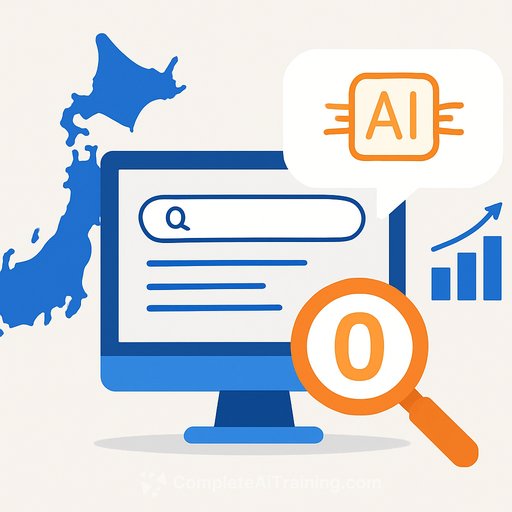
Consumer search behavior is shifting. A nationwide survey of 1,500 people in Japan found that more users are trusting AI summaries and skipping website clicks-reshaping traffic patterns marketers rely on.
The study, run by Seed in late October to early November, points to a clear trend: AI is absorbing more of the research journey, while traditional search and site visits are giving way to quick, answer-first summaries.
Key numbers at a glance
- 6% of people who started using AI say they hardly use search engines anymore.
- 44.2% report using search engines less (significantly or somewhat).
- 30.5% visit individual websites less often.
- 48.8% rely on AI answers shown on the search page-"zero click" behavior.
- 60.6% trust AI summaries (very or somewhat).
- For future research: 45% will use search engines; 38% will use AI (or AI plus search) depending on the situation.
What's driving zero-click
Google's AI Overview places an instant summary at the top of results, pulling key points from multiple sources. Users want quick answers more than perfect answers, and they're willing to stop at the summary if it feels "good enough."
Details on AI Overviews are available from Google's help resources. Learn more about AI Overviews.
Why this matters for marketers
Less clicking means fewer pageviews-even if impressions stay flat or rise. Classic SEO strategies that focused on ranking and CTR are delivering diminishing returns in categories where AI summaries satisfy intent.
The mandate is clear: earn visibility inside AI answers, pull users into owned channels, and build demand that bypasses generic search.
Immediate actions to take
- Answer-first formatting: Start pages with a 2-4 sentence plain-language summary answering the query directly. Follow with scannable subheads and short paragraphs. For guidance on structure and UX, see AI Design Courses.
- Structured data: Use FAQ, HowTo, Product, and Q&A schema where relevant to increase extractable clarity.
- Evidence and citations: Include original data, clear sources, dates, and expert quotes to improve credibility and citation likelihood.
- Keep facts fresh: Update stats and claims; add "Updated on [date]" markers. AI systems value freshness signals.
- Reduce fluff: Remove filler, add specific numbers, comparisons, and steps. Make your content the cleanest source to quote.
Content that earns inclusion in AI summaries
- Original research: Run surveys, publish benchmarks, pricing studies, and trend reports. Summaries favor unique data. Learn research methods in AI Research Courses.
- Compact explainers: Create concise definitions, step-by-step guides, and checklists for high-intent queries.
- Useful assets: Calculators, templates, and cheatsheets that others reference (and AIs can describe succinctly).
- Clear entities: Use consistent names for products, features, and people; add organization and author pages with credentials.
Measurement: new KPIs to track
- Impressions vs. clicks: Monitor growing gaps in Google Search Console as a proxy for zero-click impact.
- Query mix shifts: Watch which intents lose CTR first-broad informational queries are most exposed.
- Branded search share: Track branded vs. non-branded traffic; increase branded demand to offset generic losses.
- On-site engagement: Improve conversion per session (CPS) and newsletter signups; fewer visits must perform better.
Channel mix: build outside traditional SEO
- Email and SMS: Turn fleeting visits into owned reach with strong lead magnets and clear onboarding flows.
- Community and social: Publish un-gated insights on platforms where your audience already spends time.
- Partnerships and PR: Earn mentions in respected publications to boost brand queries and AI citations.
- Video and short content: Summarize key pages in 30-90 second clips; many queries start on YouTube and social search.
SEO tactics to keep (and refine)
- Topical depth: Build complete topic clusters with internal links. Coverage breadth helps AIs trust your expertise.
- Glossaries and FAQs: Great for definition queries and snippet-friendly structures.
- Page speed and clarity: Faster loads, clean design, and readable text-better for users and machine extraction.
Bottom line
Search isn't going away, but the click-through path is getting shorter. Treat AI summaries as a new distribution layer you can influence, not a black box you can't touch.
If you market for a living, this is the moment to rework your content for answer-first clarity, invest in original data, and shift KPIs toward owned audience growth.
Want structured training built for marketing and business stakeholders? Explore the AI Learning Path for Business Unit Managers.
Data source: Seed (Japan) survey on AI usage in online searches, late Oct-early Nov 2025.
Your membership also unlocks: