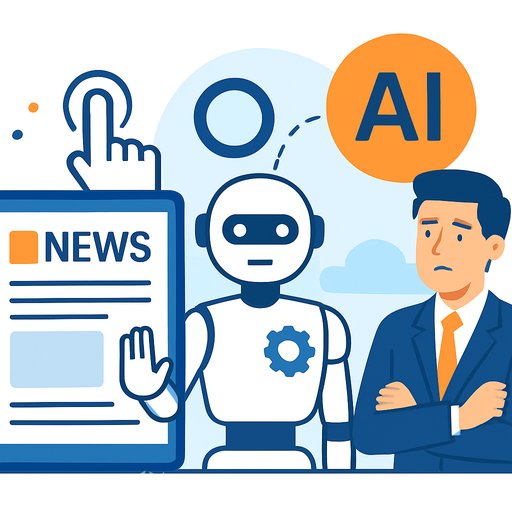
Japan's News Media Calls for Stronger Protections Against Unpermitted AI Use
Tokyo - Dec 23, 2025: The Japan Newspaper Publishers and Editors Association (Nihon Shinbun Kyokai, NSK) has urged the government to tighten protections for news content. In a written opinion to the Cabinet Office, the group said generative AI systems are using articles without permission and asked for clear safeguards in next year's Intellectual Property Promotion Plan.
The association warned that zero-click answers-where users read AI-generated summaries without visiting source sites-risk eroding traffic, revenue, and the public's right to know. It called for a legal obligation to honor publishers' no-access directives under copyright law.
The Cabinet Office is collecting public input now, with the annual IP plan usually finalized around June. Separately, several Japanese news organizations have filed lawsuits against Perplexity AI over content use.
What's Being Requested
- Make it a legal requirement for AI services to respect publishers' denials of access to articles and data.
- Address zero-click practices that deliver answers without directing users to source reporting.
- Strengthen enforcement against scraping and unlicensed reuse of news content.
Implications for Government, PR, and Communications Teams
- Audience reach and funding: Less referral traffic means fewer readers and weaker monetization for public-interest reporting.
- Information integrity: If summaries replace source context, misinterpretation risk rises and corrections are harder to propagate.
- Policy clarity: Agencies and publicly funded outlets will need explicit rules for data access, licensing, and AI interactions.
- Legal exposure: Terms of use, consent logs, and crawler controls will matter more in disputes.
Practical Steps to Take Now
- Set technical controls: Update robots.txt and related headers to manage known AI crawlers (e.g., GPTBot, CCBot, ClaudeBot, PerplexityBot, Google-Extended). Not all services comply, so pair technical blocks with legal terms.
- Tighten licensing and terms: Make content-use rules explicit. Require permission for model training or summarization. Log access and add watermarking or fingerprinting where feasible.
- Adjust distribution: Limit full-text in RSS, review syndication deals, and set internal rules for what content can be excerpted by third parties.
- Measure exposure: Track changes in click-through rates on news queries and branded topics. Watch for drops that correlate with AI answer surfacing.
- Prepare comms: Draft clear positions on AI use of your content, coordinate with industry bodies, and set a response plan for scraping incidents.
- Engage policy: Submit evidence-based comments to the Cabinet Office on publisher controls, enforcement, and zero-click effects.
Policy Timeline and References
The Intellectual Property Promotion Plan is typically compiled around June each year. Stakeholders can review the Cabinet Office's Intellectual Property Strategy Headquarters materials and follow consultations as they open.
- Cabinet Office: Intellectual Property Strategy Headquarters
- Agency for Cultural Affairs: Copyright (Japan)
Skills and Capability Building
If your team needs practical AI literacy with a compliance focus-especially for PR and public-sector work-browse role-specific programs such as AI Learning Path for Primary School Teachers or explore other job-focused courses on Complete AI Training.
Your membership also unlocks: