Writers vs. AI: New Lawsuit Targets Training On Pirated Books
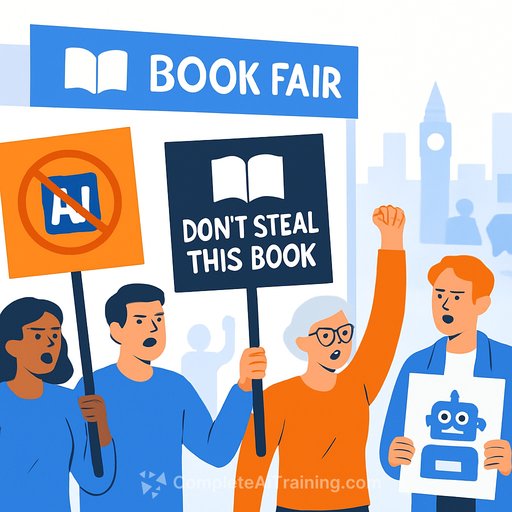
A group of writers, including Theranos whistleblower and "Bad Blood" author John Carreyrou, has filed a lawsuit against Anthropic, Google, OpenAI, Meta, xAI, and Perplexity. The core claim: these companies trained their models on pirated copies of books. The dispute centers on the use of Generative AI and LLM technologies in creating those models.
If this sounds familiar, it is. Another set of authors already brought a class action against Anthropic for the same behavior. In that case, the judge said it was legal for AI companies to train on pirated copies, but illegal to pirate the books in the first place.
Why this matters to your catalog
There's a proposed $1.5 billion settlement tied to the Anthropic case, with eligible writers receiving about $3,000. Many authors are not satisfied with that outcome, arguing it lets AI companies profit from stolen work with minimal consequences.
The new lawsuit puts it bluntly: the settlement "seems to serve [the AI companies], not creators." It continues, "LLM companies should not be able to so easily extinguish thousands upon thousands of high-value claims at bargain-basement rates, eliding what should be the true cost of their massive willful infringement."
What this means for your rights
The legal line is messy: courts are signaling that training on pirated copies may be allowed, while the act of piracy is not. This is part of broader AI for Legal debates about how existing copyright law applies to model training. That still leaves your work used to build products worth billions-with only a small payout on the table.
This new case challenges that status quo. If it succeeds, it could raise the price of training on stolen books and push the industry toward real licensing.
Action steps for writers (do these now)
- Check settlement eligibility and deadlines. Decide whether to participate or opt out based on your catalog and your appetite for further claims. Keep documentation of all published works.
- Register your copyrights. Registration strengthens your position if you need to enforce your rights. See the U.S. Copyright Office's guidance here.
- Monitor and respond to piracy. Set alerts for your titles, track known piracy sites, and use DMCA takedowns where appropriate. The basics of DMCA are outlined here.
- Update your contracts. Add clear language on AI training, dataset use, and licensing. Make sure partners can't sub-license your work into training sets without explicit permission.
- Control crawling (where possible). Block known crawlers in robots.txt and set clear usage terms on your site. Note: this won't stop piracy, but it sets expectations and may limit casual scraping.
- Join advocacy and stay informed. Organizations like the Authors Guild are tracking these cases and coordinating responses. Learn more at authorsguild.org.
- Keep clean records. Publication dates, ISBNs, contracts, and sales data help establish damages and eligibility in claims.
- Educate your team. If you use AI in your workflow, do it ethically and with clear boundaries. For practical training by job role, see Complete AI Training: Courses by Job.
What to watch next
Expect more suits, more proposed settlements, and-eventually-clearer rules on how books can be used to train models. The big question is whether courts will treat training on stolen copies as a separate, costly violation.
Until then, protect your catalog, document everything, and keep your options open. This isn't legal advice-talk to an attorney for specifics on your situation.
Your membership also unlocks: