John Lewis tops ChatGPT's Christmas picks - what this means for marketers (and how to win AI search)
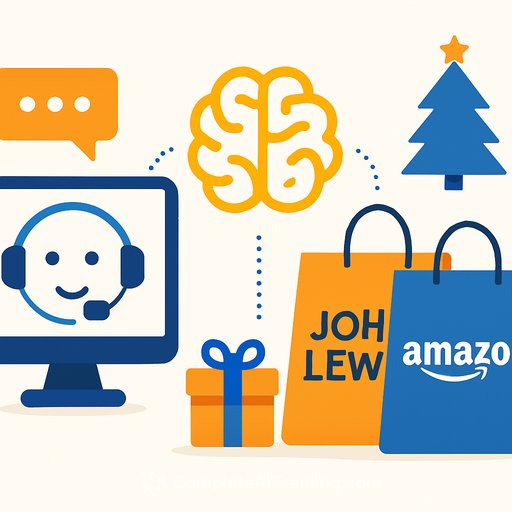
AI-driven gift guides are now a serious traffic source. Tank's December 17 analysis of ChatGPT-4 shopping responses across 10 UK retail sectors shows John Lewis leading with 31 mentions across eight categories, edging Amazon's 30. Argos followed with 10 mentions across five sectors.
ChatGPT now handles over 1 billion weekly searches, and its shopping feature assembles unsponsored, intent-based recommendations with prices and links. For marketers, that's a new discovery channel you can influence - but not buy.
The quick hits: who won, where, and why it matters
- Overall visibility: John Lewis (31 mentions), Amazon (30), Argos (10). Philips ranked fourth overall with cross-category reach (8 mentions across five sectors).
- Fashion: M&S led (score 21), Next (20), Barbour (17).
- Electronics: Samsung (25) ahead of Anker, Sony, Amazon; Apple scored 10.
- Cosmetics: Charlotte Tilbury (30) led Estee Lauder (18); Clinique and Look Fantastic (9 each). ChatGPT often linked straight to brand sites.
- Home improvement: Bosch (31).
- Sports: Decathlon (15); Adidas, New Balance, Nike (11 each).
- Books & entertainment: Amazon (43) ahead of eBay (23) and Babbel (9).
- Toys: LEGO and Smyths Toys (15 each).
- Food & drink and home goods: John Lewis led, beating M&S, Habitat, Next, and partner brand Waitrose.
Tank scored results by position: first mention = 5 points, fifth = 1. The agency analyzed hundreds of ChatGPT answers to 200 gifting prompts in November 2025. Multi-category brands with strong authority benefitted most.
Why this matters now
- UK consumers planned £91B in Christmas spend, with £34B online. Visibility in AI guides affects real revenue.
- 46% say they'd use AI agents for Christmas shopping; some would hand agents up to £200 to buy autonomously.
- ChatGPT's approach is "organic and unsponsored." You can't pay to appear - you must earn it with relevance and trust signals.
As Karl McKeever put it: shoppers want to remove guesswork and grind. AI guides do exactly that. If your brand isn't there, you're invisible in a channel millions already use.
How ChatGPT picks products (and how to work with it)
ChatGPT's shopping experience pulls from live web sources and prior training, classifies results (product listings, buying guides, editorial reviews), and displays "visually rich carousels" when it detects shopping intent. It rewrites natural-language queries into structured parameters - think attributes, category, price range - and localizes with IP-based region data.
- Infrastructure: results flow through Microsoft's Bing Web Search API.
- Signals: structured metadata, public reviews, pricing, and quality assessments from reputable sources.
- Crawling: do not block OAI-SearchBot. If the bot can't see your content, you won't be surfaced.
In the US, instant checkout is live via Stripe's Agentic Commerce Protocol for Etsy/Shopify merchants. Amazon has blocked major AI bots via robots.txt while it builds its own systems (Rufus and Help Me Decide). Google launched agentic checkout with Google Pay. The channel is growing fast, but it's fragmented.
What top performers did differently
Two patterns stand out. First, authority-rich, multi-category retailers won more mentions and better positions. Second, category specialists with deep content and clean product data punched above their weight (Samsung, Charlotte Tilbury, Bosch, Decathlon).
Brand gravity matters. John Lewis's Christmas footprint - content, PR, cultural presence - likely compounded visibility. As Martyn Gettings notes, decades of consistent brand building pay dividends in AI ranking.
The marketer's playbook for AI shopping visibility
1) Fix the foundations (technical and content)
- Open access: allow OAI-SearchBot; eliminate crawl traps and heavy client-side rendering for key pages.
- Structure product data: titles, attributes, pricing, availability, shipping, returns. Keep it current and consistent.
- Schema markup: Product, Offer, AggregateRating, FAQ. Align copy with the attributes shoppers ask for.
- Clean IA and internal links: clear category hierarchies and cross-links so AI can map your catalog quickly.
2) Write for answer quality, not clicks
- Direct answers first, detail second. If a prompt asks "best gifts under £50 for cyclists," show 3-5 options, price, why, and link.
- Create modular guides by intent: price bands, personas, occasions, use cases, and problem-solution pages.
- Use natural language that mirrors buyer questions. Avoid jargon. Keep paragraphs tight.
3) Earn trust signals AI can see
- Digital PR: secure links and mentions from specialist, high-authority publications. Quality beats volume.
- Brand PR: consistent cultural presence around key shopping moments (think seasonal campaigns with useful content).
- Reviews: increase review coverage and freshness. Highlight third-party ratings and awards on-page.
4) Social with search intent
- 70/30 split: 70% engagement-led, 30% FAQ and how-to content that answers buyer queries plainly.
- Repurpose buyer Q&A across short video, carousels, and on-site guides. Link back to structured pages.
5) Category-specific execution
- Electronics: comparisons with spec tables, use-case picks, and warranty clarity. Address compatibility and ecosystem concerns.
- Beauty: routine-based bundles, shade finders, and ingredient explainers. Link to brand PDPs where relevant.
- Home & DIY: step-by-step checklists, tool kits by job, and safety notes. Surface availability and click-and-collect.
- Fashion: fit, material, and care callouts; size guidance and returns policy up front.
Small retailers: how to compete without a giant budget
- Own a niche: build the best guide on one buyer job (e.g., "cold-water swimmer gift kit under £75"). Depth beats breadth.
- Leverage specialist media: pitch useful, data-backed gift lists to niche publications and creators.
- Bundle smart: create clear bundles by price and persona to match AI's intent templates.
- Localize: highlight regional stock, collection options, and delivery cutoffs. AI uses location - give it reasons to choose you.
Tank's data shows over 1,000 retailers appeared, but household names were surfaced more often. You win by narrowing focus, answering better, and signaling trust.
Agentic commerce: pressure and opportunity
PSE Consulting reports 49% of UK adults use AI regularly and 22% plan AI-assisted holiday shopping. Of those, 85% would trust agents to place orders. McKinsey projects agentic commerce could drive up to $1T in US B2C revenue by 2030, with global projections in the trillions.
There's still skepticism: retailer incentives, context in purchase decisions, and consumer habits can limit full autonomy. But the direction is clear - more queries start and end with AI. Your presence in those answers affects funnel volume before search ads ever load.
Implementation checklist (start this week)
- Confirm OAI-SearchBot access; run a crawl and fix blocked sections.
- Add/validate Product, Offer, AggregateRating, and FAQ schema on all top SKUs.
- Publish five intent-led gift guides with price bands and clear product picks per category.
- Pitch two specialist publications with unique data or expert picks; earn high-quality links.
- Refresh top PDPs with "who it's for," "why it's great," and "under £X" callouts.
- Launch a 30% slice of social posts that answer buyer FAQs; link back to guides.
- Instrument measurement: track revenue from guide entry pages and "gift" intent keywords.
Key quotes to brief your team
"Shoppers want to maximise their time and budget… Now they're getting smarter, using online search and AI tools to remove the guesswork." - Karl McKeever, Futurview Retail Consultants.
"AI search is important… it is essential brands are discoverable where shoppers are searching for information." - Martin Harris, Tank.
"Well-structured pages, smart internal linking and clear but natural language all help AI understand what your site is about." - Jake Cassedy, Tank.
"Mentions from reputable publications signal to AI systems that you're credible, relevant and safe to surface." - James Watkins, Tank.
Timeline: 2025 milestones to watch
- Apr 28: Shopping launched in ChatGPT globally (Plus, Pro, Free, logged-out).
- Jul 2: Shopping expands to German users.
- Sep 16: Search accuracy and shopping detection improved; hallucinations reduced by 45%.
- Sep 29: Instant checkout launches via Stripe for Etsy/Shopify merchants.
- Oct-Nov: Amazon and Google roll out AI shopping and agentic checkout features.
- Dec 17: Tank publishes the AI Christmas Nice List Report; John Lewis tops UK mentions.
What to do next
Pick your top three buyer intents. Build the best answer on the internet for each. Make it crawlable, structured, cited, and easy to act on.
If you want structured training for your team, see AI Certification for Marketing Specialists and the AI Learning Path for Business Unit Managers; for practical resources and tool guides see ChatGPT guides and courses.
Your membership also unlocks: