Writers Clash Over AI's Role in Journalism
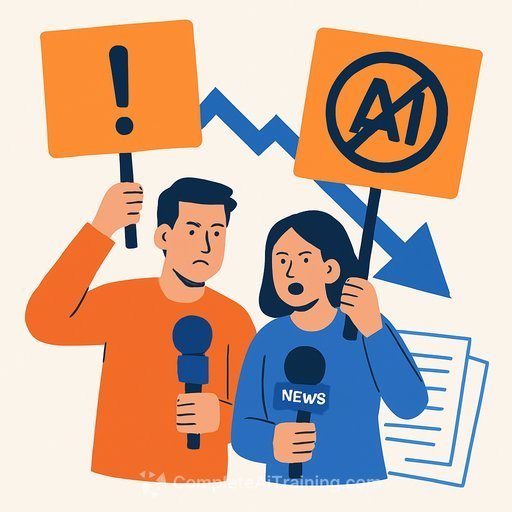
A Washington Post columnist's casual admission that she uses AI tools to fact-check, transcribe interviews, and sharpen arguments has ignited a debate about whether artificial intelligence belongs in newsrooms at all.
The disagreement cuts to a fundamental question: Is AI a useful assistant that frees writers from tedious work, or a threat that will hollow out journalism by replacing human editors, interns, and fact-checkers?
The Case for AI as a Tool
Defenders of AI use in writing argue the technology simply automates tasks that have always existed. A writer using AI to check grammar, avoid clumsy phrasing, or locate a half-remembered article is doing what writers have always done - using available tools to improve their work.
The comparison is apt: writers once consulted thesauruses and style guides. Now they consult AI. Neither replaces the actual thinking or reporting that makes writing valuable.
This view holds that AI cannot replicate what matters most in journalism. Any large language model can regurgitate conventional wisdom, but writing that expresses vulnerability, delivers deep reporting, or explores controversial ideas requires human judgment. The robots disappoint when it comes to genuine analysis.
In this framing, concerns about AI use in newsrooms represent an overreaction that conflates the tool with its abuse.
The Worry About Job Losses
Critics see a different problem. When journalists routinely turn to AI for work traditionally done by human staff - editing, fact-checking, research - companies gain cover to cut costs by laying off those employees.
The damage compounds over time. Entry-level journalism jobs train the next generation of reporters and writers. If those positions disappear, replaced by AI, where will experienced journalists come from?
A BBC and European Broadcasting Union study found that AI tools misrepresented news content about 45 percent of the time. Using unreliable technology to replace human judgment in reporting, editing, and fact-checking poses real risks to accuracy.
Critics distinguish between AI as a research starting point - similar to Google or Wikipedia - and AI as a substitute for human editorial work. The latter, they argue, erodes the human element that makes journalism worth reading.
The Practical Middle Ground
One experienced journalist describes a more cautious approach: using AI for research but not for writing or editing decisions. She relies on traditional journalism methods - checking clips, verifying sources, attributing information - while acknowledging that AI tools now make finding information easier.
The harder question involves disclosure. If a writer finds a quote through an AI search rather than a human source, does transparency require explaining that? The answer remains unclear.
Most newsrooms have not settled on consistent standards. Journalists receive mixed messages about what AI use is acceptable and what crosses ethical lines.
What Writers Need to Know
For working writers, the practical reality is this: AI tools exist and are spreading through newsrooms. Understanding how they work and where they fail is now professional necessity.
Using AI to improve clarity, check facts, or locate information differs materially from using it to generate content or replace editorial judgment. The distinction matters for both your work and your industry's future.
Learn AI for Writers and understand Prompt Engineering so you can use these tools deliberately rather than reflexively.
The debate will continue. But the outcome depends partly on how individual writers choose to use AI - whether as a genuine assistant that improves their work or as a shortcut that replaces the human thinking that readers actually value.
Your membership also unlocks: