GenAI in the Courtroom: What's at Stake
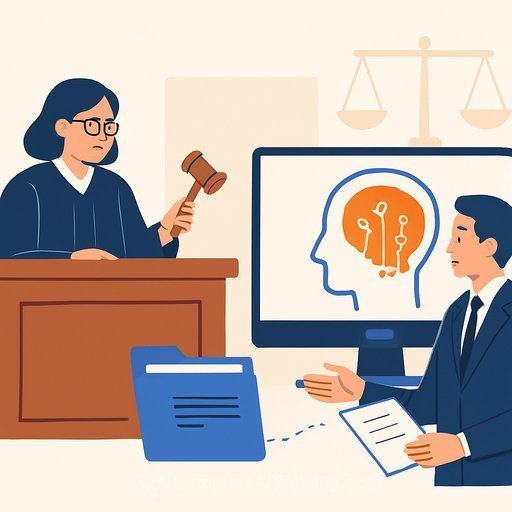
What happens when a judge relies on a GenAI tool to frame a key issue - especially one that could affect the very companies building those tools? Courts, like law firms and legal departments, face mounting workloads and shrinking resources. The temptation to offload work to AI is obvious. The risks to accuracy, fairness, and public confidence are just as obvious.
The rule of law depends on trust. If the public believes machines - or the companies behind them - are steering judicial reasoning, that trust erodes. That's the core problem we need to solve before adoption outpaces understanding.
The Role of UNESCO
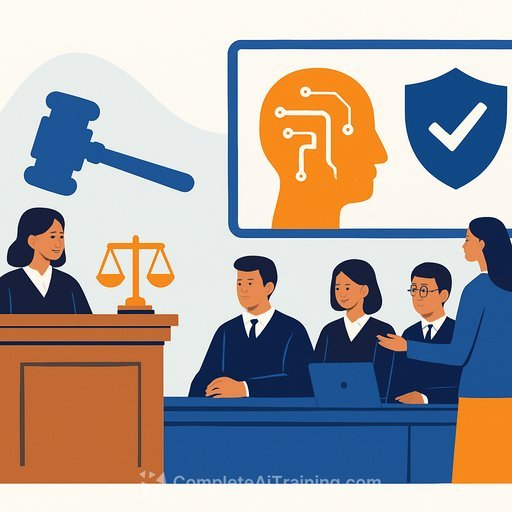
UNESCO is building a framework to guide how courts evaluate, procure, and use AI systems. Its Guidelines target three pillars: access to justice, human rights, and judicial independence. The point isn't to block AI. It's to force disciplined use that strengthens, not weakens, core judicial values.
For more, see UNESCO's work on AI and the judiciary: UNESCO AI for Justice.
Key Risks You Can't Ignore
- Vendor influence and incentives: Private companies optimize for growth, not judicial independence. That misalignment matters when their systems touch legal reasoning.
- Subtle steering of facts and framing: Even "assistive" tools like summarizers prioritize some facts over others. Dataset gaps and system defaults can tilt analysis without a judge ever seeing it.
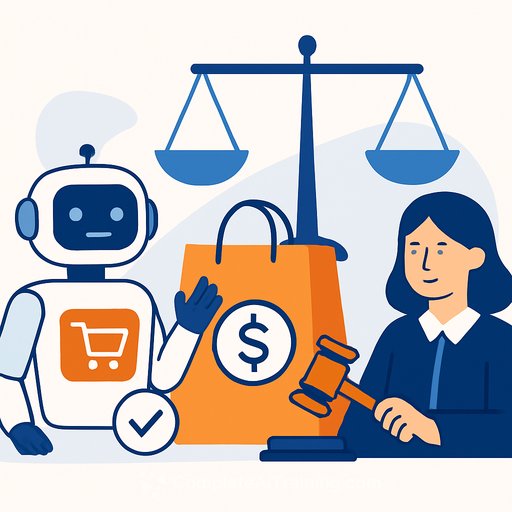
- Public pressure to adopt too fast: Budgets are tight and dockets are full. That's a setup for shortcuts, weak procurement, and little to no post-deployment oversight.
These Risks Are Not Abstract
We've already seen high-profile incidents of fake case citations entering court records and public discussion. Some judges are experimenting with AI support tools. Meanwhile, vendors market aggressively while known issues like hallucinations, biased outputs, and poor provenance persist.
There are also more deliberate threats. Hidden or white text in filings could be used to nudge AI tools toward certain recommendations. If a judge leans on those outputs, who detects the manipulation? How would an appellate court review it?
The Pressure to Adopt Is Real
Legislatures and court administrators want efficiency. Judges want relief from backlogs. The hype says GenAI can deliver both. But the cost of bad adoption is steep: wrong citations, skewed summaries, and model bias bleeding into opinions are all credibility hits the bench can't afford.
If courts begin citing materials that don't stand for the propositions asserted - or never existed - public confidence drops. Fixing that after the fact is much harder than preventing it.
Practical Guardrails for Courts and Legal Teams
Policy and Governance
- Human-in-the-loop by default: No AI-generated output should be used without independent human verification and source checking.
- Mandatory disclosure: Require judges and staff to disclose if, how, and to what extent GenAI influenced any decision or order.
- Usage boundaries: Ban use for core legal reasoning and precedent selection. Limit to admin tasks or drafting aids with strict verification.
- Audit trails: Log prompts, model versions, and outputs tied to case numbers to enable review and appellate scrutiny.
Procurement and Vendor Risk
- Independence clauses: Contract terms should bar vendors from data practices that could compromise judicial neutrality or confidentiality.
- Evaluate training data and update policies: Require transparency on data sources, fine-tuning, and change control. No black boxes for core workflows.
- Security and privacy: Enforce strict controls against ex parte data flows, inadvertent disclosures, and cross-tenant data leakage.
- Third-party testing: Demand external red-team evaluations for bias, hallucinations, and prompt-injection resilience.
Technical Controls
- Retrieval with citations: Favor systems that ground answers in verifiable sources with links and timestamps.
- Hallucination suppression: Implement strong refusal policies and confidence thresholds; block answers without sources.
- Adversarial defenses: Scan filings for hidden text, poisoned formatting, and other attempts to steer AI outputs.
- Sandboxing: Isolate AI tools from production systems until they pass case-specific evaluations.
Training and Culture
- AI literacy for the bench: Judges and staff need structured training on model limits, bias, and verification workflows.
- Clerk protocols: Create checklists for source validation, citation verification, and bias checks before any AI-assisted draft leaves chambers.
- Bar engagement: Encourage local rules and CLE requirements addressing AI use in filings to reduce downstream court risk.
For legal-focused courses and resources tailored to courts and practitioners, see AI for Legal.
Appellate Standards and Transparency
- Clear disclosure rules: Appellate courts should require lower courts to state whether and how GenAI influenced a decision.
- Review framework: Define standards for assessing AI-related error, including structural bias and reliance on unverifiable sources.
- Remedial options: Provide pathways for supplementation of the record with AI logs and for remand where AI influence is material.
Why UNESCO's Work Matters
UNESCO's Guidelines give courts a starting point: principles for design, procurement, and use that protect judicial independence and access to justice. They won't solve every issue, but they force a disciplined process. That alone reduces risk and improves public confidence.
Courts don't have to start from scratch. The National Center for State Courts maintains resources and policy work on court use of AI: NCSC AI Resources.
What to Do Next
- Adopt a temporary court policy today: disclosure, verification, and logging required for any AI use.
- Stand up a small oversight group (judges, clerks, IT, ethics) to review tools, contracts, and training.
- Run pilots in low-risk, administrative areas first and publish the evaluation criteria.
- Coordinate with the bar on filing rules, citation verification, and consequences for AI-related errors.
If your team needs structured AI literacy to support these guardrails, start here: AI Courses by Job.
The judiciary doesn't get a pass on technology competence. It needs tools, policies, and training that serve the rule of law - not vendor roadmaps, hype cycles, or convenience.
Your membership also unlocks: