
AI news ·
KAIST develops AI to detect early stroke signs using home activity data
A KAIST AI detects early stroke risk by tracking home routines with 96.53% accuracy. It monitors daily activity in 1,224 seniors to flag health declines before a crisis.
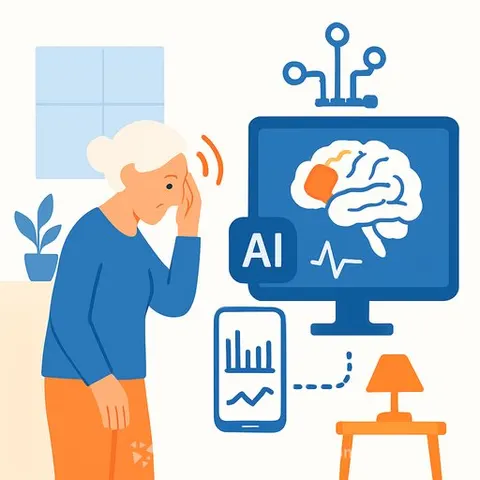
Researchers at the Korea Advanced Institute of Science and Technology (KAIST) have built an AI framework that detects early signs of cerebrovascular disease risk by monitoring subtle changes in older adults' daily routines at home. The system distinguished between imminent and non-imminent diagnostic risk periods with 96.53% accuracy, using lifelog data collected from 1,224 seniors in real residential environments. The findings, published in npj Digital Medicine, point toward a prevention-first approach in stroke care-one that could help connect patients to medical attention before a crisis occurs.
Lifelog data and risk classification
The study drew on 13,362 two-week lifelog samples gathered by LivOn Care Co., Ltd. in people's actual homes. The research team, led by Professor Lisa Lim from KAIST's Department of Civil and Environmental Engineering, developed AI that analyzes daily activity, sleep, circadian rhythm, indoor environmental information, age, and chronic disease data to identify the prodromal phase of cerebrovascular disease. Rather than relying on hospital examinations alone, the model picks up changes in everyday living patterns that signal elevated risk.
The team classified lifelog data from within four weeks before a diagnosis as the "imminent diagnostic risk period" and data from 12 weeks before diagnosis as the "non-imminent period." The AI distinguished between these two windows with 96.53% accuracy, showing that even before a hospital visit, small behavioral shifts can indicate whether the risk of cerebrovascular disease has increased.
Explainable AI reveals behavioral markers
A key feature of the work is its use of explainable AI to surface the lifestyle and environmental factors behind each judgment. The analysis showed that older adults in the prodromal phase tended to exhibit frequent continuous activity between 10 p.m. and 2 a.m.-a time when the body normally prepares for sleep. Irregular daily rhythms, such as delayed sleep onset and a blurred distinction between day and night activity, were closely associated with early signals of cerebrovascular disease.
As the time of diagnosis approached, the frequency of continuous activity during the evening window from 6 p.m. to 10 p.m. dropped noticeably, while inactive time increased. Low indoor humidity also emerged as an important factor in identifying imminent diagnostic risk.
From hospital diagnosis to home monitoring
"The key point of this study is not that AI should replace a hospital diagnosis, but that it can first detect risk signals in small lifestyle changes at home and help connect patients to medical care at the right time," said Professor Lim. She added that the team expects the technology to contribute to a shift from treating disease after it occurs to supporting prevention and early intervention.
The research team emphasized that the AI does not predict the exact onset of cerebrovascular disease or replace clinical diagnosis. It is a supportive tool intended to aid prevention and prompt medical consultation. The work adds to a growing body of AI for Healthcare research that moves monitoring beyond hospital walls, and prospective validation in larger patient groups will be necessary before clinical application.
Why this matters for Science and Research
This study, published with KAIST's Dr. Jeongyeop Baek as first author, demonstrates a methodology for extracting digital biomarkers from longitudinal, real-world data-a model that could extend to other chronic conditions. For researchers, it offers a template for combining wearable and environmental data with explainable AI to surface patterns invisible in clinical snapshots. The need for larger prospective validation also opens avenues for multi-institutional collaboration, underscoring the role of AI for Science & Research in turning observational health data into actionable early-warning systems.