AI model from KAIST and Neogenlogic targets personalized cancer vaccines with B- and T-cell intelligence
A joint team from KAIST and Neogenlogic has built an AI platform that picks patient-specific neoantigens and, crucially, predicts how B cells will respond to them. The goal is simple: train the immune system for long-term protection and cut the risk of cancer coming back.
Most cancer vaccines today lean on cytotoxic T cells for immediate tumor killing. The team points to mounting clinical evidence that B cell-driven immune memory is central to sustained antitumor effects and relapse prevention.
These findings were published on Dec. 3 in Science Advances. You can find the journal here: Science Advances.
What the model actually predicts
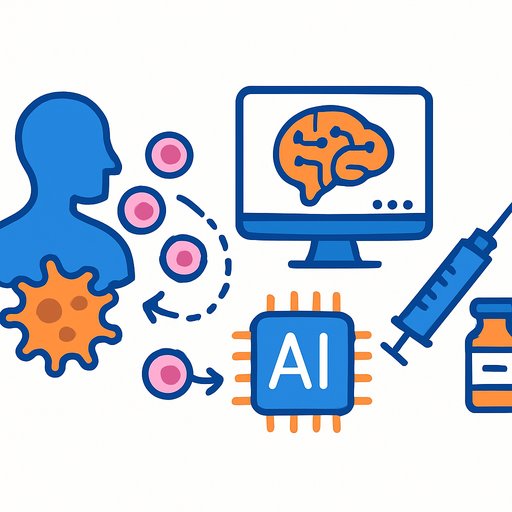
The AI learns structural interaction patterns between mutant peptides and B cell receptors (BCRs). In practice, it forecasts which neoantigens are likely to trigger a strong B cell response while also considering T cell activity.
The team describes it as the first AI framework to predict B cell immunogenicity alongside T cell responses for vaccine design. That shifts vaccine development from short-lived responses to strategies that prioritize immune memory.
Evidence, integration, and timeline
According to Neogenlogic, the approach has been tested against large genomic datasets and clinical trial data from leading vaccine developers. The framework is already integrated into the company's neoantigen discovery engine, DeepNeo.
Professor Choi Jung-kyoon's team is preparing an investigational new drug (IND) submission to the U.S. FDA, with clinical trials targeted for 2027. For reference on IND pathways, see the FDA overview: IND application.
Why this matters for researchers and translational teams
- Neoantigen selection can move beyond T cell-only filters. Including predicted B cell responses may better align vaccine candidates with durable immune memory.
- Structural features of peptide-BCR interactions become a first-class signal. This places more value on high-quality tumor genomics, BCR repertoire data, and structurally informed modeling.
- Pipelines may need multi-objective selection: B cell response, T cell epitope presentation, clonality, expression, and manufacturability.
- Trial design could benefit from endpoints that capture antibody dynamics and memory responses, not just short-term cytotoxic markers.
What's next
If the IND proceeds and trials start in 2027, expect readouts focusing on recurrence rates and the durability of immune responses. The bigger picture: integrating B cell intelligence into vaccine design could change how teams prioritize neoantigens in both discovery and clinical translation.
For teams building AI capacity in research workflows: a structured skills path helps. Explore role-based learning and topic paths such as AI Research Courses, AI Design Courses, or browse Complete AI Training - Courses by Job.
Your membership also unlocks: