
AI news ·
KAIST researchers develop AI to detect early stroke risk from home activity data
KAIST researchers use AI to detect early stroke risks from home data with 96.53% accuracy. It tracks activity and sleep changes to flag health issues weeks before diagnosis.
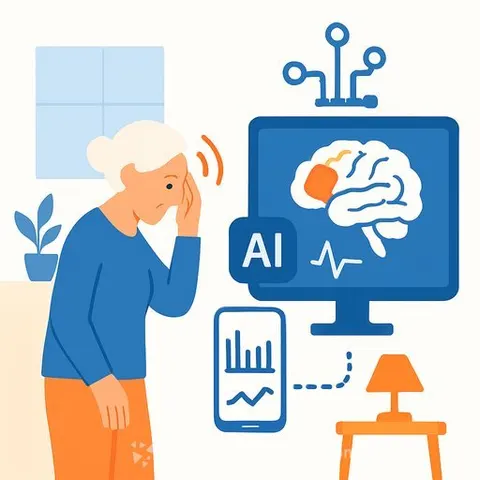
Researchers at KAIST have developed an AI framework that analyzes long-term lifelog data from older adults in their homes to spot early signs of cerebrovascular disease, achieving 96.53% accuracy in distinguishing between high-risk and low-risk periods. The study, published June 2 in npj Digital Medicine (Nature Portfolio), used data from 1,224 older adults collected by LivOn Care Co., Ltd., and examined 13,362 two-week lifelog samples. The system detects subtle changes in daily activity, sleep, circadian rhythm, and indoor environment, offering a potential early-warning tool for a condition where delayed treatment often leads to serious disability.
The work, led by Professor Lisa Lim from KAIST's Department of Civil and Environmental Engineering, together with collaborators from Sungkyunkwan University and Korea University Anam Hospital, addresses a critical gap: cerebrovascular disease is often detected only after symptoms emerge, when lasting damage may already have occurred. The approach aligns with growing interest in AI for Healthcare, where machine learning models are trained to infer health risks from passive data streams. By analyzing routine behavioral and environmental data, the AI can flag risk signals weeks before a clinical diagnosis, potentially enabling earlier intervention.
How the AI identifies risk from daily routines
The researchers used lifelog data that included activity levels, sleep patterns, circadian rhythms, and indoor environmental factors such as humidity, combined with age and chronic disease data. The AI was trained to classify two-week windows of data as belonging to either an "imminent diagnostic risk period" (within four weeks before a stroke diagnosis) or a "non-imminent period" (12 weeks before diagnosis). It correctly distinguished between the two with 96.53% accuracy.
Behavioral markers of prodromal stroke
Explainable AI techniques allowed the team to identify which lifestyle patterns most influenced the model's decisions. Older adults in the prodromal phase showed more frequent continuous activity between 10 p.m. and 2 a.m., a time normally reserved for sleep preparation. This suggested delayed sleep onset and a blurring of day-night activity rhythms. As the time of diagnosis approached, the frequency of evening activity (6 p.m. to 10 p.m.) dropped noticeably, while inactive time rose. Low indoor humidity was also flagged as an important environmental factor associated with imminent risk.
Limitations and next steps
The researchers emphasized that the AI is not designed to predict the exact onset of stroke or replace a clinical diagnosis. "The key point of this study is not that AI should replace a hospital diagnosis, but that it can first detect risk signals in small lifestyle changes at home and help connect patients to medical care at the right time," said Professor Lisa Lim. The system is intended as a supportive tool for prevention and early medical consultation. The team stressed that the model does not replace clinical diagnosis and requires prospective validation in larger, more diverse patient groups-a common next step in AI for Science & Research.
Why this matters for Science and Research
For researchers in digital health and AI, this study demonstrates the value of longitudinal, real-world data collected passively in home environments. The combination of high accuracy and explainability provides a blueprint for developing clinically useful early-warning systems that rely on subtle behavioral signals rather than invasive tests. The paper, published in a top-tier journal with an impact factor of 15.1, sets a rigorous benchmark for future work. Researchers can explore similar approaches for other conditions where pre-symptomatic changes in daily routines may be detectable-pushing the field toward preventive models that move beyond the hospital walls.