Researchers Design AI-Built Proteins That Recognize Specific Compounds
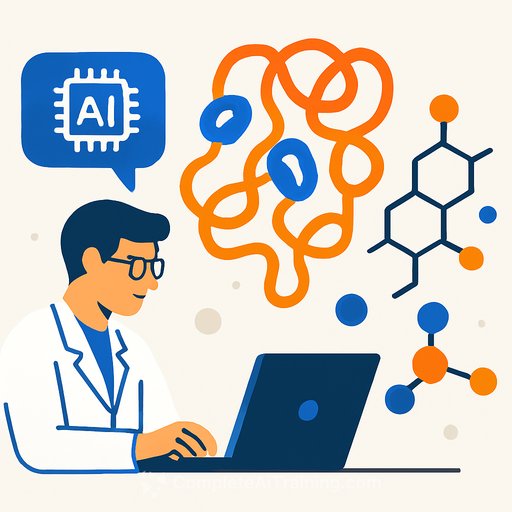
Scientists at the Korea Advanced Institute of Science and Technology (KAIST) have designed artificial proteins from scratch using AI that can selectively recognize specific compounds, a capability verified through laboratory experiments. The work, published in Nature Communications, represents a shift from traditional protein engineering-which typically modifies existing natural proteins-to custom-building proteins with predetermined functions.
The research team, led by Professor Gyu Rie Lee at KAIST and Professor David Baker, successfully created binding proteins for six types of compounds, including metabolites and small-molecule drugs. They demonstrated the approach by designing a biosensor that detects cortisol, a stress hormone, and verified its function experimentally.
The Technical Challenge
Designing proteins that recognize specific molecules has long posed a challenge because it requires precise calculations at the atomic level. The team developed an AI model that accounts for protein-ligand interactions and used it to design binding proteins without relying on natural protein templates.
The cortisol biosensor emerged as a proof of concept. The researchers designed a chemical-induced dimer-two proteins that bind together in the presence of cortisol-and confirmed it worked as intended. A provisional patent for the design technology has been filed in the United States.
Potential Applications
The technology could enable early disease diagnosis by detecting biomarkers in blood samples. It could also support targeted drug development and environmental monitoring through sensors that detect pollutants in air and water in real time.
Lee said the work "experimentally proves that AI can be used to design proteins that precisely recognize specific compounds," and indicated plans to expand the approach into other diagnostic and research applications.
The research emerged from KAIST's InnoCORE program, which supports international postdoctoral researchers working on AI-based scientific innovation. Learn more about AI for Science & Research.
Your membership also unlocks: