
AI news ·
Kanini advocates agentic AI to connect fragmented healthcare operations
KANINI proposes an Intelligent Operating Layer using Agentic AI to orchestrate healthcare workflows. It shifts from isolated automation to coordinated, outcome-driven operations.
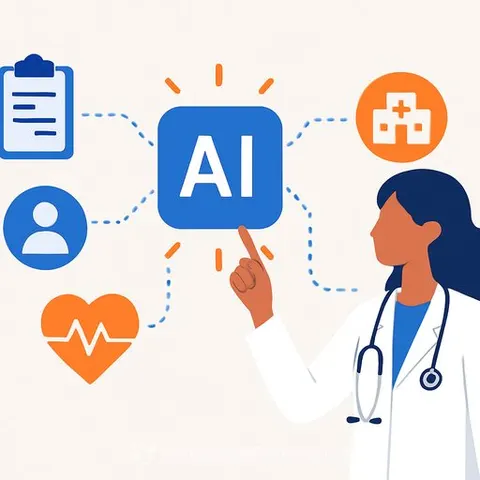
Healthcare has spent two decades digitising its operations-implementing electronic health records, modernising claims systems, and adopting analytics platforms-yet these investments have not connected into a truly intelligent operating environment. Across India and the United States, hospitals, insurers, and providers continue to run on fragmented systems where manual handoffs and siloed data delay critical decisions and strain care delivery.
KANINI, a global technology service provider, said the next breakthrough will come from intelligent orchestration rather than incremental digitisation. The company points to Agentic AI as the foundation for what it calls the Intelligent Operating Layer-an approach that moves beyond analysis and recommendations to taking coordinated action across clinical, operational, and administrative workflows.
From isolated automation to coordinated action
Traditional AI systems stop at surfacing insights. Agentic AI, by contrast, is designed to act-orchestrating workflows across provider, payer, and platform ecosystems within defined governance and compliance guardrails. It unifies fragmented data sources and enables real-time decisions. The result is a shift from managing disconnected processes to driving connected outcomes.
KANINI describes the Intelligent Operating Layer not as another standalone application but as an orchestration fabric. It connects data, decisions, and actions across the healthcare ecosystem, moving organisations from isolated automation toward outcome-driven operations. This approach has direct implications for how clinical and administrative teams work with AI for Healthcare applications in real-world settings.
What healthcare organisations are building now
Through its work with healthcare enterprises globally, KANINI reports that organisations are moving beyond pilots and isolated automation initiatives. Four interconnected capabilities are emerging as building blocks of the Intelligent Operating Layer.
Clinical Intelligence Platforms give providers a unified view of patient information, supporting more informed decisions at the point of care. For professionals managing health records and clinical documentation, structured learning paths such as the AI Learning Path for Medical Records Clerks are becoming relevant as data unification changes daily workflows.
AI-led Revenue Cycle Transformation improves efficiency and accuracy across billing and claims processes. Interoperable healthcare data foundations make insights accessible across systems that previously could not communicate. Agentic Workflow Orchestration coordinates actions and decisions across complex healthcare environments, connecting what has long been disconnected.
Two markets, one underlying need
In the United States, healthcare organisations contend with interoperability mandates, workforce shortages, regulatory pressures, and the shift to value-based care. In India, providers face the challenge of delivering affordable, scalable care across fragmented networks. Despite different contexts, the underlying requirement is the same: intelligent orchestration at scale.
"The question is no longer whether AI can create value, but how to integrate it into real-world healthcare operations at scale," KANINI said.
Governance cannot be an afterthought
As healthcare moves toward greater autonomy in decision-making systems, privacy, accountability, bias, regulatory compliance, and transparency must be addressed from the start. Building an Intelligent Operating Layer, KANINI said, requires more than deploying AI models-it demands the convergence of healthcare expertise, interoperability frameworks, enterprise architecture, and advanced AI engineering.
The company believes Agentic AI represents the transition from systems of record to systems of intelligence. The strategic question for healthcare leaders is no longer whether AI will become part of operations, but how quickly they can build the Intelligent Operating Layer required to deliver better patient, operational, and business outcomes.
Why this matters for healthcare professionals
For clinicians, administrators, and operational leaders, the shift toward agentic orchestration means the daily friction of disconnected systems may finally begin to ease. When clinical, revenue cycle, and administrative data flow into a unified operating layer, decisions that once took hours of manual coordination-prior authorisations, care transitions, discharge planning-can happen in real time. Professionals who understand how these systems connect, and who build the skills to work alongside orchestrated AI workflows, will be positioned for the roles this new operating model creates.