
AI news ·
Kazakhstan's Majilis approves 130 amendments to AI law, Senate greenlight next
Majilis accepted the Senate's editorial changes to Kazakhstan's AI bill and returned it for a new vote. Core aims stay put: transparency, safety, and stronger public oversight.
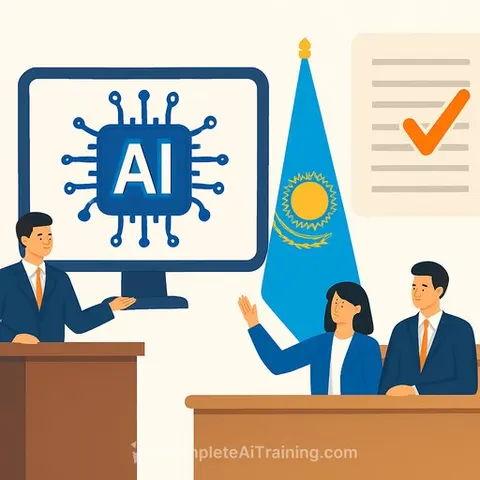
Majilis approves AI law amendments, sends bill back to Senate
29 October 2025 - The Majilis has accepted the Senate's editorial proposals to Kazakhstan's draft law on artificial intelligence and returned the package to the upper chamber for a new vote.
Deputy Yekaterina Smyshlyaeva noted that deputies adopted 130 amendments. Senators had proposed 16 adjustments across three laws; she stressed these were editorial and clarifying, with no effect on law enforcement practice.
What the draft AI law covers
The bill is positioned as a foundational framework for AI governance and digitalization. It spans seven sections and 28 articles and is intended to establish a unified legal basis for AI use across sectors.
- Legal and organizational regulation for AI technologies and systems.
- Transparency and safety measures for development, deployment, and use.
- Specific rules for government bodies and quasi-public entities.
- Defined rights and obligations for participants in the AI ecosystem.
- Expanded Government authority to develop state policy in this area.
- Related amendments to AI and digitalization legislation, plus changes to the Code of Administrative Offences.
Why this matters for legal teams
With the Senate's edits characterized as non-substantive, the core regulatory architecture appears intact. Expect clearer duties on transparency, safety, and accountability and a more formalized role for public bodies in oversight and implementation.
If enacted, the framework will likely trigger by-laws and sectoral guidance. Government and quasi-public entities will face heightened diligence obligations, while private actors should plan for contractual and documentation updates.
Immediate steps to prepare (practical, low-regret moves)
- Map AI use: inventory systems, purposes, data sources, and high-risk functions.
- Establish governance: approval gates, documented roles, human oversight, and audit trails.
- Risk and impact assessments: evaluate safety, bias, data provenance, and model monitoring.
- Data management: lawful bases, retention, consent records, and third-country transfers where relevant.
- Vendor and procurement: align contracts on data rights, security, incident reporting, and model updates.
- Incident readiness: define triggers for notifications, rollback plans, and post-incident review.
- Training: brief product, compliance, and procurement teams on acceptable AI use and documentation standards.
Context and comparators
While the Kazakh bill reflects local priorities, its themes track global trends: risk-based controls, transparency, and public-sector guidance. For context, compare with international frameworks:
What to watch next
- Senate vote: the bill returns to the upper chamber after a prior setback last week.
- Secondary regulations: if passed, expect implementing rules clarifying classifications, documentation, and oversight.
- Administrative liability: track updates to the Code of Administrative Offences for enforcement mechanics and penalties.
Bottom line for counsel
Treat this as a near-term compliance build. Use the current window to formalize AI inventories, uplift governance, and tighten vendor terms. That work will pay off regardless of minor editorial shifts before final passage.