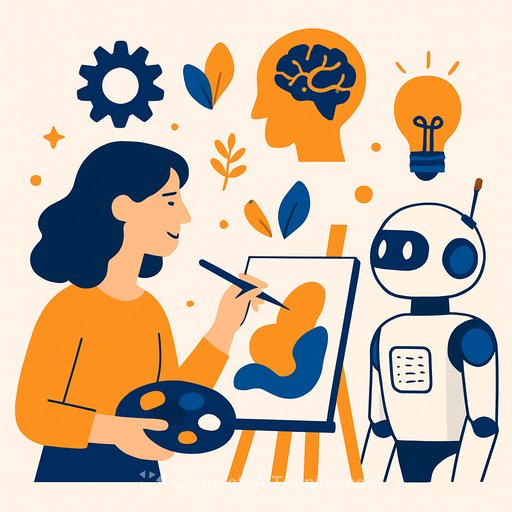
Process Over Prompt: How to Use AI without Losing Your Spark
July 20, 2025 • 37 mins
Feeling overwhelmed by the flood of AI tools hitting the market? You're not alone. Creatives Titi and Zakiyah team up with Lauren deVane—the “AI Auntie” and a creative tech expert—to cut through the clutter. They break down some of the most influential AI tools out there, discuss the concept of cognitive debt (are our brains getting lazier?), and explore what it really means to stay creative in an age ruled by ChatGPT, Gemini, NotebookLM, and more. Plus, hear about a wild AI that turned random scribbles into an entire podcast.
Introduction
Welcome to Dope Labs, a podcast that blends science, pop culture, and friendship. This episode picks up where the last left off, focusing on AI — not just its challenges, but the possibilities and practical ways to work with it.
AI and Its Impact
Last time, the focus was on AI’s environmental footprint, especially large language models like ChatGPT. This time, the spotlight is on what’s possible with AI, the tools available, and how to use them effectively if you decide to.
AI’s influence is everywhere—from social media buzz to education debates. Governments are even creating task forces to integrate AI into lifelong learning. The discussion is shifting beyond worries; it’s about how to engage with AI thoughtfully.
The Overload of AI Tools
There’s no shortage of AI tools flooding the market. Ads pop up everywhere with new apps claiming to do everything from writing to image creation. It can feel like sensory overload. So how do you choose? How do you keep your creativity intact rather than let AI take over?
Even if you’re not using AI, understanding what it can do is essential. Awareness helps you stay relevant and make informed decisions about how to engage—or not.
Expert Insights
We spoke with Lauren deVane, a creative entrepreneur and AI educator who’s deeply familiar with using AI as a creative partner. She has a background in branding and design education and offers a grounded perspective on working with AI.
Lauren’s Journey with AI
Lauren’s entry point was MidJourney. While she tried ChatGPT and DALL-E early on, MidJourney’s ability to generate surreal images clicked for her. She saw a chance to transform how creatives approach photo shoots and visual projects.
Cognitive Debt and Creativity
A recent MIT study shows that heavy reliance on AI tools like ChatGPT can reduce brain activity in creative areas—a phenomenon called cognitive debt. Essentially, if AI does the thinking, our creative muscles get lazy.
But here’s the flip side: when you pause and reflect on your thinking process, AI can actually boost creativity and originality. The key is to use AI as a collaborator, not a crutch.
The Role of AI in Creativity
Before AI, tools usually did one thing well. AI can do many things—from coding assistance to business strategy to personalized diet plans. The challenge is learning how to use it properly.
Lauren emphasizes process over prompt. It’s about conversation, not commands. When you work with AI as a partner and understand its mechanics, it won’t make you slower or less sharp. In fact, Lauren’s creativity has soared since she started integrating AI into her workflow.
The Importance of Context
AI is only as good as the input it receives. Like a calculator, if you don’t know what to feed it, the output won’t be useful. For students using AI, it can get them partway through a problem, but critical thinking is still necessary to finish the work.
Evaluation methods may need to shift. Instead of focusing solely on final results, educators could emphasize the process—how someone arrived at an answer or creation.
AI Tools and Their Applications
- ChatGPT: Known for deep research and advanced reasoning.
- Google Gemini: Notable for improvements in versatility and understanding.
- Anthropic's Claude: Ideal for creative writing and coding tasks.
- MidJourney: Recently added video capabilities, expanding its creative potential.
- Dia: An AI browser that summarizes website content efficiently.
The Future of AI in the Workplace
Many jobs now expect you to know how to use AI from day one. The fear of losing jobs to AI is common but misplaced. Technology aims to speed things up, not replace talent.
Adapting means evolving your skill set. Holding onto one role forever isn’t realistic. The smart move is to learn AI tools that complement your work and keep you ahead.
Conclusion
Understanding AI—its benefits and pitfalls—is essential. Know what these tools can do and where they fall short. In a world where AI changes fast, staying informed is your best strategy.
Thanks to Lauren deVane for sharing her insights. For creatives wanting to learn more about AI tools and practical applications, check out resources like Complete AI Training for courses designed to boost your skills.
Your membership also unlocks: