Government to deploy AI to monitor national exams and modernize education services
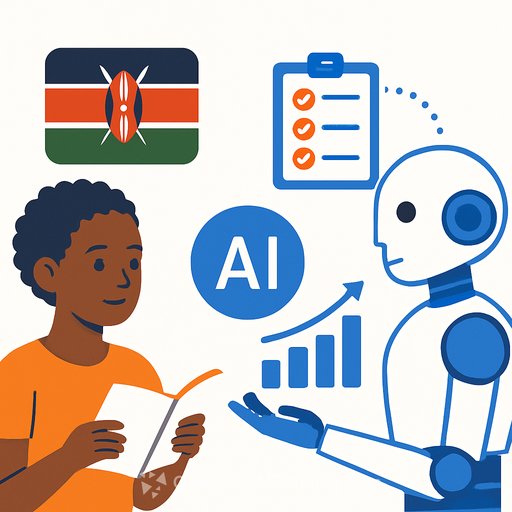
The Ministry of Education plans to monitor national examinations using AI to curb irregularities and track learner enrolment nationwide. A policy framework to integrate AI across education services is in its final stages, signaling a shift from isolated pilots to system-level use.
Speaking at the Meru University of Science and Technology during the graduation of 240 learners in AI, machine learning, and data science, State Department of Basic Education Director Dr. Sam Ngaruiya said AI will strengthen accountability in examinations and support digital learning. He represented the Principal Secretary, Julius Bitok.
What was announced
According to Dr. Ngaruiya, "We are partnering with the Engage Programme because we believe that the introduction of machine learning and AI in senior school will be a good start." He added that the Ministry is prioritizing digital tools in teaching, assessment, and remote learning.
"One of the key things going on under the education reform is encouraging digitisation of learning and the use of digital technology in lesson delivery," he said. "The future of AI is important, and because of that, the Ministry is coming up with guidelines to guide us in the use of AI in the education sector."
Why this matters for government teams
AI-enabled exam monitoring can deter cheating, surface anomalies early, and give the Ministry near real-time visibility of enrolment and center activity. Done right, it reduces manual overhead, improves data quality, and provides audit trails for high-stakes assessments.
The same infrastructure can support secure digital assessments, formative analytics, and targeted interventions for learners who need support.
Implementation focus: what to prepare now
- Policy and governance: finalize AI use guidelines, decision rights, and oversight. Map to the Data Protection Act and existing assessment regulations.
- Data protection: define data minimization, retention windows, encryption, and approved access roles. Conduct Data Protection Impact Assessments for exam use cases.
- Model and system assurance: require accuracy, bias testing, explainability, and human-in-the-loop review for flagged incidents.
- Procurement: set standards for vendor compliance, service levels during exam periods, uptime targets, and exit clauses.
- Operational playbooks: incident response, escalation paths, and clear thresholds for manual verification.
- Integration: plan APIs with KNEC systems, school MIS, and secure identity verification workflows.
- Auditability: immutable logs, versioning of models/configurations, and independent review of outcomes.
- Capacity building: train invigilators, ICT officers, and quality assurance staff on new tools and processes.
Pilot structure that reduces risk
- Phase 1: limited pilot across diverse centers (urban/rural, day/boarding) with shadow reporting, no high-stakes decisions automated.
- Phase 2: expand coverage, enable human-reviewed interventions for flagged cases, measure false positives/negatives.
- Phase 3: scale nationally with continuous monitoring, model updates after each exam cycle, and annual public reporting.
Digital learning integration
The Ministry's plan extends beyond exams. Priority areas include device access, secure learning platforms, and assessments that feed timely insights to teachers. Expect guidance on content standards, interoperability, and teacher support.
Talent pipeline: Engage Programme results
The Engage Programme, implemented by the University of Nairobi with the University of California, San Francisco, is training girls from under-privileged communities in AI, data science, and machine learning. It operates in six universities: Meru, Jaramogi Oginga Odinga, South Eastern, Kabarak, Dedan Kimathi, and the University of Nairobi.
Programme Investigator Professor Julius Oyugi said, "We developed a proposal to train about 1,000 girls across the country on AI, data science and machine learning for public health solutions." He noted early outcomes: "Last year, 53 per cent of the girls we trained got jobs," adding that the programme has expanded to include high school students, many of whom had never used a computer before.
What ministries and agencies can do this quarter
- Set a cross-agency working group (Basic Education, KNEC, ICT Authority, ODPC) to finalize standards and testing protocols.
- Inventory exam-related data flows and identify high-risk points for irregularities and privacy breaches.
- Define KPIs: detection rate, review time for flagged events, false positive rate, uptime, and user satisfaction.
- Budget for secure infrastructure during peak exam periods, training, and third-party audits.
- Engage county directors and school heads early with clear SOPs and support channels.
Helpful references
Upskilling your team
If you're planning internal capacity building for exam management, analytics, or digital learning operations, consider role-based training paths for policy, ICT, and QA teams.
Bottom line: the policy groundwork is underway. With disciplined pilots, clear governance, and targeted training, AI can help secure exams and improve learning outcomes without adding friction to the classroom.
Your membership also unlocks: