Kevin O’Leary: What Bitcoin Miners Teach Us About Winning the AI Race
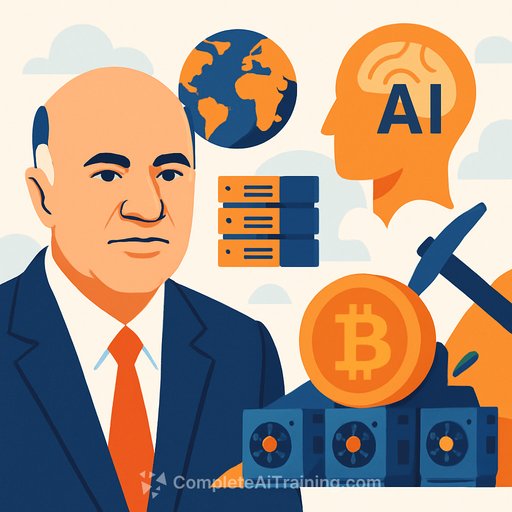
Kevin O’Leary points to a clear lesson for the U.S. in the race for AI leadership: learn from bitcoin miners. Both bitcoin mining operations and AI data centers demand massive, reliable energy supplies. This overlap is drawing attention from investors and policymakers aiming to boost North America’s position against China in next-generation industries.
Energy: The Common Ground Between Bitcoin Mining and AI
Bitcoin mining farms are typically located near abundant energy sources with infrastructure capable of handling industrial-scale power needs. These characteristics make them a natural fit for AI data centers, which also require huge amounts of electricity. O’Leary highlights that many projects today combine both bitcoin mining and AI workloads to maximize efficiency.
States like New York, which have strong hydroelectric resources but faced policy challenges, are now trying to reclaim their spot in this space. Other states like West Virginia, North Dakota, Mississippi, and Texas are emerging as attractive hubs because they can better support the power demands of these industries. Alberta, Canada, also stands out due to its vast reserves of low-cost natural gas, offering a competitive edge.
Diversification: Bitcoin Miners Moving Into AI
Bitcoin miners have faced shrinking profits after recent mining reward halving events. To stay competitive, many are branching out into AI and cloud computing. Companies such as Core Scientific, Hive Digital, and Hut 8 have shifted significant portions of their data center capacity to AI workloads.
This shift makes sense because the infrastructure for bitcoin mining — especially on the electrical side — is already in place. AI data centers typically require more complex setups, but retrofitting existing bitcoin mining operations with AI-capable GPUs is a practical way to diversify.
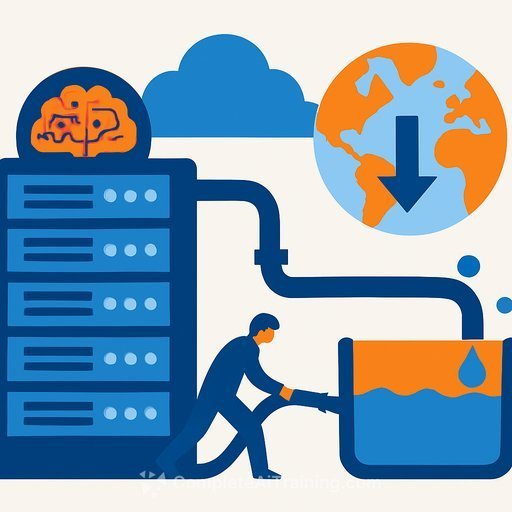
Consider that a single ChatGPT query consumes around 2.9 watt-hours, compared to just 0.3 watt-hours for a regular Google search. The energy demand difference highlights why proximity to abundant power is critical for AI data centers.
The U.S. Power Challenge and Cross-Border Cooperation
O’Leary raises a warning about the U.S. facing a power shortage on its domestic grid. He points out that securing a gigawatt of power from the grid in any state is nearly impossible without building new generation capacity, whether from natural gas, nuclear, or other sources.
He also criticizes the ongoing tariff tensions between the U.S. and Canada, calling them “foolish” in the context of AI and bitcoin mining competitiveness. Alberta’s massive gas reserves, for example, offer an opportunity that should be leveraged rather than hindered through trade disputes.
Meanwhile, China is rapidly expanding its energy production by building new coal-fired plants almost weekly to power its AI ambitions. The U.S. and Canada need to respond by ensuring they have the energy infrastructure to support these energy-intensive industries.
Why Operations Professionals Should Care
- Understanding the energy needs behind AI data centers is crucial for infrastructure planning and scaling operations effectively.
- Locating AI and bitcoin mining operations near sustainable and affordable energy sources can reduce costs and improve reliability.
- Cross-industry collaboration between bitcoin mining and AI data centers can open new revenue streams and operational efficiencies.
- Awareness of regional energy policies and trade relations can impact operational decisions and long-term strategic planning.
For operations teams involved in managing data centers or scaling AI infrastructure, this convergence offers practical lessons in site selection, energy sourcing, and multi-use facility design.
To build expertise in AI infrastructure and operations, explore relevant AI training courses by job role that cover the technical and operational aspects of AI deployments.
Your membership also unlocks: