Kevin O'Leary's 2 high-upside AI plays for anyone starting at 25
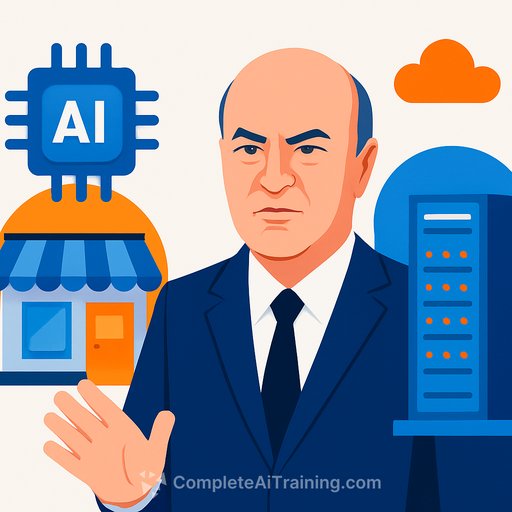
If Kevin O'Leary had to start over today, he'd go where demand is surging and supply is scarce. His call: build wealth in the "boring" foundation of AI-implementation for small businesses and data center development.
He expects AI growth to be exponential, but the smart money is in the infrastructure and execution. Not the glossy demos-real systems that make work faster or power the models behind them.
Lane 1: Implement AI for small businesses (not pure consulting)
O'Leary would target companies with fewer than 500 employees. There are tens of millions of them in the U.S., driving a large share of GDP-and many want AI but don't have the team or time to deploy it well.
He draws a line between advice and outcomes. Don't sell "strategy slides." Sell implementation and execution-clean data, integrated tools, trained teams, and measurable results.
What to build and sell
- Data audit and cleanup: centralize customer, ops, and finance data; fix hygiene issues that break automations.
- Workflow automation: map processes, then add AI where it reduces time-to-value (service tickets, lead qualification, reporting).
- Tool selection: choose proven stacks (chat interfaces, copilots, vector databases) that fit the client's size and risk profile.
- System integration: connect CRM/ERP/POS, enforce permissions, and log activity for audits.
- Security and compliance basics: access control, PII handling, and usage policies.
- Enablement and training: role-based playbooks, short sessions, and quick wins to drive adoption.
- Ongoing support: SLAs, model updates, new use cases-turn projects into MRR.
How to package it
- Discovery package (2-3 weeks): process mapping, data readiness check, ROI model.
- Fixed-scope "starter" build: one or two use cases live in 30-45 days.
- Monthly retainer: KPIs tracked, iterations shipped, quarterly expansions.
- Pick a vertical early: accounting firms, clinics, logistics, niche SaaS-specialization wins deals.
If you're technical or product-minded, this is a fast path to revenue. If you're non-technical, partner with an engineer and own the client relationship. For deeper skills and playbooks, see AI for IT & Development.
Lane 2: Build data centers-the real estate of AI
"The biggest pain point in AI is data centers," O'Leary said. Supply is behind demand, with only a few gigawatts under construction while hyperscalers keep spending and model sizes climb.
He's backing a $70 billion data center industrial park in Alberta, built to deliver roughly 7.5 GW. The project has faced delays, but the thesis is clear: compute and power capacity are scarce, and buyers are lining up.
What it takes to compete
- Site selection: cheap and reliable power, favorable zoning, strong grid interconnect, and cooling options.
- Power procurement: utility negotiations, PPAs, and queue management for transmission upgrades.
- Permits and community: environmental reviews, water plans, and local incentives.
- Capital stack: equity + project finance, potential REIT partnerships, and tax credits where available.
- Delivery partners: utilities, EPC firms, fiber providers, and colocation operators or hyperscalers.
- Phased builds: stage capacity to match demand and de-risk capex.
This route is heavier on capital and project management, but the demand story is hard to ignore. For cross-over ideas on siting, construction, and permitting, explore AI for Real Estate & Construction.
Why these two lanes work
Both are "picks and shovels." They're less flashy than model research, but they're essential and sticky.
Small businesses will pay to reduce workload and grow revenue. Data centers monetize scarcity-land, power, and time-to-capacity.
90-day action plan
- Days 1-15: Pick a lane. If you're early-career with limited capital, choose SMB implementation. If you have real estate or energy chops (or partners), explore data centers.
- Days 16-30: Define your offer. Write a one-page scope, pricing, deliverables, timeline, and risk controls.
- Days 31-45: Build one reference project. For SMBs, ship a real workflow with measurable ROI. For data centers, assemble a site thesis: power, permits, partners, and a phased build.
- Days 46-60: Create proof: case study, KPI screenshot, or LOI. Start outbound with 50-100 targeted messages.
- Days 61-90: Close 1-3 deals or secure a development partnership. Systematize delivery, then repeat.
The bottom line
O'Leary's filter is simple: go where demand is strong, painful, and underserved. Help small businesses implement AI, or bring new compute online. Either path can make a 25-year-old rich-if you execute.
Your membership also unlocks: