AI won't ruin education. Ignoring it will
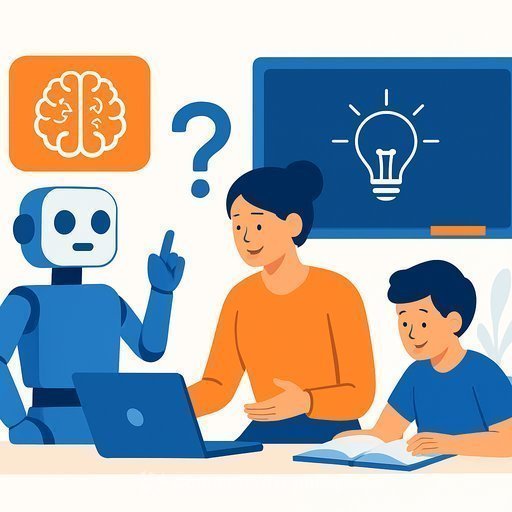
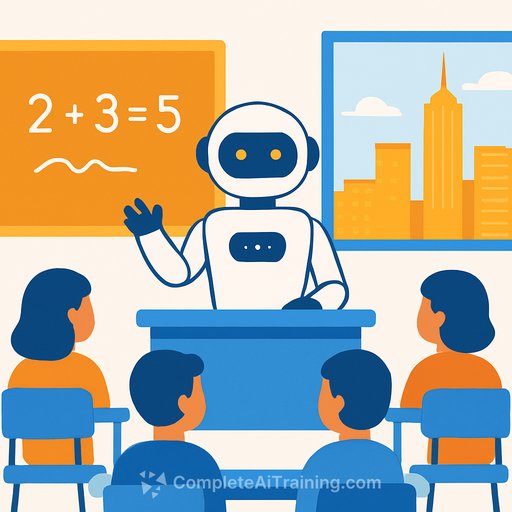
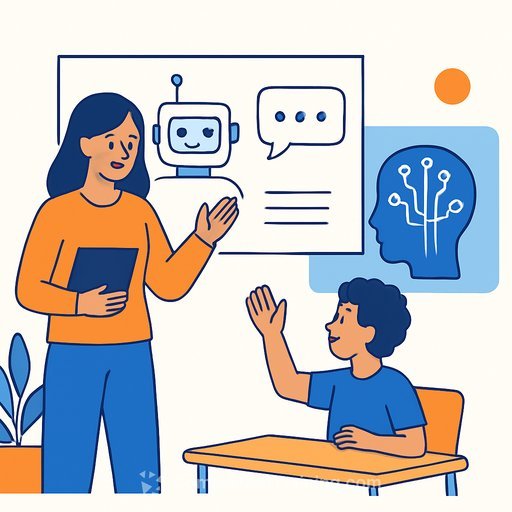
AI is already in your students' pockets and browsers. It writes drafts, explains steps, checks grammar, and answers questions faster than we can police it. Digital Learning Day on Feb. 26 is a good reminder: the question isn't "Will students use AI?" It's "Will we teach them to use it well?"
What students are already using AI for
- Brainstorming topics, outlines, and thesis ideas
- Drafting text and improving clarity and tone
- Explaining math steps, code, and problem-solving strategies
- Language support for multilingual learners and accommodations
- Quick facts and summaries (accurate or not)
They're experimenting with or without us. Our job is to turn curiosity into judgment and skill.
What happens if we look away
- Shortcut culture grows; genuine writing and thinking shrink
- Misinformation slips into assignments because students assume outputs are correct
- Privacy risks rise when kids upload personal data to random tools
- Equity gaps widen as some students get coaching and others get confusion
Set clear norms that teach good judgment
- Define allowed, limited, and off-limits uses per assignment (e.g., idea generation = allowed; full essay drafting = off-limits)
- Require process evidence: include prompts, AI outputs, student edits, and a short reflection
- Teach citation of AI assistance and verification habits (cross-check with class texts or trusted sources)
- Teach prompt writing and critique: "What did you ask? What changed after feedback?"
- Protect original thinking: use oral defenses, annotations, and sources tied to class-only materials
Classroom moves you can use this week
- AI warm-up: have AI propose three approaches to a problem; students pick the best and explain why
- Student-first, AI-second: write a rough draft, then let AI suggest edits; students accept or reject with reasons
- Error hunt: feed AI a math or science solution and ask students to find and fix mistakes
- ELL and accessibility: use AI to simplify directions or generate leveled texts, then verify accuracy
- Localize tasks: require interviews, data from your community, or recent class discussions AI can't guess
Assessment that resists shortcuts
- Grade the process: checkpoints, drafts, and reflections carry real weight
- Use in-class writing, conferences, and quick oral checks
- Ask for unique prompts tied to yesterday's lesson, classroom artifacts, or student-collected data
- Mix formats: explainers, podcasts, whiteboard talks, and build-and-explain projects
Safety, ethics, and fairness
- Use district-approved tools; avoid uploading student PII to public models
- Teach bias awareness and fact-checking; require source verification
- Don't rely on AI detectors; focus on process evidence and authentic tasks
- Post a one-page class AI policy students and families can understand in two minutes
Partner with families and your community
- Send a simple guide: what AI is, allowed uses, and how to talk about it at home
- Host a short demo night: show safe tools, model prompts, and review privacy basics
- Share student examples that show AI as a coach, not a ghostwriter
Invest in staff confidence
Start small: one tool, one routine, one unit. Build a shared prompt library, swap lesson tweaks monthly, and name site leads who can coach peers. For structured training and classroom-ready ideas, explore the AI Learning Path for Teachers.
Helpful frameworks and guidance
For policy and practice guardrails, see UNESCO's guidance for generative AI in education and the U.S. Department of Education's recommendations for teaching and learning with AI.
- UNESCO: Guidance for Generative AI in Education
- U.S. Department of Education: AI and the Future of Teaching and Learning
The move to make today
Pick one norm, one routine, and one conversation to start this week. Teach students how to think with AI, not outsource thinking to it. That's how we keep learning honest, challenging, and future-proof.
Your membership also unlocks: