Lego's AI move puts kids at the center of the conversation
Adults are loud about AI. Kids live with it. Lego Education is handing them the mic and giving schools a practical way to bring AI into real classrooms without the panic.
What Lego is launching
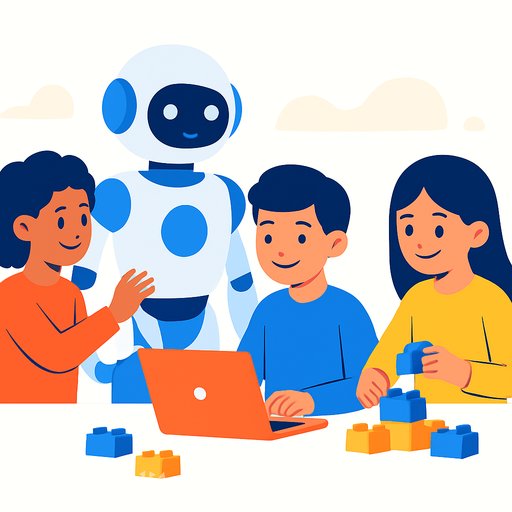
Lego Education rolled out "We Trust in Kids," a new initiative backed by an AI and computer science curriculum for years 1-9 (roughly grades 1-9). The program comes in three bands (years 1-3, 4-6, 7-9) with LEGO bricks, hardware, and physical-digital lesson plans built for teamwork and discussion. The materials are designed to align with practical teacher training resources like AI Learning Path for Primary School Teachers.
At the core is LEGO Education Coding Canvas, a block-based Coding environment with no student logins and a privacy-first setup. Classroom kits start shipping in April 2026 and will replace the LEGO SPIKE line as the brand leans deeper into AI-focused learning.
To support the campaign, Lego released a short film by documentarian Lauren Greenfield. It follows 15 students in a classroom debate as they co-create their own AI policy-treating kids as digital citizens, not passive users.
Why this matters for schools now
AI literacy is urgent, but many schools aren't ready. Lego's "Building the Future" report shows 69% of teachers see AI literacy as critical, yet 40% say their schools lack the capacity to teach it responsibly. More than half call current materials boring or disconnected from real student interests. For complementary studies and implementation guides, see Research.
Lego has the trust and track record to fix that. Decades of creative play, steady investment in digital safety, and collaborations like its work with Epic Games to build safer online spaces give educators a credible on-ramp. The company also previewed smart bricks at CES 2026-bringing sets to life with sound, light, and motion-signaling a consistent push to blend hands-on learning with modern tech.
How the new kits translate in class
The approach is simple: tangible, social, and age-appropriate. Students move from hands-on builds to discussions and block-based coding, then reflect on outcomes-anchoring abstract AI ideas in shared classroom experiences.
Privacy and access are handled upfront. No logins lowers friction for teachers and removes a common IT blocker. The Teacher Portal, lesson plans, and facilitation notes mean less prep time and cleaner adoption across grades.
Action plan for school and district leaders
- Start with a pilot. Choose one band (years 4-6 is a sweet spot) and run a unit across science or technology classes to test workflows and student engagement.
- Map to your standards. Identify where AI concepts support digital literacy, data, design, and CS benchmarks so the program doesn't feel "extra."
- Lead with norms. Use a policy-making activity like the campaign film to set class rules for AI use, bias checks, and citation.
- Mix modalities. Keep a balanced flow: bricks and conversation first, then block coding, then demos and peer feedback.
- Close the privacy loop. Document that student accounts aren't required and share a one-page brief with families and your IT lead.
- Prep your staff. Use the Teacher Portal for quick-start training and identify one champion per grade band to support colleagues.
- Plan procurement now. Kits ship April 2026-align budgets, storage, and charging needs so classrooms are ready on arrival.
Key signals for partners and vendors
- Brand trust is a launchpad. Lego's reputation gives it permission to lead on AI in schools. Others can learn from how it uses that equity to reset the narrative.
- Co-creation with kids works. Involving students in the research and creative process produces insights adults miss-and content that rings true in class.
- Curriculum-ready wins. Lesson plans, facilitation notes, and a Teacher Portal remove friction for overburdened educators. If it's not plug-and-play, it stalls.
- Digital isn't screen-only. Blending tactile builds with digital tools keeps students engaged and helps teachers control screen time with intent.
Bottom line
Lego Education is turning AI fear into classroom momentum. By listening to students, addressing teacher workload, and delivering age-appropriate tools, it gives schools a practical path to teach AI with care and clarity.
If you're planning PD or curriculum upgrades for 2026, start small, document wins, and scale. For role-based training and classroom-ready pathways, see AI Learning Path for Primary School Teachers.
Your membership also unlocks: