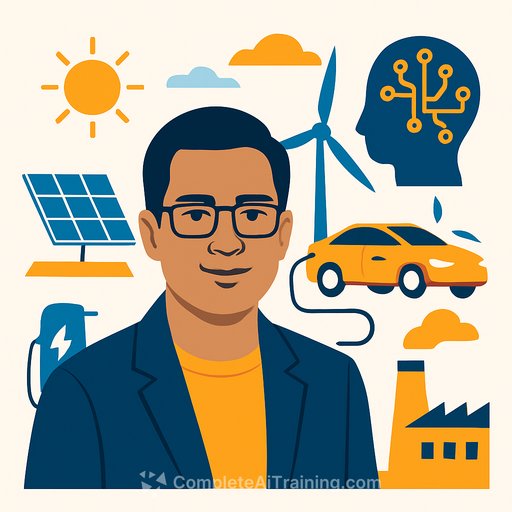
Kiran Kalyanaraman: AI-Driven Product Innovation in Energy
Kiran focuses on building scalable, AI-led energy solutions that enhance grid intelligence, urban efficiency, and sustainable field operations.
AI-Driven Product Innovation
Artificial intelligence is changing how energy products are created and deployed. As climate goals tighten and infrastructure grows complex, AI moves beyond optimization to become the core of new solutions. From real-time field services to decentralized grid management, AI-powered products are enabling energy systems that are more resilient, efficient, and inclusive.
Kiran Kalyanaraman is an expert in AI-driven product management within the energy sector. His experience spans machine learning, grid modernization, and enterprise platforms. He has developed and scaled intelligent products that merge data, infrastructure, and user needs. His work includes predictive analytics for smart grids, dynamic routing for technicians, and managing full product lifecycles for AI-powered solutions—each focused on seamless integration, scalability, and user-centered performance.
“AI is not the product; it’s the engine. The real value comes from designing scalable, customer-centric systems where AI is seamlessly embedded into decision-making and operations.”
One example is a machine learning–based routing engine Kiran developed to tackle technician dispatch inefficiencies. By considering traffic, job complexity, and technician skills, the system cut commute times, lowered emissions, and improved on-time responses. This solution was more than a tool; it became a scalable platform delivering business, environmental, and customer benefits.
Kiran also contributes to grid intelligence. In his work on AI and Machine Learning for Smart Grids, he highlights how predictive models optimize grid stability during unpredictable demand. His demand forecasting products combine real-time usage with weather data to balance loads in urban settings, reducing reliance on backup generation, cutting costs, and preventing outages.
His product vision is rooted in practical strategies. In a co-authored framework on AI-Powered Product Strategy for startups in India and Africa, Kiran shows how resource-limited regions can still implement impactful AI solutions. Applying this thinking, adaptive AI tools optimized energy use in water pumps and load balancing in underfunded municipalities, proving intelligent design works beyond high-budget environments.
“True energy innovation doesn’t stop at efficiency; it extends to accessibility, adaptability, and equity. AI must serve communities, not just infrastructure.”
Workforce training is another key focus. Kiran emphasizes AI literacy for more than engineers—it must include field staff, planners, and policymakers. He has created training programs combining data literacy, ethical decision-making, and platform fluency, enabling teams to adopt and critically engage with AI tools.
Urban optimization benefits from Kiran’s research and products. His study on The Role of Smart Cities in Promoting Energy Efficiency explores AI and IoT integration to reduce municipal energy waste through traffic modeling and smart building systems. He implemented a federated learning platform allowing buildings to train energy models locally, which protects privacy while enabling shared optimization.
In a recent scoping review on The Role of Organic Solar Cells in the US Energy Transition, Kiran synthesized over 80 studies and reports. His analysis shows how innovations in tandem cells and transparent photovoltaic films could expand solar adoption, especially in affordable housing, schools, and community centers. He highlights regulatory gaps and calls for targeted policies to scale organic solar cell manufacturing and standards.
Kiran’s work paints a future where energy systems are decentralized, data-driven, and designed for people. Whether leading AI products for real-time grid control or advocating for solar equity, he combines systems thinking, technical expertise, and user empathy.
“As AI becomes more autonomous, the product manager becomes the ethical anchor ensuring the technology remains explainable, inclusive, and aligned with real-world needs.”
Your membership also unlocks: