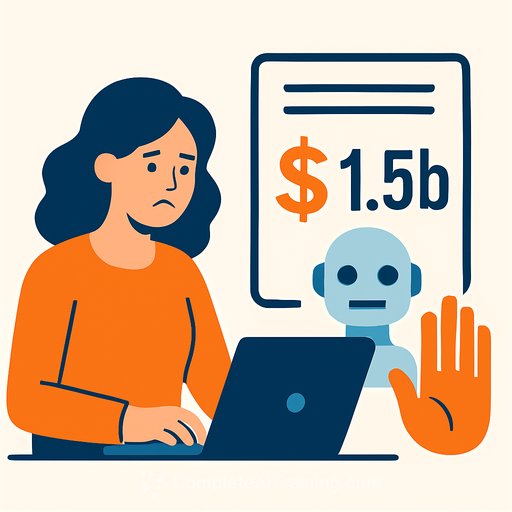
Anthropic's $1.5b settlement: a warning shot, not a fix
Anthropic AI has agreed to pay up to US$1.5 billion after claims it trained its models on millions of pirated books from Library Genesis and Pirate Library Mirror. Among the authors caught in the case is award-winning Kiwi writer Catherine Chidgey, who was told her books Remote Sympathy, The Wishchild, and The Transformation were accessed.
Authors included are being offered US$3000 per title. As Chidgey put it: "On the one hand I'm grateful they're being held to account... I imagine this will serve as a warning to others out there who are hoovering up intellectual property without asking."
She also called the payout small compared to the years poured into each book. A line in the sand-yes. Full accountability-no.
The catch that leaves many writers out
The Society of Authors says a huge number of writers won't see a cent because they're not registered for copyright in American territories. That detail matters for class actions and statutory damages in the U.S.
RNZ AI commentator Peter Griffin framed the settlement as punishment for sourcing from pirate sites, not a ruling against training on copyrighted works overall. His verdict: "a slap on the wrist with a wet bus ticket."
Are you eligible? Quick checks
- Did you receive an official notice email about the settlement? If yes, read it closely and follow the claim instructions.
- Confirm which titles were flagged. You'll likely need ISBNs, publication dates, and proof of authorship.
- If you're outside the U.S., check your U.S. copyright registration status. No registration often means no payout.
- If you work with a publisher, loop them in. They may already track registrations and can support documentation.
Protect your catalog now
- Register your books with the U.S. Copyright Office. It's the difference between "protected in theory" and "enforceable in practice" for U.S. cases. Start registration here.
- Set up a simple evidence folder per title: contracts, drafts, timestamped files, ISBNs, and screenshots of listings.
- Run periodic checks for your work on known pirate mirrors. If you find it, file takedowns under Section 512 (DMCA). DMCA basics.
- Add clauses in publishing and licensing deals that limit AI training use, redistribution, and dataset inclusion.
- Track opt-out and licensing programs offered by AI companies. Opt out if it aligns with your strategy; license if the terms make sense.
- If unsure, speak with your agent or an IP lawyer before deadlines pass.
What this signals for writers
This settlement sets a precedent on sourcing from pirate sites, not on consent-based training as a whole. Expect more legal action and more "licensed dataset" deals from AI firms.
Your move is simple: make registration and rights enforcement part of your publishing routine. The authors who prepare paperwork win options-payouts, takedowns, and leverage in negotiations.
Further reading
Your membership also unlocks: