Kodiak AI Expands Autonomous Trucking Operations Into Midwest
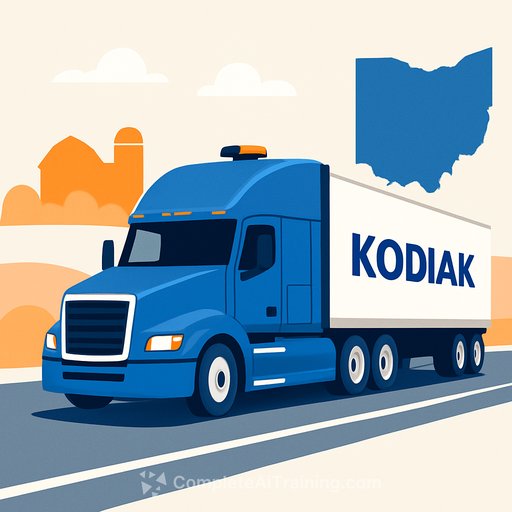
Kodiak AI completed an autonomous trucking demonstration program in Ohio, marking the company's first operational deployment outside the sunbelt. The program, conducted in partnership with DriveOhio and state transportation officials, tested Level 4 autonomous capabilities on Interstate 70, a major freight corridor connecting Ohio and Indiana.
The move signals a shift in where autonomous trucking technology can operate. Kodiak previously focused on highway environments in Texas and the southern United States. The Ohio program tested the system's ability to handle construction zones, highway merges, passing maneuvers, and unexpected pedestrian crossings.
What Operations Teams Need to Know
The demonstrations brought together transportation officials, policymakers, and industry stakeholders from both states. Kodiak held sessions at the Transportation Research Center in East Liberty, Ohio, and at the INDOT Traffic Management Center in Indianapolis to discuss safety protocols, commercial operations, and integrating autonomous vehicles into existing freight networks.
For operations managers evaluating autonomous trucking, the program addressed practical concerns: how driverless trucks interact with existing supply chain infrastructure, what safety protocols apply across state lines, and how to manage the transition in mixed human-driver and autonomous fleets.
Don Burnette, Kodiak's founder and CEO, said the program "highlights not only the maturity of our technology, but also its ability to operate safely and effectively beyond the sunbelt, in new environments that are critical to the U.S. supply chain."
The Broader Context
Kodiak claims it became the first company to deploy customer-owned and operated driverless trucks in commercial service in 2024. The company serves customers in long-haul trucking, industrial trucking, and defense sectors.
Interstate 70 carries significant freight traffic between the coasts. Success on this corridor could open deployment opportunities across the Midwest, where trucking demand remains high and driver shortages persist.
Operations professionals exploring autonomous vehicle integration should understand that deployment now extends beyond regional pilots. The Ohio program demonstrates that companies are moving toward multi-state operations with regulatory support from state departments of transportation.
For more context on how AI affects supply chain operations, see our AI Learning Path for Supply Chain Managers and resources on AI for Operations.
Your membership also unlocks: