AI that plans a full cosmetic product in 30 seconds: what Loud Labs means for product teams
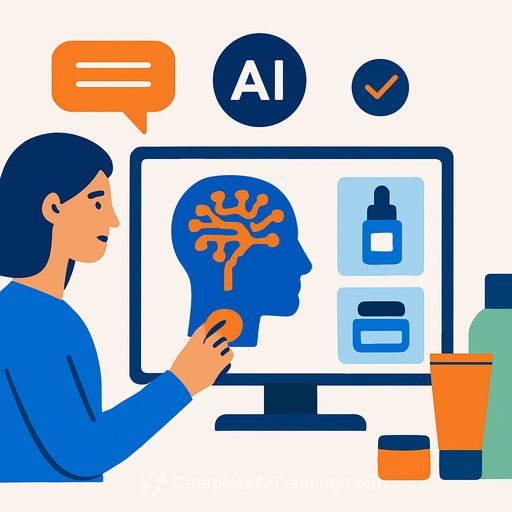
Kolmar Holdings just launched Loud Labs - an AI platform that compresses beauty product planning from 1-3 months to about 30 seconds. It builds a complete plan from a few keywords: concept, color range, formulation, and packaging. For product development leads, that means faster briefs, more tests per quarter, and less waiting on early-stage strategy work.
What it does
Loud Labs analyzes simple inputs (e.g., "glossy tint" in lip makeup) against digitized trend and R&D data from Kolmar Korea. It returns a refined concept (think "transparent, close-fitting, glow lip"), proposes on-trend color stories (cool pink, apple red, mauve lavender), recommends formulation directions, and suggests suitable container types. You leave with a production-ready planning proposal you can pass to an ODM like Kolmar Korea.
Who it's for
The platform targets individual founders and small-to-mid beauty brands that don't have dedicated planners. It lowers the cost and time to build a pipeline, especially for teams blocked by long ideation cycles, limited trend access, or expensive specialist resources. Larger teams get volume: more concepts screened, more A/B launches, fewer meetings to align on "what to build."
How it shortens the cycle
- Keyword in → concept out: Trend-mapped concepts from minimal prompts.
- Formulation options: Recommendations aligned with Kolmar Korea's R&D library and current formats.
- Color and pack: Curated palettes and packaging to complete the planning brief.
- Handoff: Collaborate with an ODM to move into sampling and validation.
Why this matters now
Beauty is under pressure to launch faster without missing trends. External reports point to slow, linear processes holding back growth and leaving real money on the table. If AI can collapse front-end planning to seconds, you can ship more targeted SKUs, cut dead-end concept work, and respond while a trend still converts.
Industry backdrop
Strategy firms have flagged year-long cycles as a drag on growth and agility, with unlaunched potential estimated in the tens of billions. We've also seen the cost of waiting play out publicly: delayed hero drops can blunt momentum when social buzz has already peaked. Speed isn't a nice-to-have anymore - it's survival.
What product leaders should test first
- Run a 2-week pilot: 20-30 prompts across 3 categories to gauge breadth and quality.
- Define guardrails: Ingredient blacklists, region-specific compliance, banned claims, budget caps.
- Score outputs: Fit-to-brief, feasibility, BOM cost, novelty, and brand alignment.
- Validate fast: Request lab samples for top 3 concepts; run quick stability and user sniff tests.
- Close the loop: Push results back into the prompt patterns that worked.
Integration questions to ask
- Data and IP: Does the model learn from your prompts or stay siloed? How are briefs and formulations protected?
- Export: Can you export BOMs, pack specs, and claims into your PLM/PIM? API access available?
- Localization: Region-specific compliance presets (EU, US, KR, GCC) and claims restrictions.
- Packaging library: Vendor-ready packs with MOQ, lead times, and deco options.
- Traceability: Versioning, audit logs, and decision history for regulatory and QA.
Risk checks before handoff
- Claims and compliance: Pre-screen for restricted ingredients and claims per market.
- Feasibility: Confirm raw material availability, MOQs, lead times, and cost targets.
- Safety: Run required toxicology and stability; verify preservative systems by region.
- Originality: Review for overlaps with your IP and the broader market to avoid me-too launches.
Speed-to-market math you can share with finance
- Planning time: 8-12 weeks → 30 seconds (brief) + sampling.
- Throughput: If you trial 3x more concepts per quarter and greenlight only top performers, you raise hit rate without raising headcount.
- Cost: Fewer external planning cycles and meetings, less dead work, tighter NPD budgets.
What's under the hood
Loud Labs is a new affiliate under Kolmar Holdings, operating as a second-tier subsidiary of Planet147, their brand incubation platform. Kolmar says the system is trained on years of internal product and trend data, and it has filed a domestic patent titled "Device, Method, and Program for Providing Cosmetics Trend Prediction Services," with overseas applications in progress. The company plans global availability next.
A quick scenario
Input: "glossy tint, transfer-resistant, K-beauty finish, Gen Z." The platform returns a concept, a color trio tailored to current cool/warm splits, a sensorial brief (lightweight slip, close-film shine), suggested pack (slim doe-foot), and a short list of formulation routes that fit trend data and likely costs. You pick one, send to an ODM, and move straight to sampling.
Bottom line for product teams
Use AI to front-load iteration, not to skip validation. Treat it as a planning accelerator that widens your option set and reduces waste. Keep regulatory, QA, and supply chain checks tight - speed pays only if the product survives claims review and ships on time.
Further reading
Build internal capability
If your team needs structured upskilling on AI for product work, see curated options by role here: AI courses by job.
Your membership also unlocks: