Krafton creates Chief AI Officer to push its AI First strategy from R&D to operations
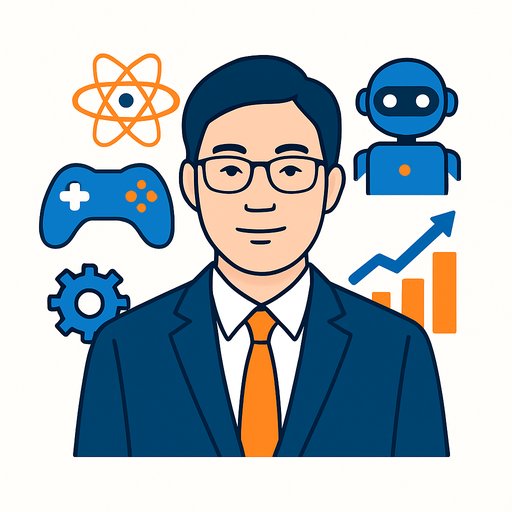
Krafton, the South Korean publisher behind PUBG, Subnautica, and Hi-Fi Rush, has introduced a new executive seat: Chief AI Officer. Kangwook Lee, who has led Krafton's AI program since 2022, steps into the role to oversee AI R&D and mid-to-long-term innovation.
The remit centers on three priorities: better in-game experiences, leaner operations, and new growth bets. It's a signal that AI is moving from tool-of-the-day to a managed portfolio with budget, governance, and measurable outcomes.
The CAIO mandate: three focus areas
- Gameplay improvement: Ship AI features that matter to players, including CPCs to deepen interactive content. Build shared AI capabilities that directly improve immersion and moment-to-moment experience.
- Operational efficiency: Cut repetitive technical work so teams can spend more time on creative planning and problem-solving. Apply AI to pipelines like content creation, QA, customer support, and live ops.
- New growth drivers: Extend beyond software into physical AI and robotics research, using the company's game-technology base as a springboard.
Capital and org moves behind the strategy
Krafton plans to invest around KRW 100 billion (about $69M USD) in a GPU-powered compute cluster to support multi-stage tasks that require reasoning and iterative planning. The company frames this as the backbone for faster progress on agentic AI.
Starting this year, Krafton will invest another KRW 30 billion (about $20M USD) annually to help employees use AI tools directly in their work. HR and organizational processes will also be reworked around AI, indicating top-down commitment to skills, incentives, and new ways of working.
Why this move matters for executive teams
- Clear ownership: A CAIO creates a single point of accountability across product, platform, safety, and compliance. It reduces scattered pilots and centers AI around roadmap impact.
- Shared platforms over point solutions: Central compute and common AI services prevent duplicated spend and speed up reuse across titles and teams.
- From features to agents: As agentic workflows mature, leaders will need evaluation frameworks that track quality, latency, and cost per task-not just model benchmarks.
- Risk and safety as a first-class concern: Data governance, red-teaming, and model risk management should be embedded in the CAIO's operating model.
- Workforce transformation: Role design, training, and incentives must reflect AI-augmented work. Expect new hybrid roles that blend game design, data science, and tooling.
What Krafton said
"Krafton uses AI as a tool to amplify human imagination and creativity, not replace it. Rooted in our core gaming business, Krafton will continue to explore future possibilities backed by AI innovation and data for long-term growth and player value," said CAIO Kangwook Lee.
Action steps for leaders
- Define the CAIO's decision rights, budget control, and interfaces with CTO, CPO, and CHRO. Clarify where product AI stops and platform AI starts. See AI for Executives & Strategy for governance patterns.
- Stand up an AI portfolio and PMO: intake, prioritization, model lifecycle, security reviews, and ROI tracking across studios and functions.
- Pick 3-5 high-yield workflows (e.g., art pipeline acceleration, automated QA, support triage, live-balance simulations) and measure time saved and defect rates.
- Set a reference architecture: data pipelines, eval harnesses, vector search, observability, and safety gates. For infrastructure planning and utilization targets, explore the AI Learning Path for CTOs.
- Compute strategy: model the buy vs. rent curve for GPUs, set utilization SLAs, and create a recharge model to allocate costs fairly to teams.
- Workforce and HR: baseline AI fluency, fund hands-on training, and embed AI goals in performance plans. The AI Learning Path for CHROs covers org design and skills transformation.
Metrics to watch
- Cycle time: prototype-to-playtest and playtest-to-production for AI features
- Share of repetitive tasks automated; hours returned to creative work
- Player impact: engagement, retention, and satisfaction deltas from AI-driven features vs. control
- Unit economics: compute cost per shipped feature and per agent task
- Safety and reliability: incident rate, rollback frequency, and compliance findings
Bottom line
The CAIO role, paired with real capital and HR changes, turns AI from scattered tools into a company-wide system. If you lead strategy or P&L, treat this as a blueprint: centralize platforms, push for measurable outcomes, and build the talent engine that keeps shipping.
Your membership also unlocks: