AI and Digital Transformation Move Up the Agenda in Kuwait's Anesthesia, ICU, and Pain Management
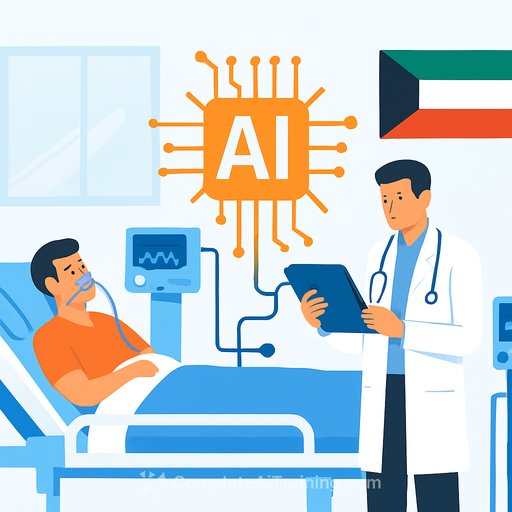
Kuwait's Minister of Health, Dr. Ahmad Al-Awadhi, set a clear tone at the 12th Anesthesia, Intensive Care, and Pain Management Conference: AI and digital tools now matter to everyday care. He pointed to clinical decision support, complication prediction, and safety in operating rooms and ICUs as immediate areas of impact.
He framed the conference as a place to exchange expertise, advance research, and develop national talent. The message was straightforward-patient safety and care quality depend on how well this specialty evolves with new methods and technology.
Dr. Al-Awadhi also emphasized sustained backing from the country's leadership for the health sector. The priority is investing in people through education, training, and building capabilities that last.
He highlighted how anesthesia, intensive care, and pain management intersect with nearly every specialty. That means staying current with science, working as one team, and making quality and safety a daily habit.
The Minister praised professionals in this field as a first line of defense for patient safety. He called on organizers, speakers, and participants to turn conference insights into practical steps that improve services.
What this means for healthcare leaders and clinical teams
- Target high-yield use cases first: Focus on perioperative risk stratification, EHR-integrated early warning scores, and ICU decision support for ventilation, sedation, and sepsis screening. Keep AI as an aid-not a replacement-for clinical judgment.
- Build safety into workflows: Pair checklists with data-driven monitoring, smart alarm strategies, and standardized handoffs from OR to ICU. Use analytics to track near-misses and adverse events so teams can act early.
- Make data reliable: Improve documentation quality, use structured fields where possible, and ensure systems can talk to each other. Good data is the price of admission for any digital tool.
- Invest in people: Upskill anesthesiologists, intensivists, pain specialists, nurses, and technicians in AI literacy and human factors. For research-oriented programs, see AI Research Courses. Simulation-based drills help teams test new tools without risking patient safety.
- Set guardrails: Establish governance for model selection, validation, and monitoring. Watch for bias, data drift, and alert fatigue, and be clear about accountability.
- Protect privacy and security: Strengthen access controls, audit trails, and vendor risk management. No tool is worth it if it puts patient data at risk.
- Measure what matters: Define a small set of outcome and process metrics-unplanned transfers, ICU length of stay, code events outside ICU, medication errors, and OR-to-ICU handoff defects. Pilot, review, and iterate.
- Work as a single unit: Bring anesthesia, ICU, surgery, nursing, IT, biomedical engineering, and quality together from day one. Shared goals prevent stalled projects and finger-pointing later.
For ethical and safe deployment, align with established guidance. The WHO's ethics and governance framework for AI in health and the Global Patient Safety Action Plan offer practical guardrails you can adapt locally.
If your teams are building AI literacy and implementation skills, consider structured training that bridges clinical, data, and operational work. A starting point: Complete AI Training - courses by job.
The takeaway is simple: pair proven clinical practice with validated digital tools, invest in people, and measure results. That's how anesthesia, ICU, and pain services get safer and more reliable-one implementation at a time.
Your membership also unlocks: