
AI news ·
Labor ministers split on copyright laws as AI companies push for data mining exemptions
AI companies urge Australia to weaken copyright laws for model training in exchange for $50 billion in datacentre investments. The plan angers creators and divides ministers.
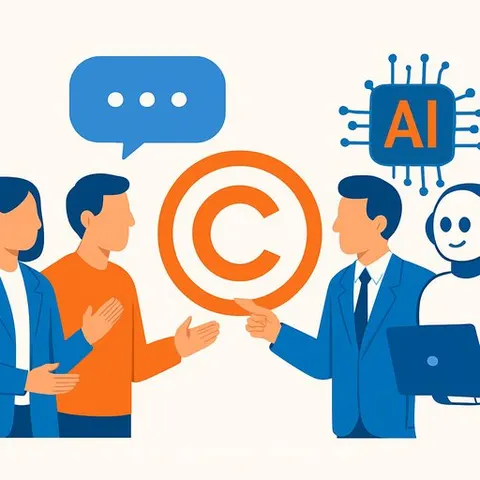
AI companies are pressing the Albanese government to weaken Australia's copyright laws, provoking fury from authors, artists, and musicians and exposing a rift inside the Labor Party. The push, which includes a proposal to grant a text and data mining exemption for training large language models, comes as the prime minister prepares to deliver a major speech on AI this week.
Author Anna Funder, speaking at Parliament House this month, described herself as a "victim of crime" to illustrate how tech firms have "hoovered up" her literary works. Her remarks underscored the stakes for creatives who depend on copyright to protect their livelihoods. Last year the government ruled out such an exemption, but sustained lobbying and a whistleblower tipoff to independent senator David Pocock have raised fears the position could shift.
Ministers divided over copyright reform
Senior Labor sources say ministers are split on how to proceed, delaying a resolution. Industry minister Tim Ayres and assistant minister for the digital economy Andrew Charlton are keen to attract AI investment, while attorney general Michelle Rowland and arts minister Tony Burke are determined to defend creators' rights. Prime Minister Anthony Albanese, asked last week if the safeguards were at risk, pointed to the news bargaining incentive as evidence of Labor's "strong track record" in compensating content producers.
"These are complex issues, we're working it through with the sector," Albanese said. "But my government, I think, has a strong record of supporting people; one, having control over things that they have created, and secondly, if things are being used, being paid for it, being properly compensated for it."
The 'ultimate dirty deal' allegation
In late June, Pocock's office was alerted to an industry proposal: a copyright carve-out in exchange for at least $50 billion in datacentre investment and contributions to a fund for creatives supposedly worth $350 million a year. Pocock called it the "ultimate dirty deal" and demanded Labor immediately rule it out. "To sell out Australian creatives would be a reckless act," he told the Senate. The government flatly rejected his claims as inaccurate and repeated it has no plans to weaken copyright laws.
Nevertheless, Guardian Australia understands the government has been told frontier AI companies view copyright laws as a "main barrier" to investment in training their models. Tech giants are prepared to invest elsewhere in a global arms race for datacentre capacity. Australia is seen as an attractive host because of its political stability, land, and renewable energy.
Datacentre ambitions and creative rights
Former industry minister Ed Husic, now on the backbench, argues the government has the leverage and should not bow to demands. "Keeping with the best traditions of late-night TV infomercials, we're being pressured by US tech that if we don't sign up to these datacentre deals now, we'll miss out on a huge opportunity," Husic said. "Impulse purchases are often regretted and our government should take a moment to remember we have negotiating leverage here and the ability to set the terms."
One Labor MP likened opposing datacentres to "nimbyism" and called for consistent national rules to secure benefits. Belinda Dennett, chief executive of Data Centres Australia, said "policy certainty" is critical. Polling from the Guardian Essential poll in May found 36% of voters see AI as carrying more risk than opportunity, while 41% view risk and opportunity as about equal.
Charlton, who is spearheading the government's AI plans, has positioned himself as a centrist. In a June speech he said Australia should not "blindly accept or reject" tech investment but should "actively set the terms on which that investment occurs, consistent with our values". For creatives, any terms that weaken copyright protections are unacceptable. Greens communications spokesperson Sarah Hanson-Young, who chairs a parliamentary inquiry into datacentres, said: "The government has said previously that they would not allow a text and data mining exemption. But anything that quacks like that, moves like that, would be a betrayal."
Why this matters for creatives
The debate goes to the heart of how writers, visual artists, musicians, and other creators earn a living. A copyright exemption would let AI companies scrape works without permission or payment, undercutting the market for original content. For writers, the threat is immediate: Anna Funder's testimony shows that even celebrated authors feel their work has been taken. Understanding the policy fight is essential for anyone whose income depends on intellectual property. Resources on AI for Creatives and AI for Writers can help professionals track how these changes may affect their rights and explore licensing models that ensure fair compensation.