Protect Creative Work from AI's Free Ride: What Labour Must Do - and What You Can Do Now
AI has soaked up huge investment. Much of its value rests on training with creative work it didn't commission, license, or pay for.
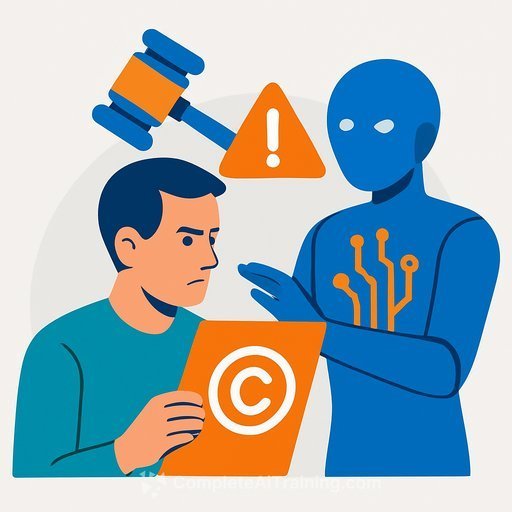
If your work trains a product, you deserve consent, credit, and cash. This isn't anti-tech - it's basic property rights and a functional market.
What policy should look like
- Opt-in for training: Make data use for model training permission-based by default. If opt-out is kept, require a single, standard signal (robots, HTTP header, ai.txt) that all major models must honor.
- Dataset transparency: Mandate public manifests of training sources and independent audits. No black-box scraping.
- Pay-to-train licensing: Enable collective licensing via collecting societies so independents and small studios get paid, not just the big catalogs.
- Attribution and provenance: Require Content Credentials on AI outputs and penalties for removing them. Support technical standards that prove who made what.
- Misuse and impersonation: Strengthen rules against deepfake ads, voice clones, and style-mimic products marketed as "by" a living artist.
- Liability with teeth: Platforms should be responsible for unlicensed training and repeat infringement. Safer harbors should require actual compliance with creator controls.
- Incentives that reward good actors: Tax relief or public contracts for companies that use licensed data and publish dataset manifests.
These steps protect jobs, keep quality high, and give ethical AI companies a level playing field.
Moves you can make now
- Post clear licenses: Spell out "no AI training, no dataset creation" in your site terms and contracts. Use robots rules or meta tags (e.g., "noai", "noimageai") to signal refusal at scale.
- Provenance by default: Add Content Credentials to your images, audio, and video so edits and origins are traceable. It won't stop scraping alone, but it helps with proof and platform enforcement.
- Watermark and monitor: Use visible and invisible watermarks, and set alerts for near-duplicates of your name, voice, or style in marketplaces and ad platforms.
- License on your terms: Offer paid, bounded licenses for reference use with limits (no model training, no dataset building, no embeddings). Price by time window and scope.
- Contract guardrails: Insert clauses that ban fine-tuning on your work, require disclosure of any AI use, and include a takedown "kill switch" for misuse.
- Collectively negotiate: Coordinate with peers or join a guild/collective to set floor rates for style references and commercial AI-assisted commissions.
- Diversify distribution: Build owned channels (newsletter, shop, patronage) so discovery isn't at the mercy of scraped platforms.
- Skill up - with ethics: Learn AI tools that save time without giving away your catalog. Focus on private workflows, local models, and tools that support provenance.
Business models that pay creators and keep AI useful
- Licensed datasets: Curated, consented, compensated sets for training and fine-tuning, with revenue share and audit rights.
- Style commissions, not style theft: Brands pay creators to collaborate on looks and voices - with credit baked in and outputs watermarked.
- Model access fees that flow back: A small percentage of model revenue goes to the licensed catalog that trained it, managed by a transparent registry.
Know your rights and the direction of travel
Rules are shifting. Creators should track guidance and push for clear consent-and-compensation norms.
Templates you can copy into your workflow
- Website notice: "No permission is granted to copy, mine, or process this work for AI training, dataset creation, embeddings, or related uses."
- Commission clause: "Client will not use or permit use of the Work to train, fine-tune, or improve AI models. Breach triggers immediate removal and a fee equal to 5x the contract value."
- Attribution: "Creator credit is required in any public use, including AI-assisted edits."
If you lead a studio or agency
- Policy: Publish an internal AI policy covering tool approval, data handling, and client disclosures.
- Vendor standards: Only work with vendors that provide dataset manifests, provenance support, and a license path for training.
- Training: Teach your team prompt hygiene, reference ethics, and contract updates. Keep a shared clause bank.
Where to upskill (without giving away your IP)
Want structured ways to add AI to your process while protecting your catalog? Explore job-specific learning paths and tool reviews built for working creatives.
- AI courses by job - creative tracks
- Generative Art - curated resources and training focused on AI-generated visuals and ethical practices.
- AI Learning Path for Training & Development Managers - a structured upskilling path for managers overseeing AI-related training and policy implementation.
Bottom line: AI can be a great assistant, but it doesn't get a free pass to take your work. Consent, clarity, and compensation - lock those in, and the whole market gets better.
Your membership also unlocks: