
AI news ·
Law firms risk hollowing out talent pipeline in rush to adopt AI, report warns
A 2026 green paper warns automating routine legal tasks could hollow out talent pipelines. Professional indemnity insurers now require explicit AI governance for renewals.
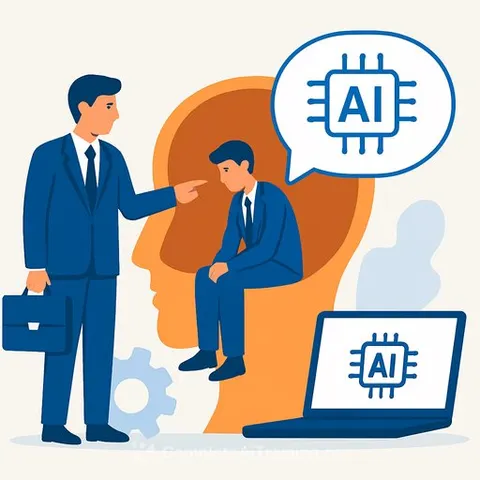
In the past twelve months, the legal profession's relationship with AI has lurched from cautious adoption to structural reckoning. By May 2025, firms were still benchmarking baseline GenAI implementation. By September, corporate clients had begun hardening their efficiency expectations. Then came January 2026, when the Broken Ladder green paper issued a blunt warning: "by automating the routine 'grunt work' tasks of the profession, we risked hollowing out the talent pipeline." Law firms are now walking a tightrope with real economic stakes - and the balancing act is only getting harder.
GenAI is firmly embedded across the profession today. Yet firms remain in the earliest stages of this transition. The challenge ahead is not purely technological. It is cultural and economic. Firms face intense pressure from corporate clients to deliver AI-driven efficiency, reduced costs, and uncompromised quality - all while maintaining billable output. That internal friction is stretching cognitive bandwidth thin. The firms that look past short-term gains and align their structures correctly will hold the advantage.
The threat of the NewMods
External pressure is mounting from an unexpected direction. A new class of competitor - dubbed the 'NewMods' - operates as AI-first, full-stack firms without the overhead of traditional human pyramids. They bypass the billable hour entirely, offering transparent fixed-fee structures instead.
Traditional firms often comfort themselves with the belief that bespoke strategic value insulates them from such competitors. That may hold for complex cases and bet-the-company litigation. For less complex, highly systematic, high-volume work, the NewMods are moving aggressively - and they have serious investment backing them. Ignoring the threat would be a mistake.
The age of the autonomous agent
If Generative AI makes lawyers faster at drafting, Agentic AI aims to remove the human from the doing of the work altogether. The industry is shifting from reactive chatbots to autonomous digital workers capable of managing end-to-end legal workflows. This shift is explored in depth across emerging AI Agents & Automation Courses that address how professionals can prepare for autonomous systems in legal and compliance settings.
This raises hard questions. Will firms outsource much - or most - of their matters to digital agents? If transaction costs for legal services plummet, a classic Jevons Paradox may kick in: demand volume skyrockets, creating an entirely new ecosystem of machine-to-machine commerce and compliance. As for where the human remains in the loop, beyond ultra-complex matters requiring strategic empathy, the answer may be simpler than it seems. "We will always need a human in the loop because we need someone to blame - and ultimately sue - should things go wrong." Professional indemnity insurers are already hardening their requirements, demanding explicit AI governance and affirmative cover frameworks before granting renewals. The liability stops with a qualified human professional.
Making the case internally
Most readers of this publication already see the long-term benefits of AI-powered automation. But many face subtle resistance from colleagues - budget inertia, or outright denial from those who view AI as a passing IT upgrade rather than a fundamental restructuring of the business.
Leadership must frame AI strategy around human preservation and structural resilience, not just procurement. Training models need to shift from content creation to what can be called the apprenticeship of oversight - teaching junior lawyers to audit adversarially, to test and challenge autonomous systems. For teams building these capabilities, AI for Legal Professionals Courses offer practical grounding in contract analysis, legal automation, and governance frameworks.
The latest report, 'AI, Human Capital and the Future of Professional Services', provides data and a framework for building this business case. It offers a blunt appraisal of the market and maps out how to bridge the volatility gap between technological advancement and institutional longevity.
Why this matters for legal professionals
The pressure to adopt AI is no longer coming from IT departments or innovation teams. It is coming from clients who expect faster, cheaper work. Meanwhile, the pipeline for developing junior lawyers is under direct threat from automation of the very tasks that once trained them. The firms that survive this transition will be those that redesign how they develop talent - not just how they deploy technology. If your firm's training model still assumes juniors learn primarily through document review and routine drafting, that model is already obsolete. The insurance market's hardening stance on AI governance means personal liability for decisions made with autonomous tools will land on individual practitioners. Getting the governance right now is not optional.