The AI Copyright Fight Just Got Real: A 2026 Briefing For Working Writers
2025 flooded the internet with AI-made content. It also lit a fuse under copyright law. Lawsuits, licensing deals, and new rules are reshaping how your work is used, paid for, and protected.
Here's what matters, what's changing, and what to do this week to protect your catalog and keep your income growing.
The lawsuits setting the tone
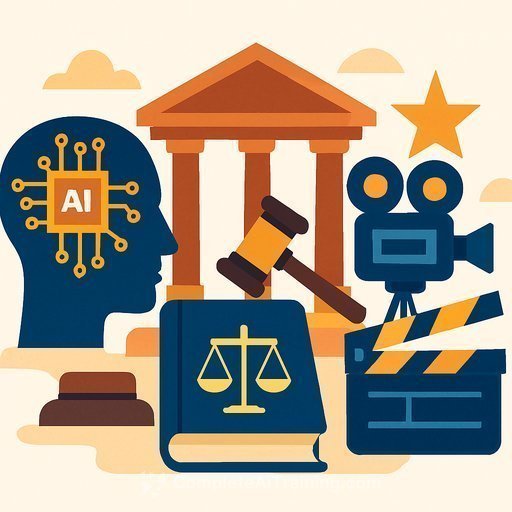
On Dec. 22, Pulitzer Prize-winning author John Carreyrou and other writers sued six AI companies - OpenAI, Google, Meta, xAI, Anthropic, and Perplexity - for training on their work without permission. The claims mirror actions by major record labels and Hollywood studios accusing tech firms of large-scale infringement tied to both training and outputs.
The common thread: did AI firms use protected works without authorization, and are AI outputs competing with or replacing the originals?
Two fronts: U.S./Europe vs. China
In the U.S. and Europe, the fight centers on unauthorized training and market substitution. In China, the focus is governance - labeling and tracing synthetic media across social, commercial, and news platforms where fake and real blend too easily.
China is also dealing with a flood of low-quality or misleading "slop." Watermarking rules exist but enforcement and tracing remain hard. One state TV documentary reportedly used obviously synthetic video, and platforms like Zhihu say their AI-detection tools can top 90% accuracy.
Litigate and license: the media playbook
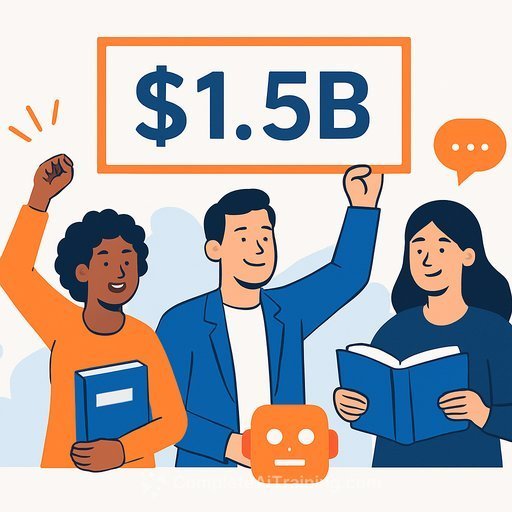
Big media is suing and partnering at the same time. Disney announced a $1 billion investment in OpenAI and a license for its video model Sora, enabling user-generated content featuring 200+ Disney characters - while still accusing other firms, including Google, of massive infringement.
Music follows the same script. Universal Music Group settled with AI music startup Udio via partnership after infringement accusations. Rival Suno raised $250 million at a $2.4 billion valuation, showing investor appetite despite legal fire.
Training data: the unresolved question
Core issue: the legality of web-scraped training sets. Lawsuits allege companies such as Midjourney and MiniMax used copyrighted materials. MiniMax's IPO filing warned penalties could exceed twice its 2024 revenue and admitted some data may lack proper authorization.
Rules are splintering. The EU is investigating Google's training practices. Japan is described as enforcing strict opt-in rules for copyrighted data. China takes a looser approach to training inputs but is strict about outputs.
Who owns AI-generated work?
Courts in China have issued mixed rulings: some accept AI-assisted works as copyrightable if there's meaningful human input, others reject them for lack of originality and human control. In the U.S., the Copyright Office says fully AI-generated works aren't copyrightable unless a human's contributions meet authorship standards.
If you publish with AI in the loop, document your edits and decisions. That paper trail can be the difference between protection and "no rights." For policy details, see the U.S. Copyright Office's AI resource page: copyright.gov/ai.
What this means for writers
Your work is training data, product, and leverage - all at once. AI can flood feeds with imitations while giving you tools to move faster. The gap widens between generic content and distinctive voice, reporting, and insight people will pay for.
The winners will defend their catalogs, negotiate smarter deals, and build audience assets that AI can't undercut.
Practical steps to protect your catalog and grow your income
- Register your core works. File with your local copyright office and keep time-stamped drafts. This strengthens takedowns, claims, and negotiations.
- Signal your rights. Use robots.txt, meta tags (e.g., "noai"), and platform settings where available. Not perfect, but it sets intent and helps future claims.
- Add provenance tech. Use Content Credentials (C2PA) and watermarks on images and PDFs. Learn more via the Content Authenticity Initiative: contentauthenticity.org.
- License on your terms. Define rates for dataset inclusion, fine-tuning, and output reuse. Demand usage reporting, audit rights, and clear indemnities.
- Update contracts. Add clauses that forbid training on your work without consent, require disclosure of synthetic use, and outline takedowns and penalties.
- Document human authorship. If you use AI, keep edit logs, prompts, and drafts. Ensure your contribution shows creative judgment, not just acceptance.
- Monitor and enforce. Set alerts for your name, signature phrases, and unique passages. Use platform takedowns and consider collective action with peers.
- Build AI-resilient offers. Premium newsletters, niche analysis, reported scoops, workshops, and community access are harder to imitate and easier to monetize.
- Experiment ethically. Use AI for research, outlines, style checks, and translation. Disclose where it helps reader trust.
- Upskill fast. Get practical workflows and tool stacks built for writers: AI Learning Path for Research Associates and Research.
Signals to watch next
Early rulings on fair use for training and on whether output "style" can infringe. Collective licensing frameworks for datasets. Platform-level content credentials becoming default. New investigations by regulators. Big, public partnerships between media companies and AI labs.
Play both offense and defense. Protect the catalog you have. Build the audience and offers that make your work hard to replace. Use the tools - and set your terms.
Your membership also unlocks: