Ling Haibin, creator of the first mobile plant ID app, leaves US for Westlake University
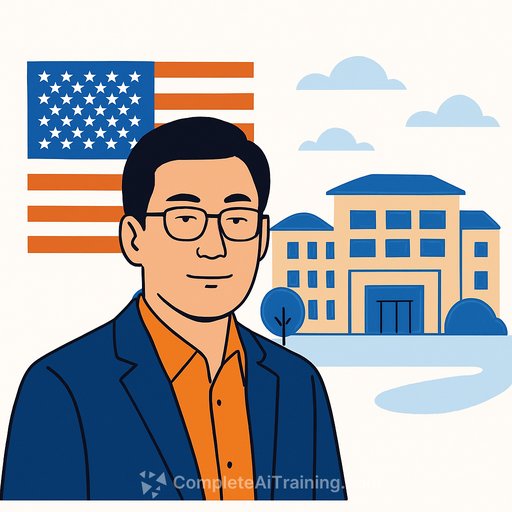
Ling Haibin-the computer vision pioneer behind the first mobile plant identification app-has moved from the United States to join Westlake University in Hangzhou as a full-time chair professor in the Department of Artificial Intelligence.
For related resources, see Research.
His PhD research on recognizing leaf shapes helped spawn LeafSnap, an app that teaches users about plant diversity, care, disease diagnosis, and collection tracking. Ling previously served as an Empire Innovation Professor at Stony Brook University and is an IEEE Fellow.
"Traditional AI fields have become highly mature, and genuine breakthroughs require fresh exploration," Ling said. He will lead Westlake's Intelligent Computing and Application Lab, according to a December 29 announcement.
Why this matters for science and research leaders
- A senior researcher is prioritizing exploratory work over incremental gains-an indicator of where ambitious labs may compete next.
- LeafSnap shows how a focused academic question (leaf shape recognition) can turn into a widely used tool. Sharply defined problems still win.
- Expect close attention to data quality, on-device inference, and cross-domain collaboration where computer vision meets biology and the physical world.
What to watch from the new lab
- Public datasets and benchmarks grounded in field conditions, not just clean lab settings.
- Efficient models that run locally for privacy and latency, especially for mobile and edge use cases.
- Partnerships that blend AI with ecology, agriculture, and health-areas where visual signals are rich but noisy.
- Transparent recruiting, open-source releases, and reproducible pipelines that other labs can build on.
Practical moves for your team
- Dedicate 10-20% of bandwidth to high-variance ideas. Time-box, document, and share negative results to speed learning.
- Collect small, high-signal datasets that mirror real deployment. Measure field performance early, then iterate.
- Prototype on-device models where data sensitivity or connectivity matters. Optimize for inference cost and update cadence.
- Build cross-disciplinary loops-botany, ecology, materials science-when perception meets matter.
Quick background
- Ling is widely recognized in computer vision and AI, with prior tenure as an Empire Innovation Professor at Stony Brook University and election as an IEEE Fellow.
- His early research on leaf shape recognition led to LeafSnap, which helps users learn species, care for plants, diagnose issues, and track collections.
If you're aligning skill paths for research teams, you can scan role-based learning tracks here: Complete AI Training: Courses by Job.
Your membership also unlocks: