The Future of Legal AI Is Collaboration
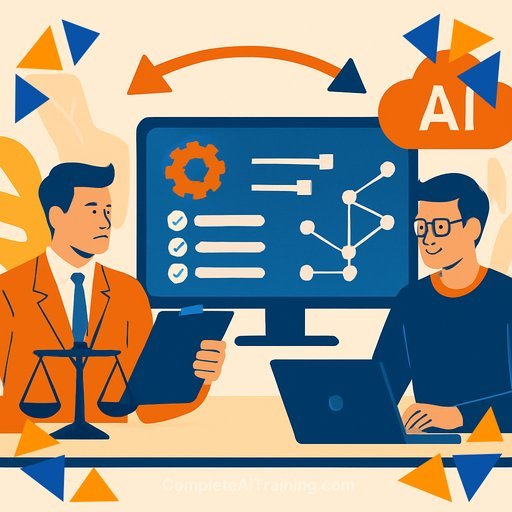
Harvey's co-founders, Winston Weinberg and Gabe Pereyra, see the next phase of legal AI as multiplayer: law firms and clients working inside shared AI systems to move matters faster, safer, and with more predictability.
This isn't just another tool in Word. It's a shift in how legal work gets done together-inside firm walls and across them.
Key takeaways
- Collaboration between firms and clients will define legal AI's next stage.
- In-house teams are ~12 months behind firms in GenAI adoption, but catching up fast.
- Real value comes from "external" collaboration: firm + client in the same guarded workspace.
- Knowledge sharing will become a core differentiator for firms, not a risk to be avoided.
- Reusable workflows will evolve into client-specific "matter OS" environments.
- Expect more fixed-fee and hybrid pricing as work becomes more measurable.
- AI expands what juniors can do and increases the premium on top partner judgment.
- The talent model shifts from "foot soldiers" to "special forces."
Why collaboration is next
Big providers are releasing features for shared AI use inside enterprises. The legal twist: matters cross organizational boundaries. That means permissions, ethical walls, confidentiality, and privilege need to work across firm and client, not just internally.
Harvey's customers are asking for exactly this: one place where firm teams, client teams, and AI agents work together without leaking data or exposing privileged reasoning.
Meanwhile, in-house adoption is accelerating. Many legal departments are where firms were last year: moving from "should we?" to "how do we?" As buyers catch up, they want their panel firms to bring the playbooks, the workflows, and the implementation muscle.
What "multiplayer" looks like in practice
- Shared workspaces per matter with tight role-based access and ethical walls.
- Teams of agents assisting deal teams or litigation teams, not just single prompts.
- Reusable workflows that mirror real processes: intake, diligence, drafting, review, QA, reporting.
- Benchmarks to measure AI work vs. human work so you can price, staff, and improve.
Think of it as a "matter OS": a structured environment where people and agents operate against the same documents, playbooks, and metrics-then selectively share the right slices with the client.
Knowledge sharing without losing the moat
Clients already "train" their firms over years of matters. AI makes that know-how easier to capture and safer to reuse-if you separate client-specific knowledge from firm expertise.
Two practical moves help:
- Contract for data rights in engagement letters and panel terms. Spell out what can be reused as firm know-how vs. what stays client-only.
- Build client-specific models/playbooks that live in that client's workspace, while firm-wide market knowledge (e.g., PE deal terms) lives in a separate, pooled layer.
From workflows to a full matter
Workflows stack. An NDA playbook becomes a contracting stream. A suite of M&A workflows becomes a PE M&A program. Then you tailor it for a specific client. Same idea for litigation, especially high-volume patterns (insurers, banks, mass torts): repeatable steps, tight QA, faster cycles.
Billing: more measurable work, more premium judgment
Not everything goes to fixed fees. But expect more hybrid pricing as units of work become clearer. Redactions, summaries, and checks can be benchmarked and packaged. The scarce piece-novel structuring, strategy, negotiation-carries more weight and higher rates.
Translation: AI trims the routine, elevates the craft, and widens the spread between commodity hours and elite judgment.
Talent: fewer "foot soldiers," more "special forces"
AI lets juniors do more, earlier. That accelerates training and shifts the goal of the firm: produce more partners, faster. The model looks less like a pyramid and more like a team of high-autonomy operators with leverage from agents and workflows.
What leading firms should do now
- Stand up secure, shared matter workspaces with client access, permissioning, and audit trails.
- Turn your best processes into reusable workflows (by practice, then by client).
- Split knowledge into three layers: market intel (pooled), firm playbooks (guarded), client-specific assets (isolated).
- Add data rights language to panel and engagement terms to reflect those layers.
- Measure everything: cycle times, accuracy, variance, and agent vs. human contribution.
- Offer implementation packages to clients: discovery, pilot, rollout, training, and change support.
What in-house teams should do next
- Map priority use cases (e.g., NDAs, vendor contracts, litigation holds) and pick one to pilot with a panel firm.
- Co-design a shared workflow. Decide who does what, what gets shared, and how you'll measure success.
- Set data boundaries up front: what lives in your workspace, what the firm can retain as expertise.
- Ask for benchmarks and pricing options based on the workflow, not just hours.
Helpful resources
- Microsoft Copilot for Microsoft 365 (enterprise collaboration features)
- OpenAI Enterprise (governance, security, and sharing controls)
Upskill your team
If you're building shared workflows with panel firms or rolling out AI to legal ops, structured training helps. Explore role-based programs here: AI courses by job.
Bottom line
The firms that win will productize their expertise, share it safely with clients, and run matters in collaborative AI workspaces. That's where speed, quality, and trust compound.
Your membership also unlocks: