Legal Frontiers in Mining and AI
June 11, 2025 | Technology Bulletin | 8 minute read
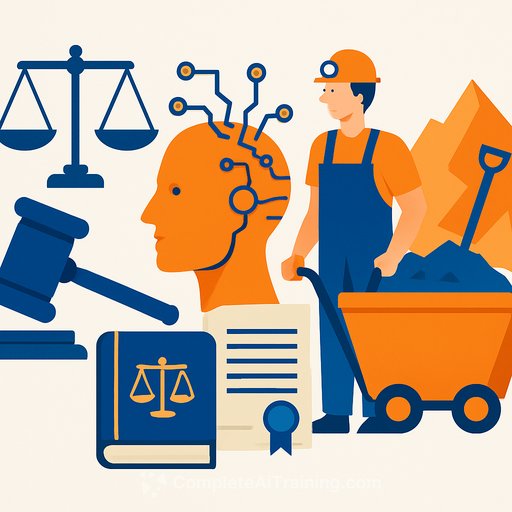
Artificial intelligence (AI) is making significant inroads into the mining sector. Recognized as a top trend by Deloitte in mining and metals, AI is transforming how mining companies explore, operate, and comply with environmental standards. This article outlines current AI applications in mining and highlights essential legal considerations for those working with or advising in this space.
Current Uses of AI in Mining
Exploration and Economic Analyses
AI, especially deep learning, is increasingly used to analyze geoscience data collected during mineral exploration. This includes geological, geophysical, mapping, and mineralogical datasets. AI models can produce complex predictions about mineral deposits and assess the economic feasibility of extraction projects. They also assist in optimizing mine-site designs to enhance profitability.
Access to high-quality, publicly available geoscience data is critical. In Canada, the Critical Minerals Geoscience and Data Initiative (CMGD) funds projects to improve data accessibility and quality, supporting AI-driven exploration and planning efforts.
Operations and Safety
AI improves collision-avoidance systems by distinguishing between routine and hazardous proximity, reducing false alarms on mine sites. Autonomous haulage trucks powered by AI reduce human error and boost operational efficiency. Additionally, AI integrated with sensor networks monitors atmospheric conditions to identify safety risks, helping limit worker exposure to hazardous environments.
Environmental Compliance
AI supports environmental monitoring through computer vision systems that detect incidents in real time and track biodiversity metrics, lowering costs for compliance. AI-assisted analytics optimize resource use, reduce waste, monitor greenhouse gas emissions, and improve water conservation during mineral processing. Overall, AI’s ability to analyze vast datasets efficiently helps minimize environmental risks and project costs.
Legal Considerations for AI Use in Mining
Data, Confidentiality, and Privacy
Mining often involves confidential data exchanges. When AI tools process this data, strong confidentiality agreements and cybersecurity diligence are essential to prevent breaches. Data breaches can lead to significant financial and legal consequences, especially if personal information of employees is involved, triggering privacy law obligations.
AI systems may generate derived data, raising questions about ownership and usage rights. It is critical to define these rights clearly before deploying AI tools.
Liability for Safety, Quality, and Accuracy
AI is not infallible. Errors from autonomous systems that cause harm to people, equipment, or the environment raise liability issues. Manufacturers, providers, and users of AI tools should incorporate liability waivers and consider “human-in-the-loop” oversight models to mitigate risks.
Vendors should limit warranties related to AI output accuracy, while mining companies should negotiate protections and remedies against damages caused by AI tools.
AI Legislation and the Voluntary Code
Canada currently lacks specific AI regulations. The proposed Artificial Intelligence and Data Act (AIDA) aimed to regulate AI risks but was not enacted due to parliamentary prorogation. The government might reintroduce similar legislation following the 2025 federal election.
Meanwhile, the Voluntary Code of Conduct on Responsible Development and Management of Advanced Generative AI Systems, introduced by Innovation, Science and Economic Development Canada in 2023, encourages ethical AI use. With 46 signatories as of June 2025, mining sector AI developers may want to join this initiative to signal commitment to responsible AI.
Public Company Disclosure Requirements in Mining
The Canadian Securities Administrators (CSA) issued Staff Notice 11-348 on December 5, 2024, outlining disclosure expectations for public companies using AI. Companies must:
- Define “artificial intelligence” and disclose whether AI use is material or expected to be material, including whether AI is developed internally or sourced externally;
- Disclose material risks related to AI use and mitigation measures;
- Explain the impact of AI on business, operations, and financial position;
- Disclose assumptions behind forward-looking statements involving AI.
Mining companies should carefully evaluate third-party AI systems integrated into operations, especially those affecting resource estimation, environmental monitoring, or key decisions, to ensure appropriate disclosure.
Disclosure for Mineral Projects
Beyond general disclosure, mining companies must comply with National Instrument 43-101 standards and technical reporting requirements. Although regulators have not yet issued specific guidance on AI’s role in these disclosures, companies should consider voluntary transparency around AI use in resource modeling and project evaluation to maintain investor confidence.
Conclusion
AI will play an expanding role in mining, accompanied by increasing legal and regulatory scrutiny. Mining companies and AI vendors must stay informed about emerging rules across data privacy, liability, and securities law. Legal professionals advising in this sector should prepare to support clients in managing these challenges effectively.
For those seeking to deepen their understanding of AI applications and legal issues, exploring specialized AI training programs can provide valuable insights and practical skills. Visit Complete AI Training for resources tailored to various professional needs.
Your membership also unlocks: