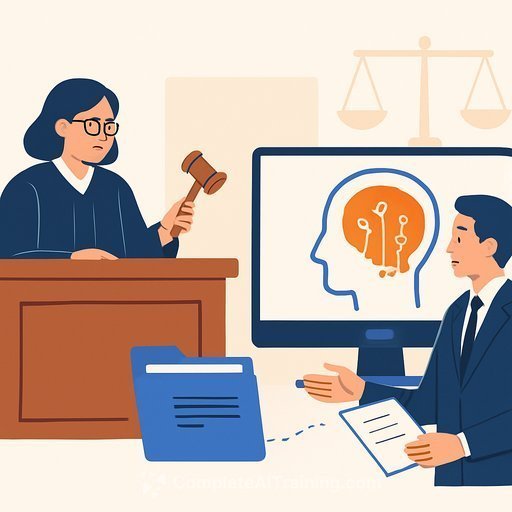
AI in Legal Workflows Raises a Hard Question: Who Owns the Risk?
If an AI system mishandles privileged information, introduces bias, exposes regulated data, or compromises evidentiary integrity, the legal team and the organization still bear the consequence. For general counsel, managing partners, CIOs, and directors of legal operations, AI adoption is now a governance, compliance, and risk ownership issue.
The liability gap
Legal departments are adopting AI tools to accelerate document review, contract analysis, and legal research. The efficiency gains are real. But the systems that deliver those gains don't carry insurance, and they can't be sued.
When an AI system fails, responsibility defaults to the humans who deployed it. A missed privilege waiver. A biased recommendation that influences case strategy. A data breach involving client information. The organization answers for all of it.
Where accountability sits
General counsel must own the decision to deploy AI. That means understanding what the system does, how it was trained, and what it can't do. It means setting guardrails before the tool touches sensitive work.
Managing partners need to know which workflows have been automated and which safeguards are in place. CIOs should establish audit trails and access controls. Directors of legal operations must verify that AI outputs are reviewed by qualified staff before they enter the record.
None of this is optional. Regulators, opposing counsel, and courts will ask who signed off on using the system and why.
The compliance angle
AI in legal work intersects with attorney-client privilege, work product doctrine, data protection rules, and evidence standards. A single mistake can compromise a case or violate client confidentiality.
Organizations that treat AI adoption as a technical upgrade rather than a legal and compliance decision are exposed. The tool itself is neutral. The governance around it is not.
What to do now
Start by auditing your current AI use. If AI is already in your workflows, document it. Understand the training data, the vendor's liability terms, and your own obligations under applicable rules of professional conduct.
Build a policy that covers which tasks AI can handle, what human review is required, and how you'll monitor for bias or error. Assign clear ownership for each decision.
Train your team on the tools they're using. Paralegals and junior associates need to know when to trust AI output and when to verify it manually. Learn more about AI tools for legal support professionals and how to integrate them responsibly.
For broader context on AI adoption in legal practice, explore AI for Legal resources that address governance and risk management.
The risk is yours. The decision to manage it is yours too.
Your membership also unlocks: