
AI news ·
Lehigh professor receives NSF grant to build AI system that teaches students self-regulated learning skills
An NSF grant is funding Meta-Partner, an AI system that teaches students to set goals and reflect on their work-not just use AI passively. Lehigh professor Juan Zheng designed it for K-12 and college classrooms.
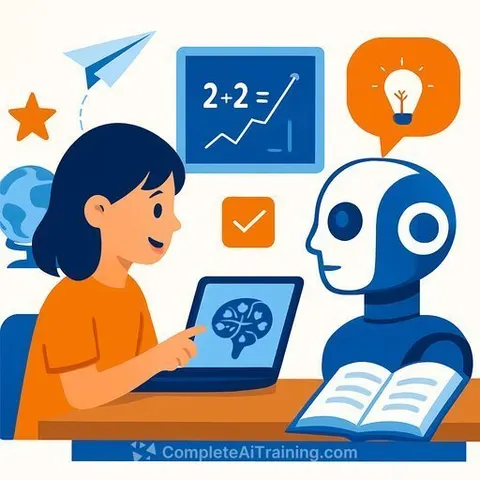
NSF-Funded Project Teaches Students to Use AI Strategically, Not Just Passively
Juan Zheng, an assistant professor in the College of Education's teaching, learning and technology program, received a National Science Foundation grant to develop Meta-Partner, a hybrid intelligence system that teaches students to use AI thoughtfully while building self-regulated learning skills.
The platform pairs human judgment with an AI agent that guides students through problem-solving. Students tackle real-world challenges that require both AI knowledge and subject expertise-such as using machine learning to classify endangered species-while the system helps them set goals, adjust strategies, and reflect on their work.
How It Works
Meta-Partner suggests learning goals that students can modify based on their knowledge. If a student hits a wall, the AI agent recommends new approaches. Once the task is complete, the system prompts deeper reflection on what was learned.
Zheng collaborates with colleagues and students at Lehigh to build the system for classroom use. The goal is implementation in K-12 and higher education settings.
The Broader Goal
Zheng frames this as a literacy issue. "We as learners, as users, have to make ourselves ready for AI," she said. "Even with technology, you need self-regulated learning to be successful in all subjects."
Self-regulated learning-the ability to set goals, monitor progress, and adjust course-matters across careers. Zheng sees it as a skill students will rely on long after they leave the classroom.
For educators interested in AI integration, the AI Learning Path for Teachers covers classroom tools and lesson design strategies. The AI for Education resource also explores how institutions are implementing AI-assisted learning systems.