Leidos Deepens AI Governance In U.S. Defense And Intelligence Systems
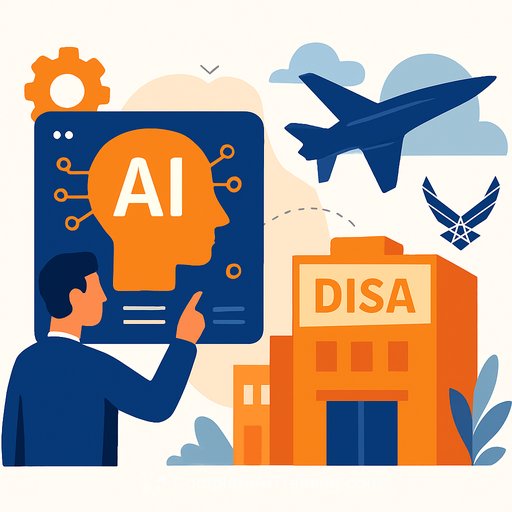
Leidos is pushing deeper into AI governance across federal missions. The company partnered with Trustible to automate AI-governance workflows, shrinking review cycles from weeks to hours. It also won a US$142 million DISA award to modernize secure IT operations with AI-driven tooling and Zero Trust alignment, while integrating RegScale for automated risk management with the U.S. Air Force.
For government teams, this clusters around a clear theme: bake governance, security, and compliance into everyday operations. Pair automated AI policy checks with continuous controls monitoring and you get fewer manual bottlenecks, tighter oversight, and faster delivery on mission software.
Why This Matters For Government Programs
- Faster, auditable AI reviews: Trustible's workflows can codify policy checks, document decisions, and create repeatable review paths. That means quicker go/no-go calls for models and features without skipping risk gates.
- Zero Trust by default: The DISA work signals deeper enforcement of identity, segmentation, and least privilege aligned to federal guidance such as NIST's Zero Trust architecture (SP 800-207).
- Continuous compliance: RegScale's automation supports ongoing evidence, control health, and change tracking-helpful for RMF packages and high-impact systems where drift is costly.
- Fewer manual tasks: Automating governance and risk lowers the administrative load on program offices and security teams, freeing time for real mission work.
Where It Fits In Leidos' Strategy
This isn't a one-off headline. Leidos is concentrating effort where compliance is non-negotiable and budgets are multi-year: defense IT, cybersecurity, and AI-enabled services. The stack spans policy-aware AI adoption (Trustible) through day-to-day risk monitoring (RegScale) and Zero Trust implementation on sensitive applications.
It also sets up a sharper posture against Booz Allen, CACI, and SAIC. Differentiation will come down to how much manual oversight Leidos can remove for agencies without losing transparency or control.
Policy Context
Federal AI governance is moving from slide decks to standard operating procedures. Agencies are being asked to show traceability, testing, and documented risk decisions across the AI lifecycle. Frameworks like the NIST AI Risk Management Framework (AI RMF) are fast becoming the common language across CIO, CISO, mission, and acquisition teams.
Operational Upside
- Speed with control: Compressing model reviews from weeks to hours keeps schedules intact while maintaining oversight.
- Cleaner ATO paths: Continuous evidence generation and control monitoring can reduce rework during assessment and authorization.
- Stickier platforms: If users rely on governance tooling in daily workflows, it tends to anchor follow-on task orders and expansions.
Risks To Keep On Your Radar
- Procurement and policy timing: Exposure to delays, evolving security standards, or shifts in federal AI policy can slow rollouts.
- Partner and integration risk: Dependence on external platforms (Trustible, RegScale) requires tight roadmap alignment with agency needs.
- Concentration risk: Greater focus on AI and cyber-heavy work deepens reliance on federal funding priorities.
What To Watch Next
- Adoption speed: Movement from pilot to enterprise deployment at DISA and the Air Force. Look for agency-wide references or standardization language.
- Task order velocity: New task orders, option exercises, and ceiling increases tied to AI-governance and Zero Trust deliverables.
- Competitive signals: How peers frame their own AI-governance and Zero Trust offerings in recompetes and new bids.
- Long-term fit: Mentions of these wins in relation to Leidos' NorthStar 2030 goals to gauge durability in the portfolio.
Practical Steps For Program And Security Leaders
- Ask vendors to map model lifecycle controls to the NIST AI RMF and your agency's AI policy, and show how evidence is generated automatically.
- Set clear metrics: review cycle time, percentage of controls monitored continuously, number of models with documented lineage and testing artifacts.
- Require Zero Trust alignment (per NIST SP 800-207) with measurable outcomes: identity enforcement coverage, microsegmentation scope, and privileged access reductions.
- Pilot automated compliance on one high-impact system, prove the time savings, then scale across portfolios.
- If you're upskilling your team on AI governance and automation practices, consider curated learning paths such as AI Learning Path for CIOs and AI Learning Path for Regulatory Affairs Specialists.
Bottom Line
Leidos is building a practical stack for agencies: AI governance that moves fast, Zero Trust that enforces policy, and compliance that updates itself. If adoption is broad and outcomes hold, expect follow-on work and deeper platform lock-in. If policies shift or integrations lag, timelines will stretch. Keep your eye on deployment scale, task order volume, and whether agencies start naming these tools as standards in their acquisition language.
Note: This is general commentary for government professionals and should not be taken as investment advice.
Your membership also unlocks: