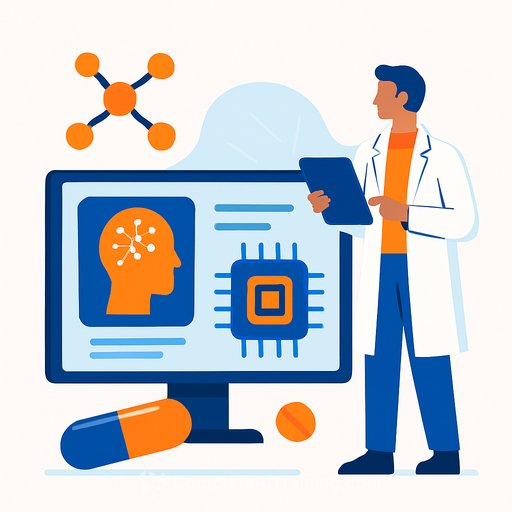
What R&D Leaders Can Learn from AI-Driven Drug Discovery
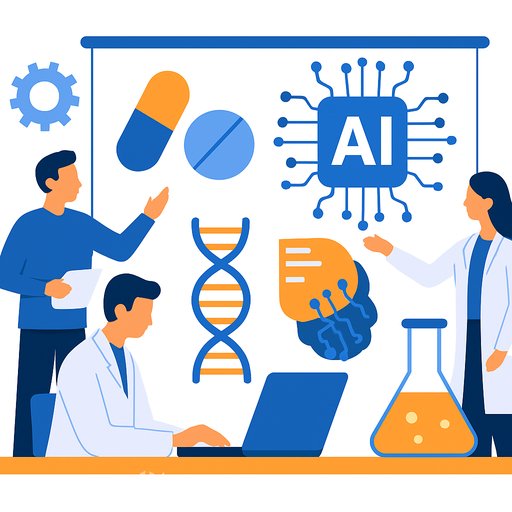
AI is becoming a key tool in drug discovery and development by generating hypotheses and revealing connections that support researchers in making first-in-class breakthroughs. Its strength lies in combining high-quality, structured data with systems that identify opportunities while collaborating with scientists to validate them. Insights from Dr. Hiroyoshi Toyoshiba, Director and CTO at FRONTEO, shed light on how AI suggests novel ideas and why human expertise remains crucial.
Accelerating Hypothesis Generation Amid Data Overload
The volume of scientific literature is growing exponentially, making it impossible for researchers to manually review all relevant information. Traditional literature review methods fall short. AI, especially natural language processing, can analyze vast amounts of academic papers to generate new hypotheses. Dr. Toyoshiba emphasizes that scientific papers are essential for hypothesis formation, which motivated his focus on AI that processes this literature effectively.
This shift from manual review to AI-supported exploration addresses a critical bottleneck but also raises questions about avoiding biases in AI outputs and ensuring that AI-generated insights undergo proper validation.
Unbiased AI and The Role of Serendipity
AI is commonly used for compound optimization, improving drug effectiveness and safety before clinical trials. However, AI’s potential extends to discovering entirely new scientific hypotheses. Due to its nature, AI tends to optimize around existing knowledge, which makes finding completely novel targets challenging.
Dr. Toyoshiba introduces the idea of “discontinuous discovery,” which involves uncovering unknown relationships from known data. Achieving this requires AI systems that avoid human biases and intentionally foster serendipity—unexpected, valuable discoveries. This approach treats AI as a creative partner that surfaces surprising connections, prompting fresh avenues of research.
Why Human Expertise Remains Essential
Despite the sophistication of AI tools, life science discovery depends on human insight. Algorithms can highlight patterns and suggest connections, but researchers must validate, interpret, and act on these leads. Dr. Toyoshiba stresses that humans transform AI hints into real innovations.
Successful R&D strategies blend AI capabilities with human judgment, ensuring AI-generated hypotheses are rigorously tested through established scientific and regulatory processes. This collaborative intelligence model enhances decision-making without replacing researchers.
The Importance of Trusted Data
The success of AI in drug discovery hinges on the quality of its data sources. AI models are only as good as the information they’re trained on, which requires structured, peer-reviewed, and diverse scientific literature. Dr. Toyoshiba highlights the importance of reliable data, noting that trusted academic databases provide essential input for sound AI analysis.
For organizations, this means prioritizing data governance and source credibility to generate insights that are both novel and scientifically valid. Quality data ensures AI tools contribute meaningful and actionable hypotheses.
Specialized AI for Personalized Medicine
The pharmaceutical industry is shifting toward precision medicine, tailoring treatments to individual patients. AI must evolve accordingly, becoming more specialized for specific therapeutic areas, data types, or drug development stages.
Dr. Toyoshiba notes that as drugs become more personalized, AI should transition from a general-purpose tool to one with specialized functions. This evolution will require new models, regulatory frameworks, and ethical considerations, but it offers the potential for more precise and efficient drug discovery.
How R&D Teams Can Effectively Leverage AI
AI is reshaping drug discovery by enabling new hypothesis generation and accelerating innovation. R&D leaders should focus on combining high-quality, structured data with collaborative systems where AI suggests possibilities and researchers validate them.
Key steps include identifying discovery bottlenecks, assessing data source reliability, and integrating AI into workflows that support human insight. Access to quality scientific data is essential for success.
For those interested in expanding their AI skills relevant to research and development, Complete AI Training offers courses that cover practical applications of AI in various fields.
About Dr Hiroyoshi Toyoshiba
Dr. Toyoshiba is Director and CTO at FRONTEO, where he develops AI algorithms specialized for life sciences. He earned his PhD in mathematics in 2000 and has experience in data analysis within life science research at institutions including Kyushu University Hospital, the National Institute of Environmental Health Sciences (NIEHS), and Takeda Pharmaceutical Company.
Since joining FRONTEO in 2017, he has focused on AI for drug discovery, becoming CTO of Life Science AI in 2019 and an executive officer in 2021. Dr. Toyoshiba has served as FRONTEO’s Director since 2024.
Your membership also unlocks: