AI in healthcare: practical optimism with clear guardrails
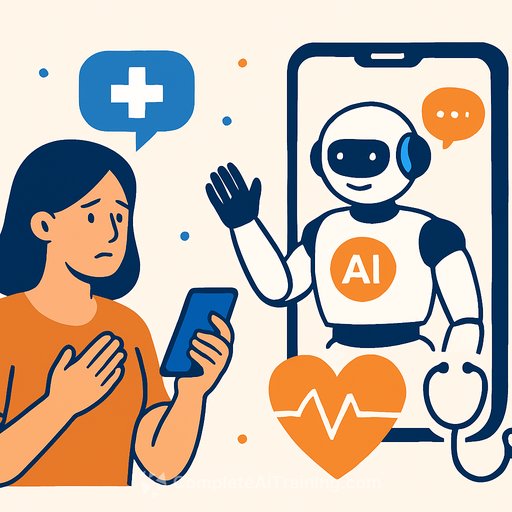
AI tools like ChatGPT are getting better at the boring, time-consuming parts of care. That's where the upside is: less admin, faster decisions, clearer communication. The risk isn't AI itself-it's using it without oversight, data discipline, or a plan.
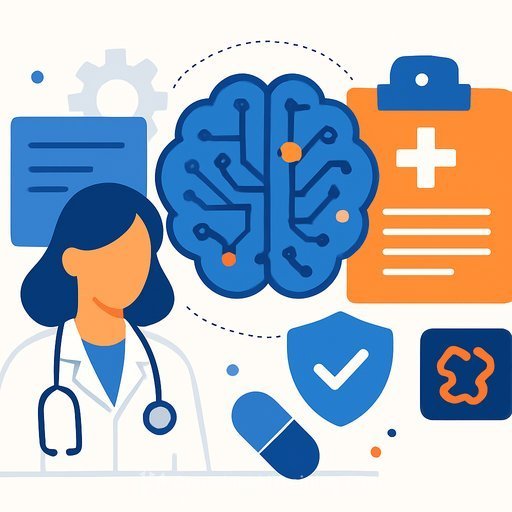
Here's a simple, clinical approach: use AI to assist, never to replace. Treat it like a capable resident-helpful, supervised, and accountable.
Where AI helps right now
- Clinical documentation: draft notes, visit summaries, and prior auth letters from structured inputs or transcripts.
- Patient communication: translate medical terms into plain language, generate instructions, and tailor education by literacy level.
- Triage and inbox: sort messages, flag urgency, summarize charts ahead of visits.
- Decision support: surface differential diagnoses, guideline snippets, and relevant orders for clinician review.
- Operations: code suggestions, quality measure abstraction, and standard form completion.
Start in low-risk zones-documentation, education, administrative tasks. Keep diagnostic and treatment recommendations under strict human review.
What can go wrong
- Hallucinations: confident, wrong answers that look convincing.
- Bias: outputs reflecting skewed training data; riskier for minorities or rare conditions.
- Privacy leaks: PHI exposure through unsecured tools or prompts.
- Overreliance: clinicians skipping verification under time pressure.
- Workflow drag: poorly integrated tools that add clicks or rework.
Simple safety rules
- Human in the loop: AI drafts; clinicians approve. No unsupervised clinical decisions.
- Source of truth: link outputs to guidelines, citations, or the patient chart when possible.
- Red-flag prompts: require double confirmation for high-risk content (dosing, abnormal vitals, new diagnoses).
- PHI control: use HIPAA-aligned, enterprise tools with data-use agreements; restrict copy/paste of identifiers.
- Versioning: log model versions and prompts; make outputs traceable for audits.
Implementation checklist (clinics and hospitals)
- Pick use cases: 3 quick wins in 90 days (e.g., note drafting, patient education, inbox triage).
- Define prompts and templates: standardize inputs to reduce variance and errors.
- Integrate with the EHR: reduce toggling; enable one-click insert and review.
- Access control: role-based permissions; turn off features not needed.
- Pilot with champions: small cohort of clinicians, weekly feedback, fast iterations.
- QA workflow: random sample reviews, graded by clinical safety and clarity.
- Training: short sessions on prompt technique, verification habits, and privacy rules.
- Escalation path: define who reviews incidents, how fast, and what gets paused.
Prompts that work in clinical settings
- Documentation: "Summarize this visit transcript into a SOAP note. Use the med list and vitals below. Flag any missing elements with a checklist."
- Education: "Explain heart failure to a 7th-grade reader in two paragraphs. Add three bullet self-care steps."
- Decision support: "Given these symptoms, vitals, labs, and meds, list 3 likely differentials and guideline-backed next steps with citations."
- Safety: "Before finalizing, check for drug-drug interactions using this med list and highlight any dosing concerns."
Measure what matters
- Time saved: minutes per note, per message, per prior auth.
- Quality: documentation completeness score; read-after-send edits; error rates.
- Patient outcomes: follow-up adherence; rework rates; message resolution time.
- Experience: clinician burnout scores; patient comprehension and satisfaction.
- Cost: reduction in overtime, transcription, and denials tied to documentation.
Ethics and regulation: keep it clean
Use enterprise-grade tools, clear data-use terms, and strong access controls. Document your intended use and monitor drift; regulators care about both.
- Regulatory context: FDA updates on AI/ML-enabled medical devices clarify expectations for clinical safety and change control. See current FDA guidance.
- Ethics: fairness, transparency, and accountability should be explicit in your governance plan. The WHO's guidance is a solid baseline. Read WHO recommendations.
Governance that sticks
- Cross-functional team: clinical lead, quality/safety, IT/security, compliance, and an operations owner.
- Approved use list: green-light tasks; yellow-light with extra review; red-light banned.
- Bias checks: test across demographics; review disparities in suggestions and outcomes.
- Incident playbook: define thresholds to pause features and notify stakeholders.
Getting started
Pick one low-risk use case and prove it in 30 days. Track time saved and error rates. If the data looks good, scale carefully and keep the human review tight.
For deeper skills and practical tools, explore AI for Healthcare and targeted workflows with ChatGPT. Small, smart steps now beat big promises later.
Your membership also unlocks: