Why AI in education still needs human judgment
As schools embrace smart tools, oversight and fairness matter more than ever
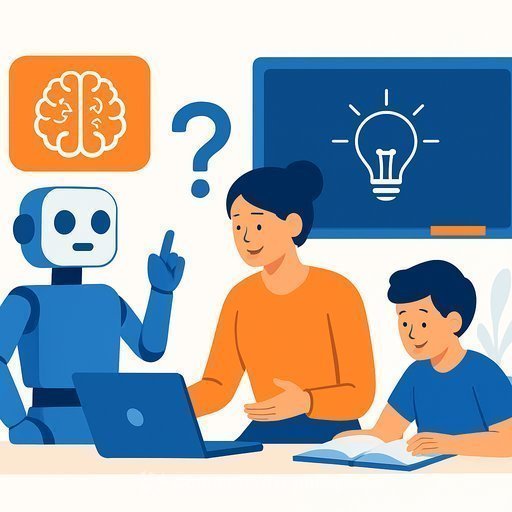
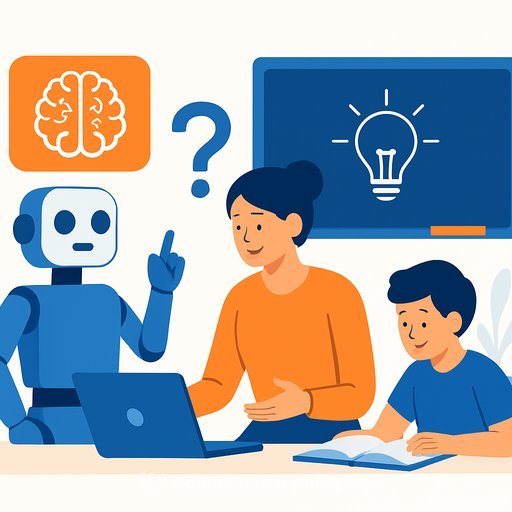
AI is showing up in lesson planning, assessment, and student support faster than most staff meetings can keep up with. It can save time, personalize pathways, and surface patterns you'd otherwise miss. All good-until we forget to ask a basic question: who makes the final call?
Data can inform. It cannot care. Classrooms run on context-motivation, language background, home life, culture, confidence. None of that fits neatly in a dataset. That's why the tool should advise and the educator should decide.
Data isn't neutral, and fairness isn't uniform
Educational AI learns from existing records: grades, attendance, clickstreams, behavior logs. If those inputs carry gaps or bias, the system can quietly pass them forward. A student who struggled due to external factors may get tracked into "lower" expectations again and again, even when their potential is higher.
Treating every learner exactly the same can still be unfair. Some students need more time, different scaffolds, or alternative demonstrations of mastery. Rigid, one-size rules turn support into sorting. Flexibility, empathy, and professional judgment are the antidote.
The UAE context: innovation with responsibility
Schools and universities across the UAE are investing in digital tools that promise better outcomes. That momentum is valuable-if it's paired with clear safeguards. Transparency, equitable use, and human oversight are not extras; they are requirements for trust.
The real risk: over-reliance
When a dashboard flags a learner as "at risk" or auto-recommends a pathway, it's easy to accept the suggestion. Do that often enough and professional judgment fades into the background. The danger isn't that AI makes mistakes. It's when we stop challenging whether its output fits the student in front of us.
Keep humans in the loop: practical guardrails for schools
- Define decision rights: AI suggests; educators decide. Write this into policy and workflows.
- Ask for explanations: Require plain-language rationale for recommendations and flags. No black boxes in core decisions.
- Audit for equity: Regularly check outcomes by gender, language background, disability, and socioeconomic factors. Adjust thresholds when disparities appear.
- Add context notes: Let teachers annotate student profiles with timely context (illness, caregiving, relocation) that models won't see.
- Run safe trials: Pilot with small cohorts, compare to human-only baselines, and set clear "stop" criteria.
- Offer an appeal path: Give students and families a way to question or correct automated decisions.
- Protect data: Collect the minimum needed, set retention limits, and get informed consent where appropriate.
- Train your staff: Build critical use skills, prompt hygiene, and bias awareness into PD. Try the AI Learning Path for Teachers.
What to ask your AI vendor-before you deploy
- What data trains and runs the system? Who owns it, and where is it stored?
- How are recommendations generated, and can we see feature importance or explanations?
- What bias testing has been done? Share recent results and remediation steps.
- How do we adjust thresholds for our context without breaking the model?
- What happens when the system is wrong? Show the override and audit trail.
- How will you support audits, staff training, and incident response?
When to override the "smart" recommendation
- Major life events affecting attendance or focus.
- English or Arabic language acquisition masking content mastery.
- Neurodiversity or disability requiring alternative assessment.
- Creative or project-based strengths not captured by narrow metrics.
- Assessment anomalies (first attempt, technical issues, inconsistent proctoring).
Policy anchors you can stand on
Align local practice with recognized guidance. For example, see UNESCO's guidance on AI in education for policy-level guardrails and classroom considerations: UNESCO guidance for generative AI in education and research.
Bottom line
AI can make the work lighter and the feedback quicker. It cannot replace the judgment that makes education humane and fair. Treat every AI output as a conversation starter, not a verdict-and keep teachers firmly in charge of student decisions.
Your membership also unlocks: