AI in the Music Industry: Defending Human Emotion and Creative Risk
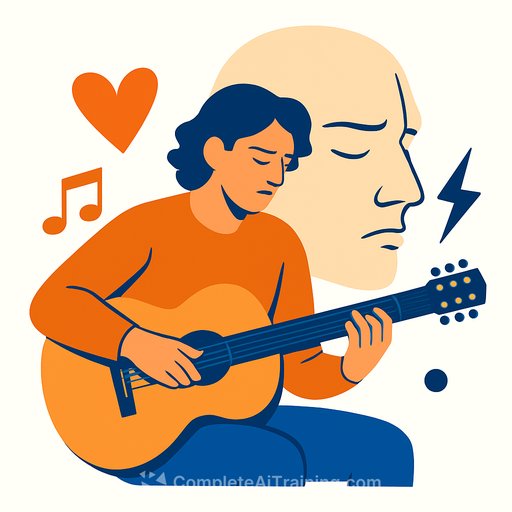
Great music isn't perfect. It's human. It's the moment your voice cracks, the take you almost threw away, the line that hurt to write. That's what moves people - not polish for polish's sake, but vulnerability with risk attached.
As creatives, our job is to nurture originality, not optimize for sameness. The work that lasts is the work that feels like a soul pressed into sound.
What Makes Music Move Us
We don't cry because a track is clean. We cry because someone felt something real and left it in the recording. The story behind a song is part of the instrument.
Think of "Let It Be." It resonates because it wasn't engineered to trend. It was written from grief, love, and relief. That human origin is the difference-maker.
Tech Isn't the Enemy - Misuse Is
Digital tools expanded what's possible. Going fully digital early freed resources for artists, not against them. That's the point: use tech to support the craft, not replace the core of it.
AI can check grammar, transcribe ideas, suggest lines, and speed up admin. That's leverage. But outsourcing the feeling - the voice, the risk, the meaning - is where the art dies.
The Red Flag of Algorithmic Perfection
I've heard submissions that sounded flawless. Radio-ready. On paper, they ticked every box. But every track felt the same - no pulse, no surprise, no lived experience in the vocal.
That's what happens when a song is 99.9% generated. You get pattern-matching, not presence. Music needs "happy mistakes," not sterile symmetry.
Where AI Belongs (and Where It Doesn't)
- Use AI for: transcription, lyric polish, idea capture, arrangement experiments, file cleanup.
- Do not use AI for: your core message, your voice, your emotional choices, your story.
- If a tool saves time, great. If it replaces feeling, you've traded your edge for convenience.
The Real Risk: Corporate Data Over Soul
The biggest danger isn't kids using AI. It's major companies prioritizing data and licensing catalogs to train systems that mimic artists at scale. That turns creative DNA into a commodity.
When decisions are driven by dashboards instead of discovery, you don't get the next Beatles or the next Hendrix. You get derivatives that test well. Safe music doesn't make history.
If you care about authorship and rights, this is worth tracking. The U.S. Copyright Office's AI policy hub is a helpful starting point.
Two Futures for Creatives
- Big-stream, big-data music: mass uploads, AI spam, background noise, low attention, low connection.
- Independent human-first music: smaller audiences, deeper resonance, direct relationships, long-term trust.
Both worlds will exist. Choose the one that aligns with your values and the work you want to be known for.
Practical Guardrails: Use AI Without Losing Your Voice
- Start human. Write the core concept, hook, and emotional frame before any tool touches it.
- Record messy drafts. Keep the take with the feeling, then clean around it - not over it.
- Limit prompts. If you need 30 prompts to make a line work, the idea probably isn't honest yet.
- Keep a "mistake vault." Save the weird takes, ad-libs, and glitches. They're often the magic.
- Taste > tools. Spend more time listening to great albums than testing new plugins.
- Document your story. Notes, voice memos, journal entries - they'll feed lyrics with real weight.
Release Strategy That Respects Your Art
- Own your channels: email list, SMS, private community, direct store.
- Diversify platforms: don't bet your career on a single algorithm.
- Share the process: clips of the writing room, the origin story, the failed versions.
- Sell context, not just files: annotated lyrics, stems, limited editions, live commentary versions.
- Collaborate with humans: session players, writers, visual artists. Build a creative circle that raises the bar.
For Creatives Who Want Smart Leverage (Without Losing the Plot)
If you're sharpening your AI workflow to serve your art - not replace it - explore role-specific options here: AI courses by job. Use tools to buy back time and double down on the human parts only you can do.
What We Stand For
At ColorWorld, the mission is simple: music made by humans, for humans. We choose emotion over trends, risk over templates, and artists over algorithms.
The industry can chase graphs. We'll chase goosebumps. The audience that cares will always find the work that dares.
Call to Creators
Write the line that scares you. Keep the take that isn't perfect but feels true. Use tech to clear the path, then walk it with your own feet.
The future doesn't need more of the same. It needs your difference.
Your membership also unlocks: