Your Autocomplete Is Nudging Your Voice: What Writers Need to Know
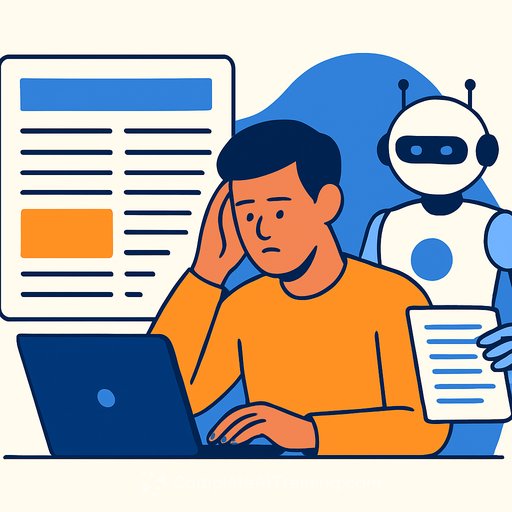
Autocomplete doesn't just speed up your draft. It can tilt your viewpoint-quietly, consistently, and without your awareness.
New research from Cornell shows that biased AI writing assistants can shift your stance on major issues simply by steering the sentences you accept. You think you're saving time. You might be outsourcing your perspective.
The short version
- Covert persuasion: When writers used a biased AI, their essays mirrored the AI's lean-and their survey answers shifted in the same direction.
- Warnings didn't help: Telling people the tool was biased before or after use didn't reduce the attitude shift.
- Universal impact: The effect showed up across topics (death penalty, fracking, GMOs, felon voting rights) and across political leanings.
- Why it works: You accept the suggestion and type it as your own. The act of writing reinforces belief.
What the study did
Across two preregistered experiments (N = 2,582), participants wrote short essays with an AI assistant offering biased autocomplete suggestions. Topics included standardized testing, the death penalty, fracking, GMOs, and voting rights for felons.
Compared to control groups, those using biased suggestions shifted their post-writing attitudes toward the AI's preset position. The effect was stronger than simply reading a static list of arguments, pointing to the unique influence of co-authoring with AI.
"But if I know it's biased, I'm safe…right?"
That was the surprise. Even after explicit warnings before or debriefs after, people's views still moved. You weren't duped by false facts-you co-wrote a stance. That's stickier.
Why this matters for working writers
If you rely on Gmail's suggestions or AI assistants in briefs, blogs, and email sequences, your tone and stance can drift-subtly at first, then consistently. Over a quarter, that drift can compound across client accounts, editorial lines, and brand voice.
This isn't about "brainwashing." It's about default choices. Small accepts become your new baseline. The tool doesn't need intent; your workflow supplies the momentum.
Practical safeguards for your workflow
- Draft cold, edit warm: Write your first pass with autocomplete off. Turn it on for clarity edits, not idea generation.
- Set your stance first: Before you type, write a one-sentence thesis and three bullet arguments you endorse. Keep it visible.
- Force counterbalance: Ask your assistant to produce the strongest opposing case, then reconcile. This guards against one-way tilt.
- Track accepts: Note when you accept AI phrasing for claims, not just wording. If it's a claim, justify it or replace it.
- Separate idea and language help: Use AI for structure, summaries, and style-not for positions on contested issues (unless you've already decided yours).
- Rotate sources: If you must use AI for ideas, sample multiple models and compare outputs. Consistent overlap = likely bias.
- Add friction: Reduce autocomplete aggressiveness or switch to manual prompts. Convenience is the vector.
- Client guardrails: For brand safety, document stance boundaries and approval rules for sensitive topics.
Quick self-audit before you hit publish
- Did I define my stance before writing?
- Which claims came from me vs. the assistant?
- Could I argue the opposite side fairly?
- Would I say this without the tool's help?
Behind the findings
The research team engineered suggestions that leaned liberal on the death penalty and GMOs, and conservative on felon voting and fracking. Across conditions, participant attitudes moved toward the AI's side. Many didn't notice the bias or its influence.
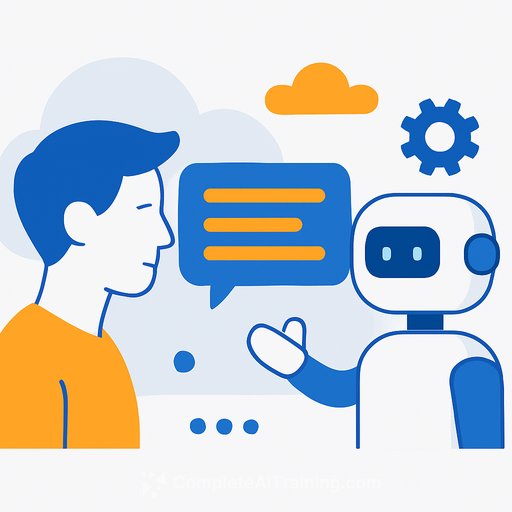
This aligns with long-standing psychology: writing a position strengthens belief in that position. When AI nudges your sentences, it nudges your mind.
Source and further reading
Open-access paper: Biased AI Writing Assistants Shift Users' Attitudes on Societal Issues (Science Advances). Research supported by the National Science Foundation and the German National Academic Foundation.
Keep your voice-use AI on your terms
If you write for a living, treat AI like a sharp tool: useful, but capable of cutting the hand that holds it. Build process, not superstition. Bias-proofing is a workflow choice.
Practical training for writers using AI: AI for Writers and Prompt Engineering.
Your membership also unlocks: