LexisNexis Risk Solutions Launches AI-Powered Identity Management for Healthcare
LexisNexis Risk Solutions has introduced an identity management platform built for healthcare operations. It verifies patients and members, resolves duplicate records, and enriches profiles with social and behavioral data so teams can make faster, safer decisions with fewer manual steps.
The goal is straightforward: stronger data integrity, lower fraud exposure, and better engagement across digital enrollment, virtual care, and self-service portals-without piling on unnecessary friction.
Why this matters for healthcare leaders
Security requirements keep rising while access has to stay simple. Many organizations respond by adding more verification steps, which can keep out bad actors-but also frustrate the people you're trying to serve. This platform aims to strike the balance: verify with confidence, keep workflows moving, and maintain trust across every interaction.
- Reduce identity-related risk while keeping patient and member experiences smooth.
- Eliminate duplicate and disparate identities that inflate costs and slow care coordination.
- Improve outreach, enrollment, and claims throughput with accurate, current contact data.
- Enrich profiles with external insights to support more relevant engagement.
What the platform does
- Identity verification across touchpoints: Enrollment, portal access, telehealth, and call centers-verify quickly and consistently.
- Record resolution: Link and merge duplicates across EHRs, claims systems, and care settings to improve match rates and reporting.
- Data enrichment: Append up-to-date contact information and connect relevant behavioral or socio-economic insights to profiles.
- Friction-right experiences: Apply the right level of verification based on risk, so legitimate users get through while fraud attempts stall.
- Workflow acceleration: Speed registrations and claims processing by reducing manual checks and identity exceptions.
AI protection against synthetic IDs and deepfakes
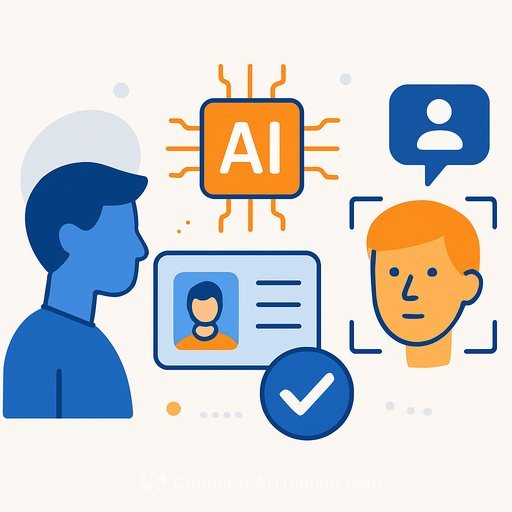
Fraud tactics now include synthetic identities and deepfakes that make basic checks less effective. The platform addresses this with AI-driven capabilities, including LexisNexis IDVerse®, which brings biometric verification, proprietary models, and deep neural networks to document authentication-without slowing the user experience.
As Adam Mariano, SVP and general manager of healthcare at LexisNexis Risk Solutions, put it: "Identity management has to keep pace with AI-driven threats while building more complete, trusted patient and member profiles that support efficient operations, stronger engagement, and improved outcomes."
Kim Brown, vice president of product management for insurance and healthcare identity solutions, added: "By integrating automated identity verification directly into healthcare environments, organizations can detect deepfakes, reduce fraud risk, improve efficiency, and say 'yes' with confidence."
Implementation notes for managers
- High-impact use cases: Digital enrollment, account recovery, Medicaid redeterminations, financial assistance screening, telehealth access, prior authorization, and contact center authentication.
- Data integration: Connect to EHR, CRM, payer core systems, and MPIs. Establish an enterprise identity key and audit trails for merges/splits.
- Risk policy: Define when to step up verification (e.g., new account creation, high-value claims changes, PHI access) and when to streamline.
- Metrics to track: Duplicate rate, match precision/recall, registration completion time, account takeover incidents, claim holds due to identity issues, outreach contact rate, and false positive/negative verification rates.
- Governance and compliance: Confirm HIPAA safeguards, consent and use policies for enrichment data, bias testing for biometrics, and alignment with NIST Digital Identity Guidelines.
Practical next steps
- Map your current identity flows and flag high-friction and high-risk moments.
- Baseline duplicate records and set a remediation plan with clear ownership.
- Pilot in one workflow (e.g., portal enrollment) with A/B friction testing and clear success metrics.
- Update SOPs and escalation paths for identity exceptions; train staff on new verification steps.
- Complete vendor security reviews, BAAs, and monitoring for model performance and drift.
Where to learn more
For strategies and playbooks on applying AI in care delivery and operations, explore AI for Healthcare.
Your membership also unlocks: