
AI news ·
LG Uplus opens Korea's first hybrid-cooled hyperscale AI data center in Paju as telecoms race to expand capacity
LG Uplus is building a 200-megawatt AI data center in Paju that will hold 70,000 GPUs - the only hyperscale facility of its size near Seoul. All contracts for the first 50-megawatt building are already signed.
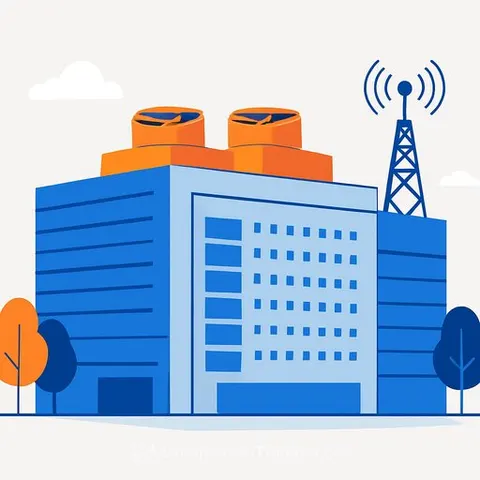
South Korea's Telecom Giants Race to Build AI Data Centers as Seoul Region Becomes Hub
LG Uplus is constructing a 200-megawatt AI data center in Paju, Gyeonggi province-the only hyperscale facility of its size under development in the greater Seoul area. The company expects to house roughly 70,000 graphics processing units (GPUs) once complete, enough capacity to run generative AI services for the entire Seoul metropolitan population simultaneously.
The Paju facility reached 20% completion in roughly one year by using prefabricated modular data center (PMDC) methods, which standardize equipment and assemble structures on-site rather than building everything traditionally. LG Uplus expects this approach to shorten construction by several months.
Cooling Design Sets Paju Apart
The data center is the first in South Korea designed to support both air and liquid cooling simultaneously. As GPU processing demands increase, heat management directly affects efficiency and stability.
LG Uplus uses a direct-to-chip liquid cooling method developed with LG Electronics, attaching metal cold plates to GPU chips and circulating coolant through a distribution unit. Internal tests showed 24% better energy efficiency compared to conventional air cooling alone.
The company rejected immersion liquid cooling-which submerges servers directly in coolant-because Nvidia and LG Uplus are still validating the technology. An Hyeong-gyun, head of the Enterprise AI Business Group, said the company plans to adopt immersion cooling after verification is complete.
Building 1 Already Sold Out
Building 1, a 50-megawatt facility slated for completion in June 2027, has finalized all contracts. An said LG Uplus aims to achieve cumulative orders worth 5 trillion won by 2030 with a 600-megawatt AI data center portfolio.
LG Uplus operates 15 AI data centers nationwide. Last year, AI data center revenue reached 422 billion won, up 18.4% from 2022. That growth outpaced the company's core telecommunications business, which grew only 3.3% over the same period.
SK Telecom and KT Accelerating Builds
South Korea's three major telecom companies are all betting on AI data centers as a growth engine. SK Telecom posted first-quarter AI data center revenue of 131.4 billion won this year, up 89.3% year-over-year. KT Cloud, the group's data center operator, posted first-quarter revenue of 250.1 billion won.
SK Telecom operates nine AI data centers and plans to secure more than 300 megawatts of capacity through 11 facilities by 2030. The company is partnering with Amazon Web Services to build a center in Ulsan.
KT operates 16 AI data centers and plans to expand to more than 500 megawatts by 2030 through new facilities in the western region.
Revenue Models Diversify Beyond Leasing
Telecom companies are moving beyond simple server-space leasing. SK Telecom offers both GPU-as-a-service (renting computing infrastructure in the cloud) and colocation services (building data centers and leasing them out). KT Cloud introduced Colo.AI, a subscription service for personalized GPU infrastructure.
An said LG Uplus aims to operate as an "AI factory operator" that integrates management of GPU resources, power, cooling, and infrastructure-not just a landlord renting space.
In-House Supply Chain
The Paju data center will rely on LG Group affiliates for key equipment. LG Electronics manufactures the liquid cooling units and coolant distribution systems. LG Energy Solution supplies uninterruptible power supply batteries with multi-layered safety design to prevent thermal runaway during outages.
LG Uplus and LS Electric are co-developing an 800-volt power distribution system. The company is also building an AI-based data center infrastructure management system to operate all equipment in an integrated manner.