Lighthouse Guild Launches AI Initiative With Blind Leadership at the Center
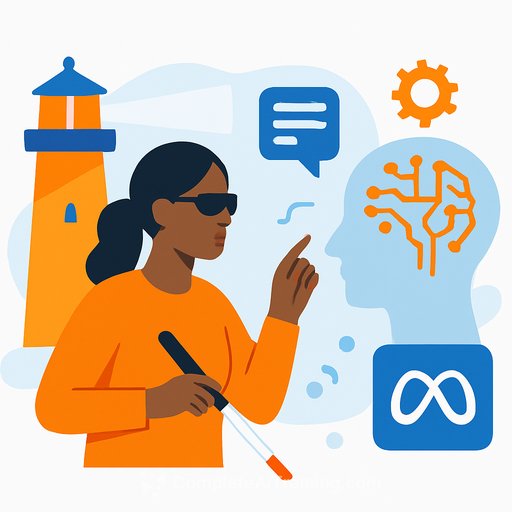
Lighthouse Guild announced the launch of Lighthouse Guild AI (LGAI) on March 17, a new division dedicated to co-developing adaptive technology with partners like Meta. The organization places blind and low-vision people in leadership roles during technology design, not as testers after development.
The announcement came as Thomas Panek, the organization's CEO who is blind, completed the United Airlines NYC Half marathon on March 15. Panek ran 13.1 miles through New York City using AI glasses co-developed with Meta, with real-time coaching from ultramarathoner Scott Jurek through the device.
How the Technology Worked
The AI glasses provided Panek with information about upcoming water stops and the location of the finish line before he reached it. A human guide, Jed Laskowitz, ran alongside him. The setup demonstrated how the technology could function in a real-world scenario rather than a controlled lab environment.
"Every time I've stood at a start line, people have told me what I couldn't see," Panek said. "What I've learned is that the real limits aren't in our eyes. They're in our tools and in our imagination."
Initial Focus Areas
LGAI will concentrate on three capabilities: navigation, travel, and obstacle detection. The organization argues these areas have the potential to increase independence and mobility for millions of people with vision loss.
Alex Himel, VP of Wearables at Meta, said the partnership reflects a basic principle: "Technology works best when you build it with the people who'll actually use it."
What This Means for Development Teams
For IT and development professionals, the model presents a different approach to accessibility work. Rather than treating vision loss accommodations as a separate feature set added late in development, LGAI embeds affected users into the design process from the beginning.
This approach mirrors broader shifts in how companies build for specific user groups. Involving end users early typically surfaces problems that internal teams miss, reduces rework, and produces features that actually solve real problems rather than assumed ones.
Jim Dubin, Chairman of Lighthouse Guild, said the race was a milestone but represented something larger. "Lighthouse Guild AI marks the beginning of a new chapter - one where our organization is both serving the blind and low vision community and actively shaping the technology that will define their independence for generations to come."
Learn more about Lighthouse Guild and its work in adaptive technology.
Your membership also unlocks: