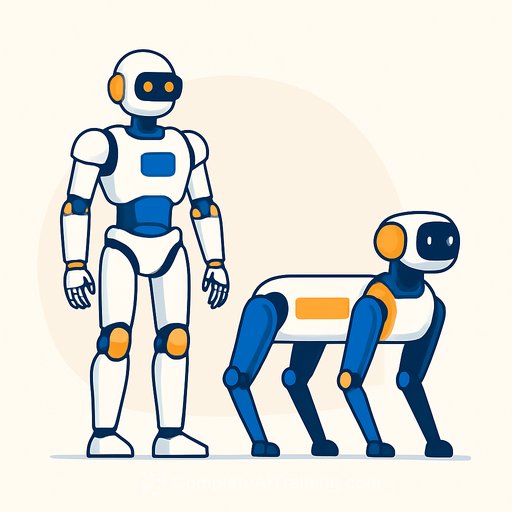
Linkhome AI Introduces Home Humanoid and Quadruped Robots
New hardware platforms don't just add features. They reset expectations. With humanoid and quadruped robots stepping into the home, product teams have a fresh set of problems to solve: safety in tight spaces, believable usefulness, and a service model that holds up under real daily use.
Below is a practical checklist to turn this headline into an actionable product plan. No buzzwords. Just what matters to ship, scale, and support.
Jobs to Validate First
- Daily chores with measurable payoff: floor pickup, dish handling, laundry assist, waste sorting.
- Safety and wellness checks: gentle reminders, fall detection, medication prompts, telepresence for caregivers.
- Home monitoring: door/window check, pet supervision, localized patrol with event-based alerts (noise, motion, smoke).
- Package handling: bring-ins, handoffs at the door, simple delivery inside the home.
Pick two to three jobs with clear success criteria, and instrument them end to end. Everything else waits.
Humanoid vs. Quadruped: Trade-Offs to Model
- Quadruped: High stability, stair capability, uneven terrain tolerance. Limited manipulation without an arm. Great for patrol, inspection, and sensor duties.
- Humanoid: Fits human environments (doors, switches, countertops). More complex locomotion and safety envelope, but higher ceiling for chores and handoffs.
Map each priority job to the platform that completes it with the least added complexity. Don't force a humanoid to patrol if a quadruped can do it safer and cheaper.
Key Technical Pillars (Focus Here First)
- Mobility: Reliable stair and threshold handling, quiet operation, safe speed limits indoors.
- Manipulation: Grasp sets for common objects, slip detection, gentle force control, quick-swap end effectors.
- Perception: Low-light navigation, clutter resilience, person and pet awareness, appliance/handle detection.
- On-device AI: Intent recognition and task sequencing on edge; see AI Agents & Automation for patterns on on-device autonomy and safe task sequencing.
- Power/Thermals: Battery change or dock strategy, heat under continuous duty, fan noise thresholds for home use.
- Safety Redundancy: E-stops, torque limits, fall detection, geo-fencing, auto-stand-down on anomaly.
- Connectivity/OTA: Wi-Fi resilience, local fallback, secure updates with staged rollouts and rollback.
Safety and Compliance (Non-Negotiable)
Build to established household-robot norms and document early. These two are a strong starting point:
Align your hazard analysis, protective measures, and validation tests to these frameworks. Doing it late costs months.
Home Constraints You Can't Ignore
- Footprint and turning radius in tight kitchens and hallways.
- Noise during evenings and early mornings.
- Lighting changes, glossy floors, rugs, and pet toys on the ground.
- Door handles, drawers, and switches at varied heights.
- Multi-resident homes with different preferences and trust levels.
Data, Privacy, and Trust
- Default to on-device processing for audio/video; ask for explicit consent before any cloud use.
- Offer clear data controls: pause, delete, offline mode, per-user permissions.
- Human-in-the-loop teleop must be auditable, time-bound, and visible to the resident.
- Public incident reporting and rapid response protocols build trust faster than promises.
Service and Support Model
- Installation playbook: mapping, safety zones, task templates, quick training for the household.
- AI for Operations: RaaS pricing with clear SLAs and swap coverage for hardware faults.
- Consumables and spares: grippers, pads, batteries, wear parts-available with 2-day shipping.
- Tiered support: self-serve guides, chat, and on-site options for critical issues.
Metrics That Actually Matter
- Tasks/hour and successful task completion rate.
- Intervention rate (manual assists per day) and time to recover from faults.
- Mean time between failures (MTBF) and mean time to repair (MTTR).
- Household retention at 90 and 180 days, and incident rate per operating hour.
Go-To-Market: Stage Your Risk
- Pilot: Narrow task set, supervised mode, instrument everything.
- Step 1: Add safe autonomy blocks (mapping, patrol, object fetch) with strict boundaries.
- Step 2: Expand manipulation library and household integrations (locks, lights, appliances).
- Step 3: Open a vetted "skills" path for third parties, with safety gates and simulation tests.
Team Checklist (Use This Next Week)
- Define top three jobs and write pass/fail tests users can understand.
- Pick the platform per job (humanoid vs quadruped) and document the trade-offs.
- Run a structured safety review against ISO 13482 and UL 3300; log gaps and owners.
- Ship a home-noise test, night-mode test, and pet-interaction test in your next sprint.
- Stand up a metrics dashboard for tasks, interventions, and incidents-review daily.
Level Up Your Team
If your roadmap touches autonomy, manipulation, or AI productization, upskilling the team pays off fast. Explore focused resources for product roles here: AI for Product Development.
Headlines come and go. The teams that win turn them into clear jobs, safer systems, and repeatable service. Start small, measure, and keep what works.
Your membership also unlocks: